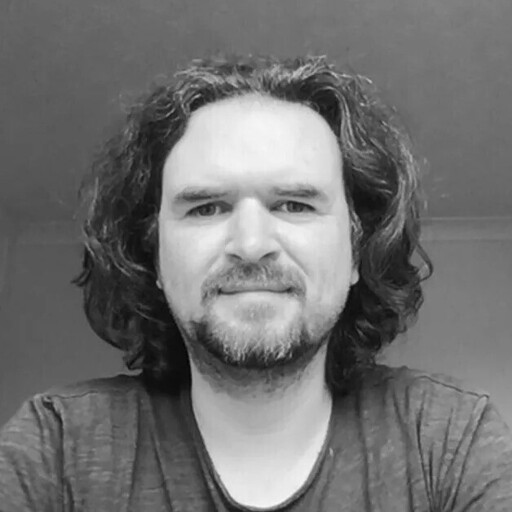
Sébastien Long didn't set out to become a policy advocate. As the founder and CEO of Lodgeur, a company transforming empty apartment buildings into professionally operated short-term rentals, he was focused on scaling operations and perfecting the guest experience.
But as short-term rental regulation intensified in Houston, where proposed rules posed an existential threat to his business, Sébastien realized something many operators learn too late: if you don’t show up, decisions get made without you. So he leaned in and engaged with city council, showed up publicly, and helped shape a more balanced conversation around professionalism in the industry.
In this conversation, Sébastien explains why regulation is often driven by perception rather than data, how professional operators can change the narrative, and why proactive engagement may be one of the most important investments an operator can make today. He also shares lessons from Lodgeur’s evolution, from design-led differentiation to revenue-sharing partnerships and tech-enabled operations.
The unconventional path to hospitality innovation
Sébastien's entry into hospitality wasn't through a traditional hotel management program. He grew up literally living the business: his parents launched a campground in France the year he was born. By age 13, he was scrubbing dishes in the kitchen. By university, he was managing front-of-house operations.
"Like a lot of entrepreneurs, my parents said you should go find a stable job," Sébastien recalls. That stable job turned out to be international banking, with postings that moved him to a new country every 18 months. Those years gave him firsthand experience as a consumer of corporate housing and serviced apartments.
"When you're traveling the world away from home, your home environment becomes very important. It was my nest or cocoon away from everything else," he explains. "I remember one place, I even had all the furniture taken out and bought my own furniture, decorated it to make it feel like a great place to come back to."
That lived experience would later become foundational to Lodgeur's approach. But first came a pivotal role at Sonder as the GM launching their UK market — a position that would crystallize his thinking about what was missing in the industry.
The 50% premium: Quantifying what everyone assumes
At Sonder, Sébastien witnessed a decision that bothered him deeply. The company planned to spend millions refurnishing 400 of its 700 units to improve quality, but nobody could answer a simple question: How much more revenue would better design actually generate?
"You can find articles that say a 1% improvement in your customer experience score will lead to 1.42% improvement in RevPAR, that was a Cornell study," he notes. "But I couldn't find anything that quantified the impact of design specifically."
"I was doing an executive MBA at Cambridge, and we had to find a research project for our thesis. This bothered me so much that I decided to research it," Sébastien says.
What he discovered was striking. Through an online experiment with hundreds of participants, controlling for size and other variables, he found that people would pay up to 50% more to upgrade from an average-looking property to the best-looking property.
This insight became Lodgeur's founding principle: design isn't just aesthetics, it's a measurable competitive advantage. But design alone wouldn't be enough. The business model itself needed innovation.
The pivot that saved the company
Lodgeur initially operated like most hospitality companies, signing traditional leases with building owners and operating as tenants. Then COVID-19 hit, and revenue dropped 92% in three months.
Facing potential bankruptcy and unsure where to store furniture, Sébastien had what he calls "a crazy idea." He approached a flexible property owner with an unconventional proposal: instead of paying for warehousing, what if they stored excess furniture in empty units and split the revenue that came in?
"That worked. We went from three units with that partner to around 70. We'll probably have potentially up to 100 with them this year," Sébastien says. "A lot changes when you flip that relationship from tenant-landlord to being partners."
The advantages of revenue sharing
The revenue-sharing model created better alignment across the board:
For building owners: They earn income from units that would otherwise sit empty, with no capital investment required
For Lodgeur: They maintain complete control over design, furnishing, and the guest experience
For guests: Consistent quality standards across properties, since Lodgeur decides when items need replacement
"Our aim is to be able to deliver above-market rents wherever we can," Sébastien explains. "But the reality is often we're competing with zero because these units are sitting empty. And we can beat zero any day of the week."
Even when Lodgeur does sign traditional master leases, they've learned to build in protections. Their contracts now include provisions that suspend rent payments if critical systems fail, like the air conditioning failing in a Texas summer.
"We've had to enforce some of these claims," Sébastien notes. "A building’s AC went down and a lot of units had major issues. We used data that Minut provided in terms of temperature and humidity to provide a file to the owner to show how uncomfortable conditions were. That got us a $25,000 rebate last summer."
The longer stay revolution
COVID fundamentally changed Lodgeur's business in another way: guest behavior. Pre-pandemic, units turned over seven times per month. Post-pandemic, that dropped to twice per month, with guests staying much longer.
"How you equip a space for people who are essentially temporarily living there is very different," Sébastien explains. This shift required rethinking everything from kitchen equipment to furniture durability.
Drawing on his years living in corporate housing as an expat, Sébastien began testing products in his own home before deploying them in Lodgeur properties. "Most of the items that you find in a Lodgeur apartment is either in my house or has been tested in my house at some point," he says.
When regulation becomes an existential threat
Despite Lodgeur's professional operations and institutional partnerships, Sébastien found himself facing a crisis when Houston was drafting short-term rental regulations.
"The initial drafts were an existential threat to our company. Basically, we would not have been able to operate," he says.
What followed was months of conversations with city council and administrative departments, and a realization that many policymakers didn’t fully understand the diversity of short-term rental business models.
The perception problem
The industry faces a fundamental messaging challenge. Media coverage overwhelmingly focuses on nightmare scenarios of parties, crimes, and neighbor complaints. These stories, while representing rare exceptions, shape how regulators view the entire sector.
"Local politicians can think that's sort of the norm rather than it being the absolute exception," Sébastien explains. "They're very much tainted by some of the media messaging."
Compounding the problem: regulators often don't realize that many short-term rental operators are substantial, professional businesses, rather than hobbyists renting out vacation homes for extra income.
"We do this for a living. It's not a hobby," Sébastien emphasizes. "And yet I think a lot of them see it as something that's discretionary. Oh, you don't have to rent out your property as a short-term rental."
The power of showing up
Sébastien's response was to mobilize. He began attending city council meetings, speaking directly with council members and administrative departments, and providing the counter narrative to sensationalized media coverage.
"As an operator, you need to mobilize and start speaking, give them the other side of the story," he says. "These are terrible events. None of us operators want to have a party at our house. But there's still a perception that we're enabling parties."
The experience showed him that showing up can make a real difference. Through persistent engagement, Sébastien and other operators were able to share the operator perspective and push back on proposals that could have made it impossible to operate.
As founding president of the Texas Short-Term Rental Association, Sébastien sees the same challenge playing out across Texas: "we and our members could continue fighting all across the state, in different cities, different counties," he explains. "But what if we could change things at a higher-up level? What if we could get a state bill passed that basically puts in place a framework to try and prevent bad regulation from happening?"
The goal isn't to avoid all regulation, rather to ensure regulations are informed by operational reality rather than media sensationalism. For a business trying to expand across markets, having to completely change operating practices in each new city creates an impossible scaling challenge. "Every single area is going to have different regulations," Sébastien notes. "If we can have a framework that allows us to expand in markets without having to completely change our business model or operating practices, that to me is something that has long term value for the industry."
The technology paradox: Integration vs. reality
As someone who's cycled through four property management systems, Sébastien has strong views on hospitality technology. The promise of seamless integration rarely matches reality.
"A lot of it is sold as integrated, but the reality is they're only often partial integrations," he explains. "Maybe one system sends data, but it's not going to receive data back."
This creates operational friction. But Sébastien sees AI as democratizing technical capabilities. Despite not being a programmer, he's now building custom integrations and small applications using AI tools.
"I understand enough about tech to be dangerous and know what I'd like it to do," he says. "But now with AI, I've been coding little applications, little integrations. That to me is kind of magical because once you create that connection, then an AI agent can do some of that manual work that a human would have to do otherwise."
His vision for technology is about creating space for hospitality. "AI is never going to clean a room," he notes. "To me, it's about how do we make it easier to do the mundane, the repetitive stuff, so that we can focus more on the hospitality."
Redefining luxury as frictionless experience
Sébastien challenges the traditional view that hospitality must be high-touch and in-person. "Sometimes to me, luxury is not having to speak to a person because things just work," he says. "You can get into the property without speaking to a human, you don't even need to message because everything is there as it should be."
This philosophy extends to his metric for success: "If someone has to contact you about something, it usually means you've failed further upstream."
Unexpected lessons from banking
One of the more surprising elements of Sébastien's background is how his years in financial crime prevention prepared him for hospitality operations. Working in private banking, he developed expertise in client due diligence and screening, which were skills that seemed irrelevant until he started working with large apartment buildings.
"The partners we work with are very concerned about who's coming in because there's a lot more risk when you have hundreds of people in a building," he explains. "From day one, we were screening our guests. We were even looking at Google searches and whether their names were coming up in negative news."
This proactive approach to guest vetting, informed by banking compliance practices, has become a differentiator for Lodgeur with institutional property partners. It's a reminder that seemingly unrelated experience can provide unexpected competitive advantages.
"A lot of the challenges in industries are quite universal problems," Sébastien reflects. "In a strange way my banking career prepared me for fixing these kinds of issues because they're high transaction volume businesses where you have to get it right every time. It doesn't matter that you got it right yesterday for the other customer. You have to get it right today for this customer."
What operators aren't preparing for
Looking five years ahead, Sébastien focuses less on predicting change and more on identifying constants, which is a philosophy attributed to Jeff Bezos.
"Most people are concerned about what's going to change in the future in five, ten years," he says. "But Bezos was more interested in what isn't going to change, what are the universal truths."
For Sébastien, one constant stands out: the need for continuous improvement. Having watched his parents' campground business evolve over 40-plus years, he's seen how guest expectations steadily rise.
"Every year you have to get better, because people expect a little bit more comfort, a little bit more this," he explains. "You can't stand still. Last year's standards aren't good enough for this year, and the standards in five years time again, well, I think we'd look back at how we do things today and be a little bit embarrassed."
The rising bar of guest expectations
This observation reflects a broader industry shift. Early Airbnb guests accepted lower standards in exchange for lower prices. Today, finding dishes in the dishwasher or thin pillows would generate immediate complaints.
"I remember scrolling through Airbnb for many years before I booked my first short-term rental," Sébastien recalls. "You can tell a lot sometimes by looking at the photos. Does that bed look comfortable? Are those pillows wafer-thin? That minimum entry-level Airbnb, you can't do that anymore."
The professionalization of the industry has raised expectations across the board. But Sébastien sees this as positive: "Things may have been cheaper, but you're getting a very different product now."
Key takeaways
On competitive advantage:
Design quality can command up to 50% premium in booking rates, but only if you can achieve it cost-effectively
Standardizing designs across multiple units delivers better ROI than custom designing each property
Control over furnishing and replacement decisions ensures consistent quality standards
On business model innovation:
Revenue-sharing partnerships align incentives better than traditional leases
Building owners will accept lower returns from occupied units versus zero returns from vacant ones
Master leases should include provisions that protect operators from building system failures
On regulation and advocacy:
Local politicians often lack bandwidth to understand diverse business models in the short-term rental space
Media narratives disproportionately focus on problem properties, skewing regulatory perception
Showing up to city council meetings and providing operator perspectives can meaningfully influence outcomes
State-level frameworks can prevent patchwork local regulations that make scaling impossible
On technology and operations:
Integration promises often exceed reality, so be prepared to build custom connections
AI tools are democratizing technical capabilities for non-technical founders
The goal of technology should be eliminating mundane tasks to create space for hospitality
Guest contact often signals upstream operational failure
On industry evolution:
Guest expectations continuously rise, so last year's standards won't suffice this year
Longer average stays require different equipment and design considerations
Professional operators must differentiate themselves from hobbyist hosts in regulatory conversations
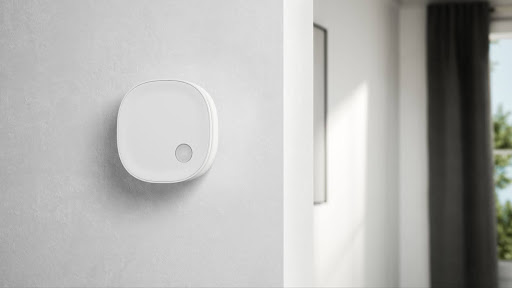
💡 Want to learn more about how technology can support safety and operational efficiency in property management? Discover Minut’s privacy-first sensor.


%20(1).png)