One guest smokes. The next guest leaves a 1-star review
Practical ways to prevent smoking in rental properties, including clear no-smoking policies, guest communication, and privacy-safe monitoring to catch issues early and avoid costly damage.
A single instance of indoor smoke can turn a routine turnover into a scramble, and an otherwise great stay into a complaint. The room looks fine at first glance, but then the odor hits you. That’s when costs climb and reviews suffer.
The solution is straightforward: set clear expectations and combine them with privacy-safe, real-time awareness. When you know about smoke early, you can act early to protect the next guest’s experience, your team’s time, and your margins.
Why smoking in rental properties doesn’t start as a big problem
Most smoke incidents don’t look like a disaster. The beds are made, bins are emptied, and everything appears guest-ready. Until you notice a faint edge in the air that shouldn’t be there. If you miss that moment, the smell quickly settles into the curtains, carpets, furniture, and even the ventilation unit. That's when a routine checkout clean becomes hours of unplanned cleaning and a compromised arrival.
It’s a quiet problem, which is why it’s risky. Careful guests won’t leave overflowing ashtrays, and they may try to mask the smell with an air freshener. But that won’t stop the smoke getting into your fabrics and furniture.
The real cost isn’t the smoke, it’s what follows
Cigarette smoke leaves an invisible presence. It seeps into soft furnishings, walls, and HVAC. Effective removal often requires extra labor, specialized products, and, in some cases, ozone treatment. In hospitality, you’re not only paying for the labor and products but also lost revenue while a unit is undergoing extended treatment.
Why smoking in rental properties keeps happening (even with rules in place)
Most operators clearly state no-smoking rules in listings, house manuals, and pre-arrival messages, but violations still happen. Some guests skim your materials and miss the rule, some assume there’s flexibility, and others simply break the rules for convenience. If hosts don’t have visibility during the stay, a policy can quickly become a wish.
The real problem is you find out too late
Discovering that a guest smoked after checkout is like getting yesterday’s weather alert. By the time you know, conditions have moved on — just not in your favor. The smell is already lingering in your property, settling into your furnishings.
In multifamily buildings, timing is even more important. Smoke can drift through vents into neighboring units, triggering complaints and, in some jurisdictions, fines. Property managers in affordable housing have long flagged the enforcement gap: smoke can be easily detected in hallways, but it’s almost impossible to prove inside a unit without permission to enter, making enforcement difficult.
In other words, without timely, privacy-safe visibility, you can only react to the issue rather than prevent it.
What actually works: catching the problem early
Most teams succeed when they pair clear communication with a path to compliance that starts before arrival:
Set firm, visible expectations in your listing and pre-stay messages.
Offer practical alternatives, like a designated outdoor smoking area with seating and an ashtray.
Remind guests that your goal is a fresh, comfortable space for everyone.
These steps deter violations and create a fair framework for fees if needed.
Where most hosts lack control
Hosts don’t know what’s happening inside their properties, and are reliant on guests being considerate and following the rules. Let’s say a guest lights up by an open window or late at night, assuming no one will notice. Without early signals, you miss the chance to correct the behavior or to document if it continues.
At scale, that visibility gap becomes an operational drag. You can’t standardize response times, coach your team to consistent outcomes, or enforce fees without a reliable record tied to the stay.
How early detection changes the outcome
Here’s the good news: smoke changes the indoor environment and those subtle changes can be detected early. With the right tools, you receive a discreet alert and step in with a courteous message requesting the guest to follow your rules.
This isn’t surveillance, it’s just giving operators the awareness of when something happens inside the property when it isn’t supposed to.
How Minut helps without affecting guest experience
Minut gives hosts insights about what’s happening inside their property, without violating guest privacy. Our sensors don’t have cameras or microphones, nor can they identify guests. Instead, they track environmental signals inside the property and send real-time alerts when something is off, including sustained noise, potential parties, and guest smoking.
Here’s how it works day to day:
You set clear no-smoking rules and, if you choose, a designated outdoor area.
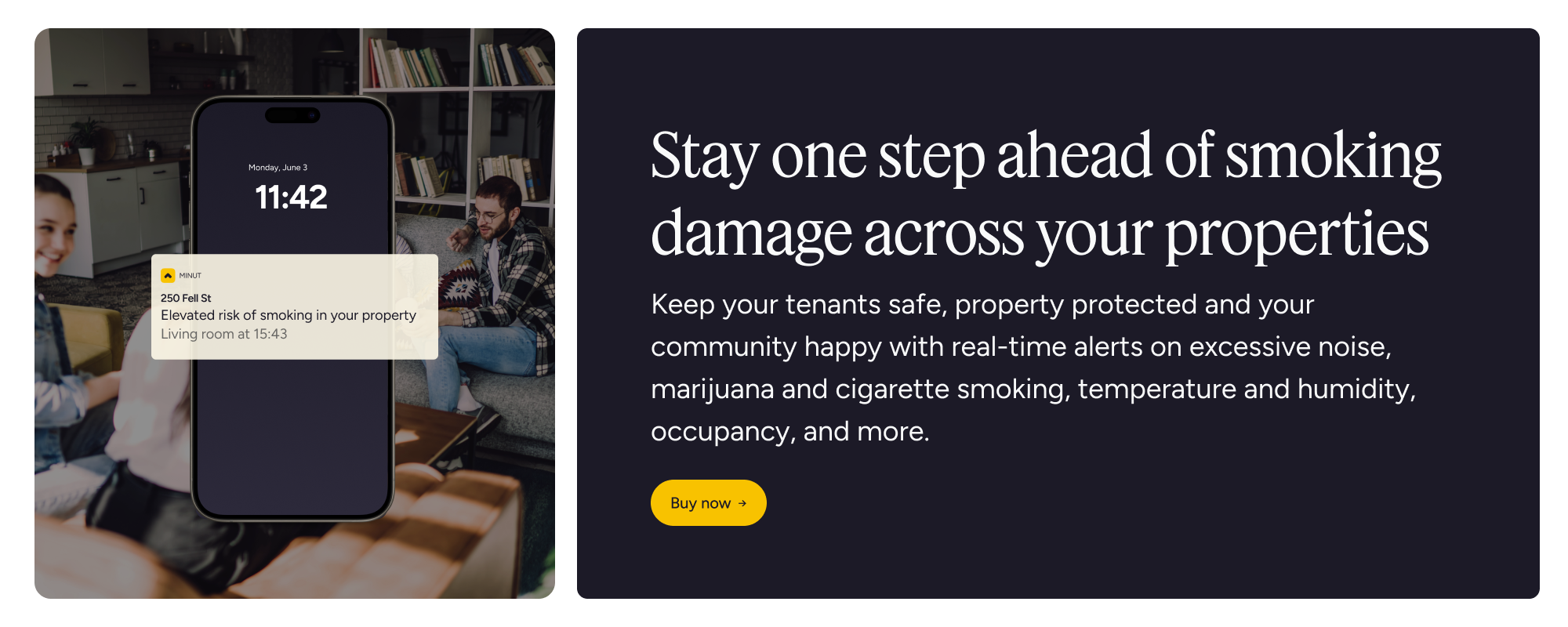
Minut provides real-time notifications when indoor smoke is detected.
Your team reaches out with a friendly, templated message that often resolves the issue on first contact.
If a violation continues, you have a timestamped log in your dashboard to support fees, resolve disputes, and protect brand standards.
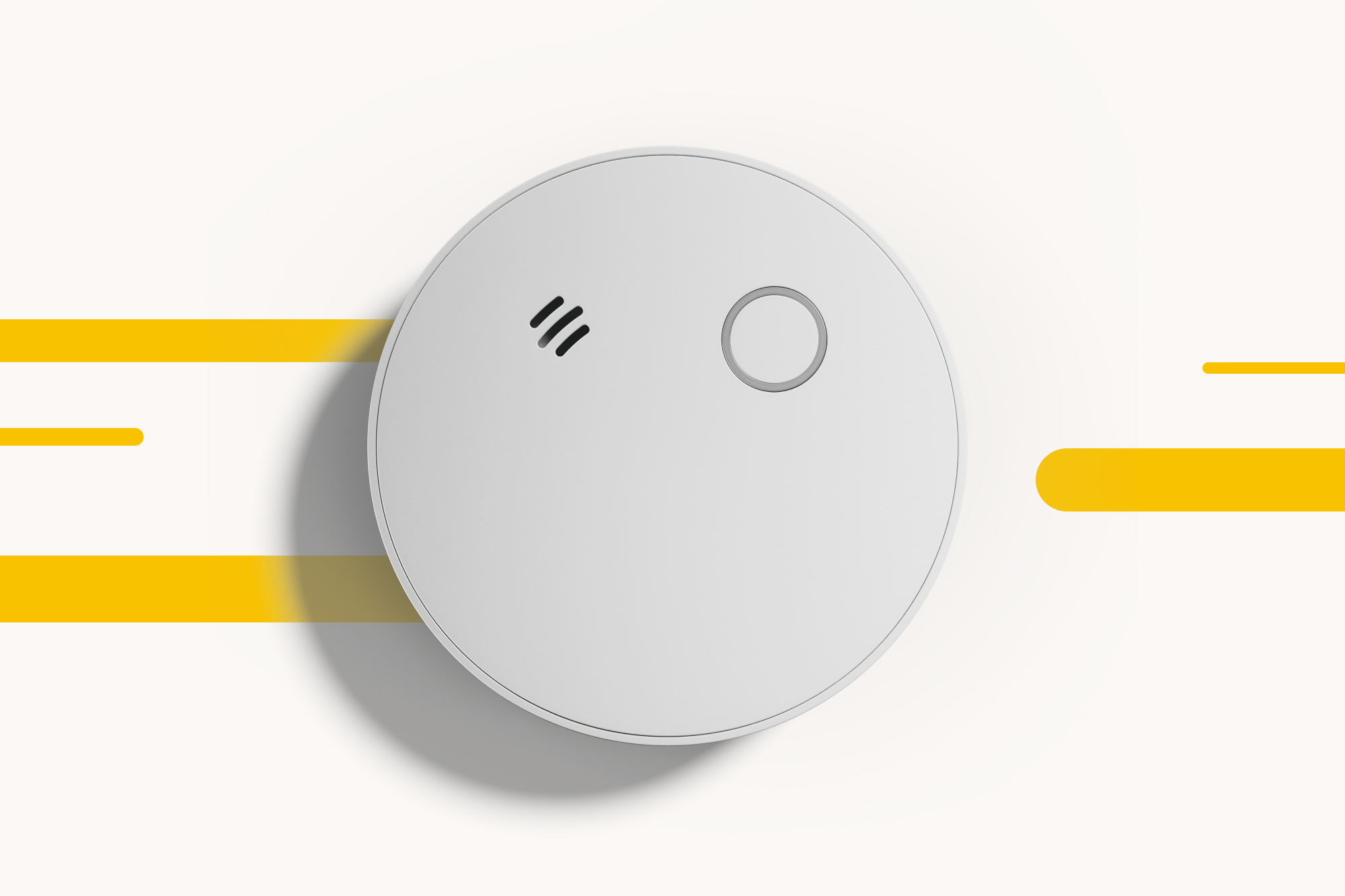
A Minut wall sensor on a wall
Why smoking in rental properties is rarely an isolated issue
Smoking violations often accompany other high-risk behaviors like over-occupancy and parties. When one rule breaks, others usually follow. That’s why the most effective approach pairs smoke detection with noise and occupancy insights. Early signals of crowding and sustained noise help you step in before the situation becomes a neighbor complaint or a public review.
Final thoughts
When it comes to guests smoking, minutes matter. Late detection means higher cleaning costs, unprofitable downtime, and a higher likelihood of receiving negative reviews.
To keep properties fresh, protect margins, and deliver 5-star stays, combine clear no-smoking expectations with privacy-safe, real-time detection. Smoke affects the environment before it becomes obvious. Detect it early, act respectfully, and you’ll prevent avoidable damage without compromising guest trust.






.png)
.jpg)