Reviews are the most powerful ranking signal on Airbnb, shaping visibility, conversion, and revenue. With the platform’s average listing rating holding above 4.75 and 85% of 2024 reviews at five stars, the bar is high and rising. Receiving a higher volume of reviews, and increasing your aggregate score, helps you to appear higher in search results and charge higher prices.
As guest expectations shift from “clean and affordable” to “seamless, comfortable, and predictable,” operators who invest in experience design, comfort control, communication systems, and prevention strategies will win the bookings that matter.
In this article, we’ll explore some of the ways you can receive more 5-star reviews on Airbnb.
How to get 5-star reviews on Airbnb in 2026: the short answer
To get 5-star reviews on Airbnb in 2026, you need to design a stay that’s seamless end to end: think zero-friction access, clear communication, and predictable comfort. Your listing needs to be accurate so guests don’t feel misled or disappointed when they arrive. All important information needs to be delivered early and clearly, including any house rules, amenities, emergency contact details, and where to find a first aid kit.
Pair this with proactive systems, such as noise and climate monitoring, automated guest messaging so any questions are answered swiftly, and rapid issue resolution.
Finally, don’t be afraid to ask for a 5-star review. In a check-out message, you can briefly mention how much importance Airbnb places on a full 5-stars compared to 3- or 4-star reviews, explain that a perfect score tells Airbnb you’ve exceeded expectations, and encourage guests to share their experience if they truly feel their stay deserves top marks, without offering any incentives or suggesting what they should write.
Why reviews are the most powerful ranking signal on Airbnb
Airbnb guests have left more than 460 million reviews, with the average listing rating above 4.75. Of the reviews left in 2024, 85% were five stars. Airbnb has also removed more than 400,000 low-quality listings to protect guest trust. And because Airbnb wants guests to have the best stay, and therefore wants hosts to provide great stays, it has published a 5-Star Hosting series.
Airbnb also launched Guest Favorites, which features the platform’s top-rated listings “based on ratings, reviews, and reliability data.” Over 250 million nights have been booked at properties listed within Guest Favorites, and the average rating is a whopping 4.92.
Airbnb’s ranking system weighs the following:
your overall rating
the six guest experience metrics (cleanliness, check-in, accuracy, communication, location, and value)
review frequency and recency, so a steady stream of recent positives matters
With 1.3 million Superhosts in 2024 and new quality filters and review-sorting tools, guests can quickly spot small lapses and choose a competitor instead. If you want to increase Airbnb rating outcomes in 2026, your goal should be designing a consistent stay experience.
What actually drives 5-star reviews on Airbnb
If you’re working out how to get 5 star reviews on Airbnb, start by thinking in experiences rather than amenities.
Guests review experiences, not amenities
Hot tubs, coffee stations, and interiors that photograph beautifully are helpful, but they can’t compensate for friction. Guests rate how they felt:
welcomed or stressed
informed or confused
safe or anxious
The psychology of post-stay reviews is simple: emotional memory gets the final word. A single moment of relief, like a quick fix after a late-night lock issue, can outweigh three decorative extras. This is why it’s so beneficial to have automated processes, so as much as possible the stay for each guest is consistently high quality.
Emotional comfort vs physical comfort
Five-star outcomes rely on both.
Emotional comfort: safety, trust, clarity. Guests want to know what to expect, how to get help, and that their privacy is respected.
Physical comfort: temperature, noise, cleanliness, and sleep quality. When these are right, guests relax. When they’re wrong, reviews drop.
If you want to know how to get 5 star reviews on Airbnb without adding big-ticket amenities, focus on comfort and confidence first. Those are the things that people remember.
Predictability of stay
Make sure house rules are clear, the listing is accurate, and everything guests are likely to need is disclosed in advance. There should be no surprises at check-in, guesswork about parking, or hidden rules. If a guest returns for a second stay a while later, they should feel confident that the experience will be at least as good as the previous one.
Zero-friction check-in
A smooth arrival sets the tone. Smart lock access, clear parking instructions, and WiFi details delivered ahead of time prevent the most common first-day frustrations. If you’re designing how to get 5 star reviews on Airbnb at scale across a portfolio, codify check-in so it’s identical in quality every time.
Clear communication
Communication is one of the fastest ways to improve Airbnb reviews. In fact, Airbnb says that “Timely, clear communication is key to five-star hosting.” Best practice includes:
Get to guests early with pre-arrival details
Check in mid-stay with a quick message checking if they need anything
Follow up after checkout to thank them for choosing your listing, and a simple path to leave a review
Response time matters too, with Airbnb suggesting that urgent matters should be responded to within an hour.
Guest experience is the real rating driver
The basics matter, but not always how you think.
Cleanliness is expected, not rewarded
Let’s be blunt: clean is the baseline. Most guests only mention cleanliness when it fails. Strive for immaculate, yes, but understand that having a spotless property won’t deliver a 5-star rating on its own. Professional operators already clear this bar, so your opportunity is everything around it.
Comfort determines rating
Comfort is the category that guests experience every minute they’re inside the space. Sleep quality, air quality, noise levels, lighting, and temperature directly shape whether your average rating is 4.7 or 4.9. If you want to increase Airbnb rating performance quickly, prioritize the systems that keep these variables stable, especially overnight.
Clarity reduces anxiety
Provide visible emergency contacts, a short, scannable house manual, and clear appliance instructions. Anxiety thrives on uncertainty, so you can go a long way to preventing negative Airbnb reviews just by removing uncertainty.
First impressions shape final reviews
First impressions are everything, and you only get one opportunity to make a good one. Fresh air, neutral scent, warm, well-placed lighting, and a tidy entrance signal care and professionalism. Guests carry that emotional first impression through the stay, which is why reviews reflect emotional memory more than physical features. If you’ve ever wondered how to get 5 star reviews on Airbnb, start by rewriting your first 5 minutes.
Prevent problems before they impact your rating
This is where operational systems matter most. If you run multiple units or a dispersed portfolio, prevention beats recovery every time.
Noise complaints
Noise is treated as a core risk hosts are expected to control. Airbnb’s Community Disturbance Policy bans disruptive gatherings and explicitly lists “excessive noise” as a community disturbance that can lead to listing suspension or removal, and the platform even operates a dedicated Neighborhood Support line so neighbors can report parties or noise complaints in real time. That means one loud night can generate not only a bad review but also complaints and potential platform action, so proactive policies and privacy‑safe monitoring should be considered as standard parts of 5-star operations.
Minut’s real-time noise monitoring notifies you when sustained noise exceeds your chosen threshold, so you can resolve issues quickly and discreetly.
Indoor comfort and climate
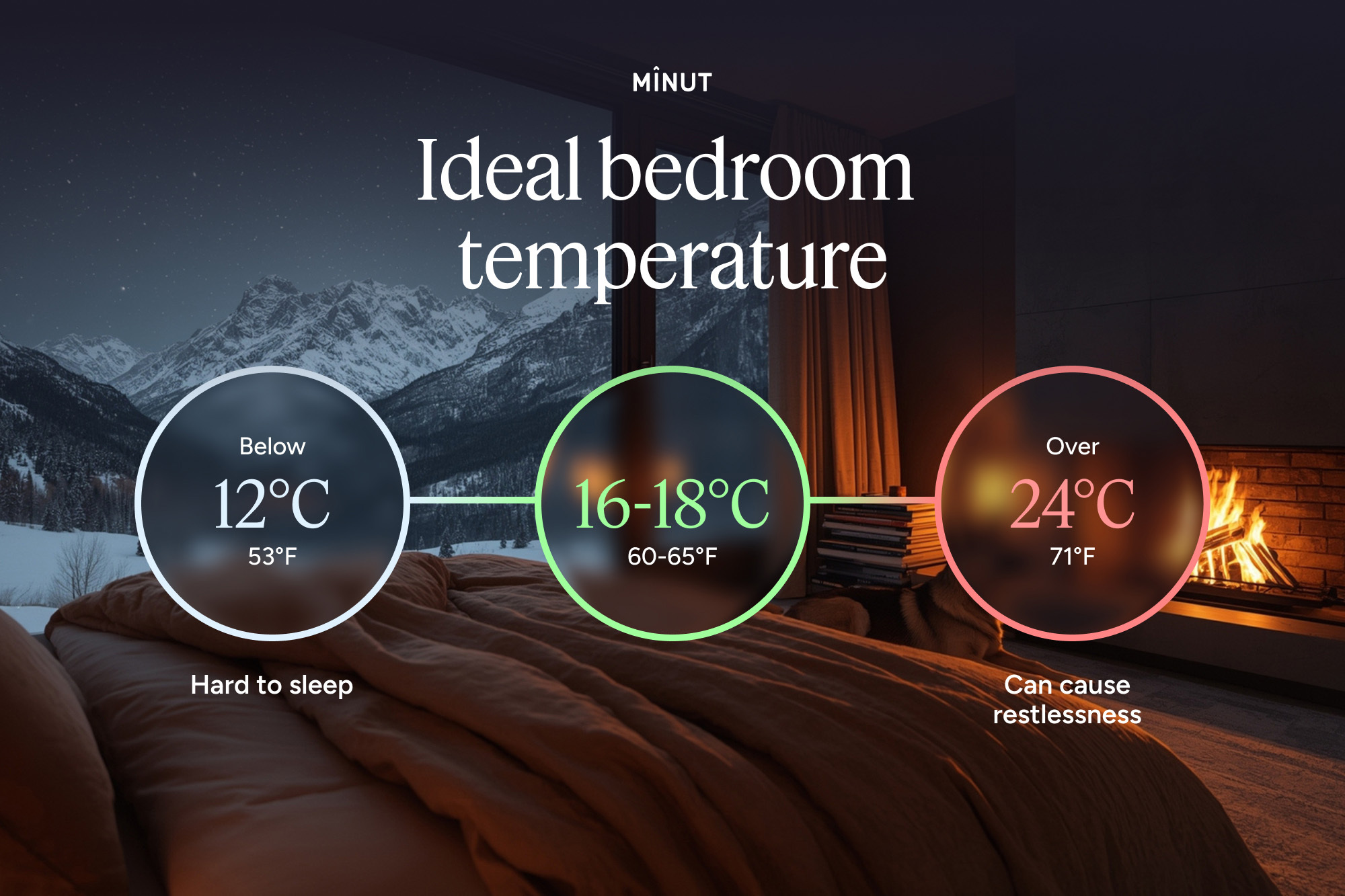
Comfort issues are often underreported in-moment but overrepresented in reviews. The Sleep Charity explains that “an ideal bedroom temperature is around 16-18°C (60-65°F).” Temperatures over 24°C/71°F can cause restlessness, but it can also be hard to sleep if the temperatures are as low as 12°C/53°F.
Fast communication increases Airbnb ratings
Airbnb’s Global Quality Report shows that the platform favors responsive listings, and response metrics influence visibility alongside reviews and booking reliability. Fortunately, communication excellence is one of the few levers entirely in your control.
Response time expectations in 2026
A clear, timely answer can be the difference between a neutral and a delighted review. Operators who systematize their guest journey — e.g. pre-arrival, mid-stay, and post-stay — tend to collect more consistent 5-star feedback. This is echoed in Guesty’s guidance on proactive communication, which shows that mid-stay check-ins catch small issues before they become ratings problems.
Pre-arrival clarity
Send automated instructions 24–48 hours ahead with details on how to access the property, where to park, WiFi details, and house rules. Include the house manual link and emergency numbers. A lot of guests will arrive late and tired as a result of travel, but you can still get 5-star reviews on Airbnb with a focus on pre-arrival clarity.
Emergency readiness
Stress levels are high in emergencies, and your planning needs to consider that guests may be in a state of panic. Include important details prominently in your welcome communication, and consider having a visible emergency card in the unit with the address and key numbers. You’ll rarely need it, but guests find comfort knowing it’s there.
Proactive updates
Storm in the forecast? Maintenance at 10 a.m.? Message proactively with alternatives or adjustments. These small acts are some of the simplest Airbnb guest experience tips you can act on today, yet they can make a meaningful and lasting impression on your guests.
Why hosts receive 4-star reviews
Many guests see 4 stars as a very positive rating, but for hosts it can quietly drag down search ranking and Superhost status. The good news is that if someone was already willing to score you a 4, it’s not an overhaul of the guest experience to nudge that score to a 5. Here are some important areas to focus on:
Small friction points: unclear instructions, temperature not quite right, and delayed replies can all create lingering frustration. Fix the first five minutes and your response time, and the extra star often follows.
Noise:even minor late-night disturbances reduce perceived restfulness and satisfaction. It’s one of the fastest ways a great stay becomes a middling review.
Slow communication: delayed or vague responses can create anxiety and frustration, as well as indicate to a guest that you’re disorganized. Fast, friendly replies restore confidence and protect ratings.
Poor sleep: everyone wants to feel rested and relaxed when they’re away, so inadequate or uncomfortable sleep is a fast way to harm your score.
The 5-star review checklist
If you want something you can run on every turnover, here’s a simple pre‑stay and in‑stay checklist you can follow. Treat it as your 5-star baseline: if you can tick these off consistently, you’ll prevent most of the issues that drag ratings down.
Pre-arrival instructions sent 24 hours before check-in
Smart lock functioning properly
Indoor temperature within seasonal comfort range
Humidity maintained at healthy levels
Quiet hours clearly communicated
Emergency contact information visible
Fast response time during stay
No surprise fees or unexpected rules
Clear check-out instructions
Follow-up message after departure
How smart monitoring supports better reviews
Technology should make hospitality feel more human, not less. When you design for prevention and privacy, guests experience a calmer, more predictable stay, and you collect more 5-star feedback. Here are three ways smart monitoring can help you and your guests.
Preventing noise escalation
Early alerts let you step in before a neighbor complains or a guest loses sleep. Guests rarely review what never became a problem, and that’s exactly the point of smart monitoring. For operators focused on how to get 5-star reviews on Airbnb across dozens of units, preventing one 2 a.m. issue a week can noticeably improve your average rating.
Detecting humidity issues early
Minut’s indoor climate monitoring lets you track trends and notifies you if your unit becomes too humid. This way, you can air out units, adjust HVAC, or deploy dehumidifiers before it causes a problem for guests.
Supporting guest comfort without cameras
Privacy-safe monitoring enables you to keep an eye on key parameters like noise, temperature, and humidity without using cameras or microphones. That means guests themselves are never recorded and no personal information is ever captured. In other words, monitor the environment, not people.
Bringing it all together
In a marketplace where the average rating sits above 4.75 and quality signals drive visibility, the operators who master 5-star reviews on Airbnb are the ones who leave nothing to chance. Sweat the small details like designing a frictionless arrival, stabilizing comfort overnight, communicating with speed and warmth. Then repeat for every stay.
If you’re ready to scale that consistency, start by codifying your first five minutes and your last five messages. Use systems that surface risk early. And take the time to read the feedback you receive so you can make the improvements that guests want to see. That’s how you prevent negative Airbnb reviews and improve your average over time.
How to get 5 star reviews on Airbnb FAQs
How do I get 5 star reviews on Airbnb?
Engineer a predictable stay: accurate listings, smooth self-check-in, fast and friendly communication, and stable comfort (quiet nights, clean air, good sleep). Use privacy-safe monitoring to catch noise or humidity issues early. Proactively follow up mid-stay and after checkout with gratitude and a simple review link.
What affects Airbnb ratings the most?
Comfort and clarity are big drivers of reviews: sleep quality, temperature and humidity, noise levels, ease of check-in, and responsive communication. Focus on systems that stabilize comfort and on messaging that reduces uncertainty from booking to checkout.
How important is response time on Airbnb?
Response time is extremely important. Guests expect near-instant replies in 2026, and Airbnb’s visibility metrics favor responsive hosts. To set yourself up for success, automate pre-arrival details and mid-stay check-ins, then keep your tone warm and concise. Fast, clear answers signal professionalism and help convert near-misses into 5-star feedback.
Does indoor temperature impact guest satisfaction?
Yes, comfort is inseparable from ratings. Aim for 18–22°C and 40–60% humidity, and monitor trends so you can adjust settings or set up fans and dehumidifiers as needed. If a unit smells musty or feels heavy, address it before guests mention it in reviews.
How can hosts prevent negative Airbnb reviews?
Proactively look for ways to prevent problems before they’re felt. Use noise and climate monitoring, automate the guest journey, and verify readiness at turnover. Keep instructions and rules crystal clear.





.png)


.jpg)