If you've ever walked into a room and been hit with the stale, lingering stench of old cigarette smoke, you know how it clings to everything — walls, carpets, furniture — seeping into every corner. It's persistent, overpowering, and nearly impossible to ignore.
No matter how clean the space looks, that musty, smoky odor can instantly make it feel off-putting. A quick spray of air freshener won't cut it. Knowing how to get rid of cigarette smell in a room comes down to one thing: you need to pull the residue out of the surfaces it's soaked into, not mask it.
That's true in any room, but it matters more when you're renting the space out. Whether you're dealing with one rental or multiple listings, a leftover smoke smell can cost you a security deposit dispute, a bad review, or a tenant who walks away. This guide shows you how to remove smoke smell step by step, and explores what remediation costs and how to keep it from happening again.
Why does smoke smell linger? Cigarette smoke contains more than 7,000 chemicals — at least 69 of which are known to cause cancer. Along with nicotine residue, these tiny particles embed themselves in walls, carpets, upholstery, and even cabinets. When ignored, these particles cause a persistent smell in your apartment or house. The longer you wait, the higher the chances that regular cleaning won't be enough.
It's more than just unpleasant. It can also impact indoor air quality, occupants' health, and rental property value. Smoke residue and thirdhand smoke pose health risks, especially for people with allergies or respiratory issues. A strong smoke odor also lowers the appeal of the property, discouraging prospective tenants. As a landlord or property manager, getting rid of cigarette smoke smell protects your investment and keeps renters happy.
How to remove cigarette smoke smell: 5 steps
Whether you're clearing one room or getting the smoke smell out of a whole house, this sequence takes you from a fast fix before a guest arrives to a full deep clean. Work through the steps in order, as each one builds on the last.
Step 1: Ventilate the space
Open windows and turn on fans to air out the space. Push old, stale air out and bring fresh air in.
Create a draft: Position a fan in front of a window so it blows air outside. Open another window on the opposite side to draw fresh air in.
Run ceiling fans: Keep them on a medium to high setting for at least an hour or two to move air around.
Check stale spaces: Closets and enclosed bathrooms may have little airflow. Leave doors open so air circulates everywhere.
Ventilation alone won't completely remove the smell of cigarette smoke, but it's a critical first step in reducing the concentration of smoke particles in the air.
Step 2: Neutralize odors with natural remedies
Household items like baking soda, coffee grounds, vinegar, and activated charcoal work well for short-term odor removal.
Baking soda: Sprinkle it generously on carpets, upholstered furniture, and mattress surfaces. Let it sit for a few hours, ideally overnight, then vacuum it up.
White vinegar: Mix warm water and vinegar in a spray bottle, then lightly mist curtains, carpeting, or other fabrics. Test a hidden patch first, as vinegar can affect some finishes. You can also leave bowls of vinegar around the room.
Coffee grounds: Place fresh grounds in small bowls around the home. Coffee has a strong scent that helps mask odors.
Activated charcoal: These pouches sit discreetly in corners, closets, or near vents to absorb smoke particles.
These approaches may not fully remove the cigarette smell, but they freshen things up until you can deep clean.
Step 3: Deep clean walls, ceilings, and floors
Walls, ceilings, and floors retain most of the smoke smell, so clean them thoroughly. This step matters most if a previous tenant was a heavy smoker or the unit has fire smoke damage.
Wipe down surfaces with a cleaning solution:
A mix of warm water and white vinegar works well, or use a professional-grade product made for smoke odor removal.
In some cases, a little ammonia helps break down stubborn nicotine residue. Never mix it with bleach.
Use an odor-blocking primer:
Once surfaces are clean and dry, paint over walls with a blocking primer like Kilz or Zinsser BIN.
These primers seal in leftover smoke particles so smells won't come through the paint later.
Clean the floor thoroughly:
Deep clean carpets, or replace them if the smell persists.
Mop hard floors (wood, laminate, tile) with a product that breaks down nicotine residue.
Pay special attention to corners, baseboards, and cabinet toe kicks.
Step 4: Deodorize fabrics and address the HVAC system
Soft furnishings like upholstered furniture, curtains, and rugs are a major source of lingering smoke odors. Work through them like this:
Remove all fabrics (curtains, cushion covers, and similar) and wash them in hot water if the fabric allows. Add a cup of white vinegar for extra odor-fighting power.
Sprinkle baking soda on carpets, rugs, and upholstery that can't be machine-washed. Let it sit a few hours, then vacuum thoroughly.
Steam clean carpets and larger furniture to reach smoke particles deep in the fibers.
Air dry everything in a well-ventilated area. Direct sunlight helps, as UV rays cut the smell.
Your HVAC system can recirculate smoke odor through the whole unit, so address it too:
Replace HVAC filters. A filter clogged with nicotine residue or dust circulates smelly air.
Wipe down vents and intake grilles with a vinegar solution or a specialized product.
Hire a professional duct cleaning service if the property has had serious smoke exposure, such as a house fire or years of heavy smoking.
Run an air purifier with a HEPA filter or activated charcoal to remove lingering particles.
Step 5: Bring in professional treatment for stubborn smells
If you've worked through steps 1 to 4 and still notice a smell, professional smoke smell removal is the best way to go. See the section below for how these treatments work, when to call a service, and what they cost.
Why does the smell of cigarette smoke linger?
If a tenant or guest has been smoking in your rental property, opening a window and hoping for the best won't be enough. Smoke particles are incredibly tiny, and they embed themselves in porous materials like carpet, wall paint, curtain fabric, and even wooden furniture. Over time, these materials absorb the nicotine residue and release it slowly back into the air.
Walls and ceilings: Drywall and paint are somewhat porous. Nicotine residue sticks to the surface, creating a yellowish film that can make the entire apartment smell like smoke.
Carpets and rugs: The fibers act like a sponge, trapping smoke particles that linger for months or even years.
HVAC systems: In an older vent or duct system, smoke can move through the entire unit, affecting rooms that nobody ever smoked in.
To get rid of the smoke smell, you need to tackle all of these. Otherwise you might mask the odor in one area while it continues to spread.
Common mistakes to avoid
Wondering why so many DIY methods fail? It often comes down to focusing on the wrong solutions:
Only using air fresheners: Scented sprays temporarily cover up odors, but they don't address thirdhand smoke particles on surfaces.
Neglecting ventilation: Fresh air circulation is key to reducing smoke smells.
Not cleaning all affected areas: It's easy to forget cabinets, flooring, baseboards, and lamp shades. Every nook and cranny could hold smoke residue.
Skipping HVAC maintenance: A filter clogged with nicotine residue will keep recirculating that smoke odor.
Professional solutions for stubborn smells
If you've done a deep clean and still notice a smell, a professional intervention is the best way to go.
Ozone treatment and ionizers
An ozone generator emits O₃, which oxidizes smoke molecules to reduce the smell. You'll need to vacate the property during treatment, as ozone can harm people and pets if inhaled in large amounts. It's effective, but it can also be expensive. Our guide to using an ozone treatment walks through the process in detail.
Ionizers charge smoke particles so they stick to surfaces and can be cleaned away. They're often used alongside other methods but aren't as powerful as a full ozone treatment.
DIY vs. professional cost, for landlords and property managers
If you manage rentals, the real question is whether to run a treatment yourself or hire it out. Here's how the costs compare:
For a light smell in one apartment, a DIY machine plus a thorough deep clean is often enough. For a larger property, years of heavy smoking, or a fast turnover between tenants, professional remediation usually pays off — and a documented treatment gives you a clear record if a security deposit or tenant dispute comes up later.
When to hire a professional cleaning service
You might need a professional service if:
A heavy smoker lived in the unit for many years.
Multiple cleaning attempts haven't succeeded.
You need the property turned over quickly.
Companies that specialize in fire smoke or cigarette odor removal use specialized solutions — such as ozone generators, thermal fogging, or advanced chemical treatments — to break down smoke particles in ways standard products can't.
Setting up a smoke-free environment
Once you're finally rid of the cigarette smell, the next question is how to prevent it from coming back. Here are some effective ways to keep your rentals free from that pesky smell.
Establish a no smoking policy
If you're a landlord, include a strict no smoking policy in your lease. For property managers handling Airbnb or other short-term rentals, clearly state in your listing that there's no smoking indoors. Check out our article on the Airbnb smoking fee to see how adding a fee can deter guests from smoking.
Use smoke detection sensors
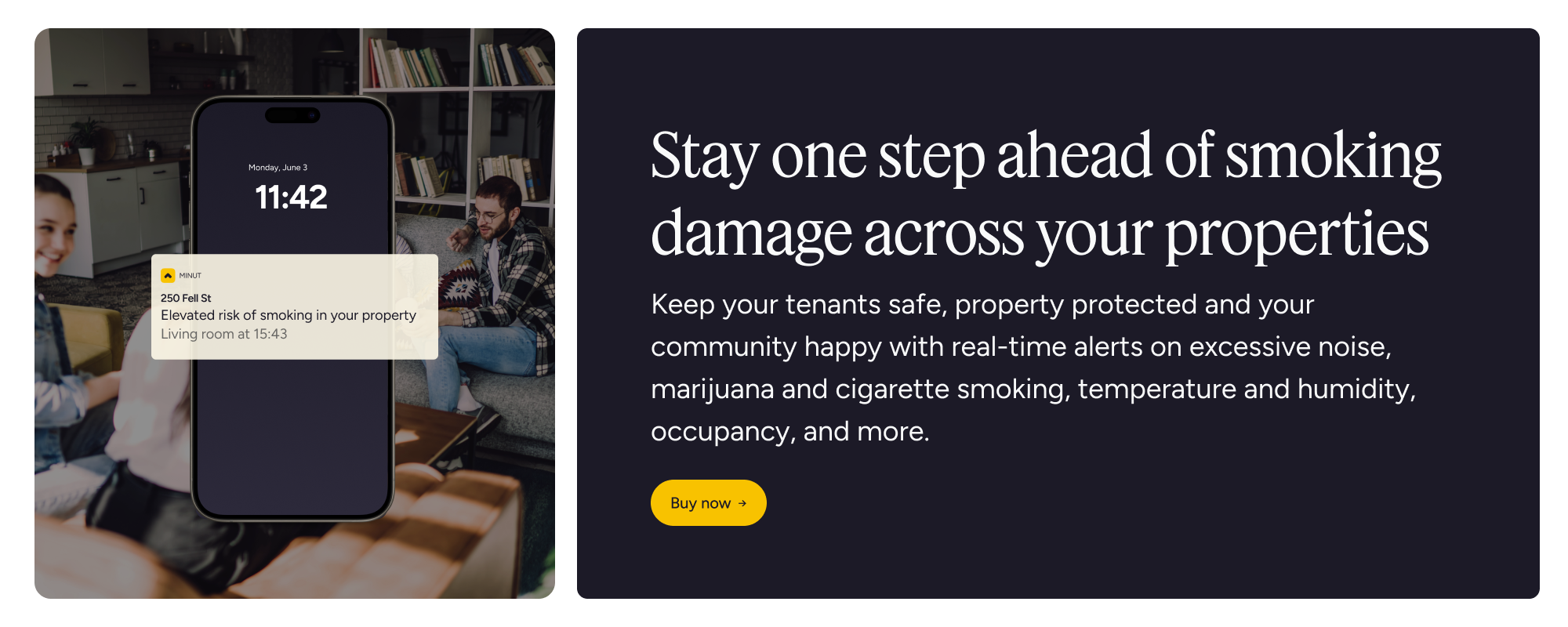
Smoke detectors are essential for fire safety, but they can't tell the difference between cigarette smoke and real danger. Minut's smoke detection solves this by identifying cigarette smoke in real time. The sensor monitors the environment, not the guest, and sends an instant, timestamped alert you can use to enforce no-smoking policies and back up a claim if you need to.
Designate a smoking area outside
Provide seating and ashtrays, or a covered area outside, to encourage smokers not to smoke inside.
Regularly inspect the property
Walk through the apartment between stays, or occasionally during longer leases, to catch signs of smoke or damage early.
These protective measures reduce the risk of dealing with smoke smells in the future. It's about safeguarding your property and keeping the space pleasant for every new renter or guest.
Keeping your property fresh
Dealing with smoke odors in a rental property can feel overwhelming, but it doesn't have to be. By airing out rooms, using natural odor absorbers like baking soda, performing a thorough deep clean with a vinegar solution, and considering professional treatment in the worst cases, you can remove cigarette smoke smell for good. Then use preventive measures — a strict no smoking policy, Minut's cigarette smoke detection, and regular inspections — to keep it from happening again.
Eliminating smells is only half the battle. Preventing new smoke residue buildup is what protects your investment in the long run. Whether you're a landlord managing a single unit or a professional overseeing multiple properties, a smoke-free environment improves indoor air quality, keeps tenants happy, and safeguards your property value.
Want to catch smoking before it turns into a cleanup job? Minut gives you real-time data on noise, occupancy, and smoke detection, with a timestamped record you can use to keep your rental fresh and resolve disputes for years to come.






.jpeg)