Denver short-term rental laws: guide for hosts 2026
This article explains how Denver regulates short-term rentals and what you must do to stay compliant, from proving primary residence to getting licensed, handling taxes, and meeting documentation and safety expectations.
As of 2025, Denver is one of the strictest short-term rental (STR) markets in the United States, and the rules are enforced with real teeth. If you’re operating in the Mile High City, or advising owners who are, this guide distills what you need to know to stay compliant and protect your business under current Denver short-term rental laws.
Short-term rentals in Denver are legal only if the host lives in the property as their full-time primary residence and obtains the required city licenses.
That single sentence captures the heart of Denver’s policy. From licensing and taxes to safety inspections and advertising rules, the city has built a system designed to preserve neighborhood stability while accommodating responsible hosting. The good news: when you understand the framework, you can operate confidently and proactively, simultaneously protecting your guests, your properties, and your brand.
To ground the guidance below, we reference the city’s current rules and FAQs, 2025 noise ordinance updates, and recent enforcement and market data. You’ll see links to official pages throughout for quick verification and deeper reading.
What counts as an STR in Denver
Denver defines a short-term rental as lodging for fewer than 30 consecutive days. STRs are treated as an accessory use of a dwelling that is also a host’s primary residence. The city is explicit: you can have only one primary residence, and you must actually live there.
Owners and tenants can operate STRs in Denver, but both must meet the same licensing and compliance standards, and tenants also need written permission from their landlord. The City’s STR license hub explains that a license is needed “if you rent a property to guests for fewer than 29 nights at one time” and that a primary residence is “the place in which a person’s habitation is fixed for the term of the license and is the person’s usual place of return. A person can have only one primary residence.”
Licensing requirements
For any stay under 30 nights, licensing is non-negotiable. Denver’s processes are thorough and timelines matter when you’re planning go-live dates or renewals.
Who needs a license
Anyone offering stays of fewer than 30 days within the city limits must hold an STR business license tied to the property that is their primary residence. This applies across single-family homes, condos, apartments, and eligible accessory dwelling units (ADUs), subject to zoning and HOA constraints. The City’s core requirements are clarified further in the Short-term rental FAQ.
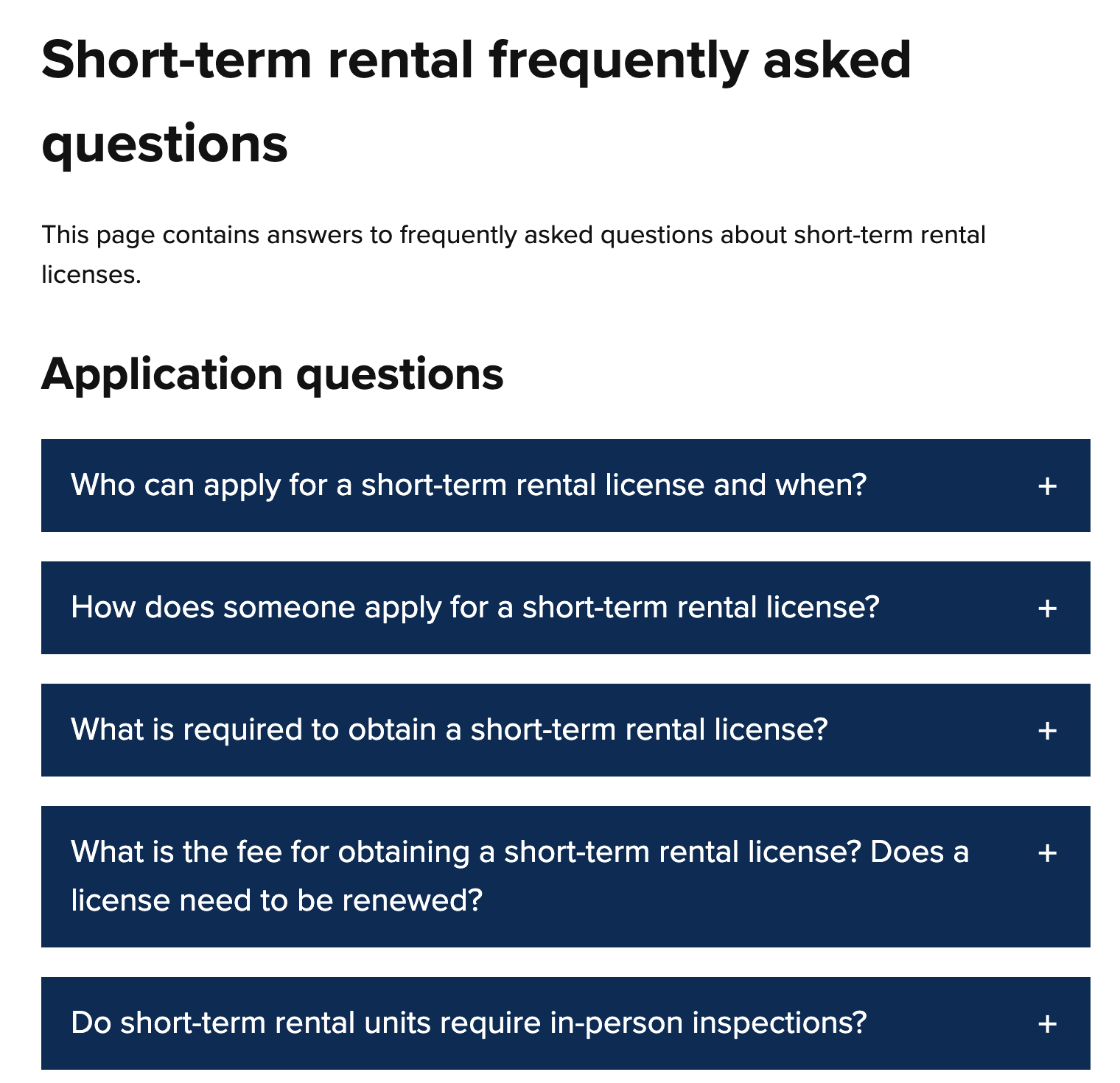
Denver's short-term rental FAQ page
Fees, timelines, and renewal
As of 2025, the City generally reviews initial STR applications within 30 days, and specialist reviews can take up to 90 days. Processing times can fluctuate, so always check the portal for current estimates. Annual renewals are required, and licensees must update contact details promptly whenever they change. You must display your license number on every advertisement, including Airbnb and Vrbo. For current processing guidance and advertising requirements, consult the City’s official short-term rentals FAQs page.
Required documentation
Expect to provide evidence that the address is your primary residence, along with key safety, tax, and ownership or occupancy documents. In practice, applications often include the following, but remember that these requirements may change in the future so always check official documentation before making a decision:
Proof of primary residence. Acceptable documentation includes a driver’s license, voter registration, vehicle registration, address of record on tax returns, and recent utility or similar statements. The City may verify across public, tax, and utility records.
Proof of ownership or a landlord permission affidavit. Tenants must secure permission from their landlord and retain it on file.
A floor plan noting safety equipment, plus a Lodger’s Tax account number. See the application expectations on the Short-term rentals license page.
Liability insurance. STR rules require notification to your insurer and a minimum of $1,000,000 in aggregate liability coverage, or equivalent platform coverage per transaction. Where applicable, HOAs must be notified. Requirements are outlined in Denver’s 2019 STR rules.
The 2019 rules also state that although HOA or condo approval is not uploaded in every case, you must obtain and retain it when governing documents prohibit or restrict STR activity. The City can request it during review or enforcement.
Primary residence rule and verification
Primary residence is the cornerstone of Denver’s STR policy. The City uses multiple indicators to verify the claim, including but not limited to:
Where you usually return
The address used on legal and tax documents
Vehicle registration
Voter registration
Whether the applicant is actively deployed in the US military
Only the host’s primary residence is eligible for a standard STR license, and the City has shown a willingness to revoke licenses when primary residence is misrepresented. If you want to rent a non-primary unit, you need a lodging facility license, but it’s important to note that only certain zone districts can have lodging facilities, and it might be necessary for a change of building occupancy classification.
Safety and inspections
Life-safety readiness is as important as your paperwork. The City requires working smoke alarms, carbon monoxide detectors where required by code, a fire extinguisher, clear emergency exit instructions, and an accurate floor plan indicating safety equipment. Inspections may occur randomly, during complaint investigations, or as part of specialist reviews.
Noise and events
In 2025, Denver modernized its citywide noise ordinance. Typical residential limits are 55 dBA from 7 a.m. to 10 p.m. and 50 dBA overnight, and violations can trigger enforcement by the Department of Public Health & Environment or police.
STRs must rent to a single party at a time and cannot host events such as weddings, fund raisers, or similar gatherings. These limitations are codified in the Denver Zoning Code Interpretation.
Denver STRs are subject to multiple layers of taxes that may be collected by the platform or must be remitted by you. The City’s Treasury guidance puts the responsibility on operators to ensure taxes are registered and paid correctly.
Denver Lodger’s Tax
As of 2025, Denver’s Lodger’s Tax rate is 10.75% and applies to lodging under 30 days. It’s charged on the total price including rent and applicable fees and must be collected at the time of sale. STR operators must establish and maintain a Lodger’s Tax account with the City.
The same guidance notes the City’s Occupational Privilege Tax (OPT) for business activity within Denver. Hotels with 50 or more rooms also owe an additional 1% Tourism Improvement District (TID) tax. While that specific surcharge targets large hotels rather than STRs, it illustrates how lodging-related tax layers can vary by asset type.
State and related lodging taxes
Colorado state and special district taxes can apply to STRs, and rates vary by location and component. Platforms may not always collect every applicable tax on your behalf. The City emphasizes that hosts remain responsible for Lodger’s Tax registration and remittance where a platform does not collect.
Advertising and platform compliance
Denver pairs strict licensing with equally strict advertising and on-site requirements. The Short-term rental FAQs state that you must:
Display the City license number on every advertisement and listing. Denver monitors platforms for compliance and platforms may be required to verify license numbers.
Provide guests with contact information, house rules, and city service details in a brochure at the property, and designate a local responsible party when you are away.
Limit bookings to a single party at a time and prohibit events such as weddings.
Hosts don’t need to be physically present during guest stays, provided the contact, brochure, and responsible-party requirements are met.
Quick compliance checklist
Running a lawful STR in Denver requires getting the fundamentals right and keeping them up to date. At a minimum, you should have:
A true primary residence
An active STR business license with the number displayed on every listing, plus a Lodger’s Tax account
Liability insurance with at least $1,000,000 aggregate coverage or platform coverage that meets or exceeds that standard
A clear floor plan and required safety equipment (smoke alarms, CO detectors where required, fire extinguisher, emergency exit instructions), and readiness for inspections
Documentation on file: proof of residence, proof of ownership or landlord consent, HOA/condo approval if applicable, and a designated local responsible party for when you are away
Tax registration and compliant collection/remittance for the 10.75% Denver Lodger’s Tax, with awareness that platforms may not collect all applicable taxes on your behalf
Accurate advertising and on-site brochures with emergency contacts, house rules, and safety information; bookings limited to a single party at a time with no events
Annual license renewal and prompt updates to contact details with Excise & Licenses.
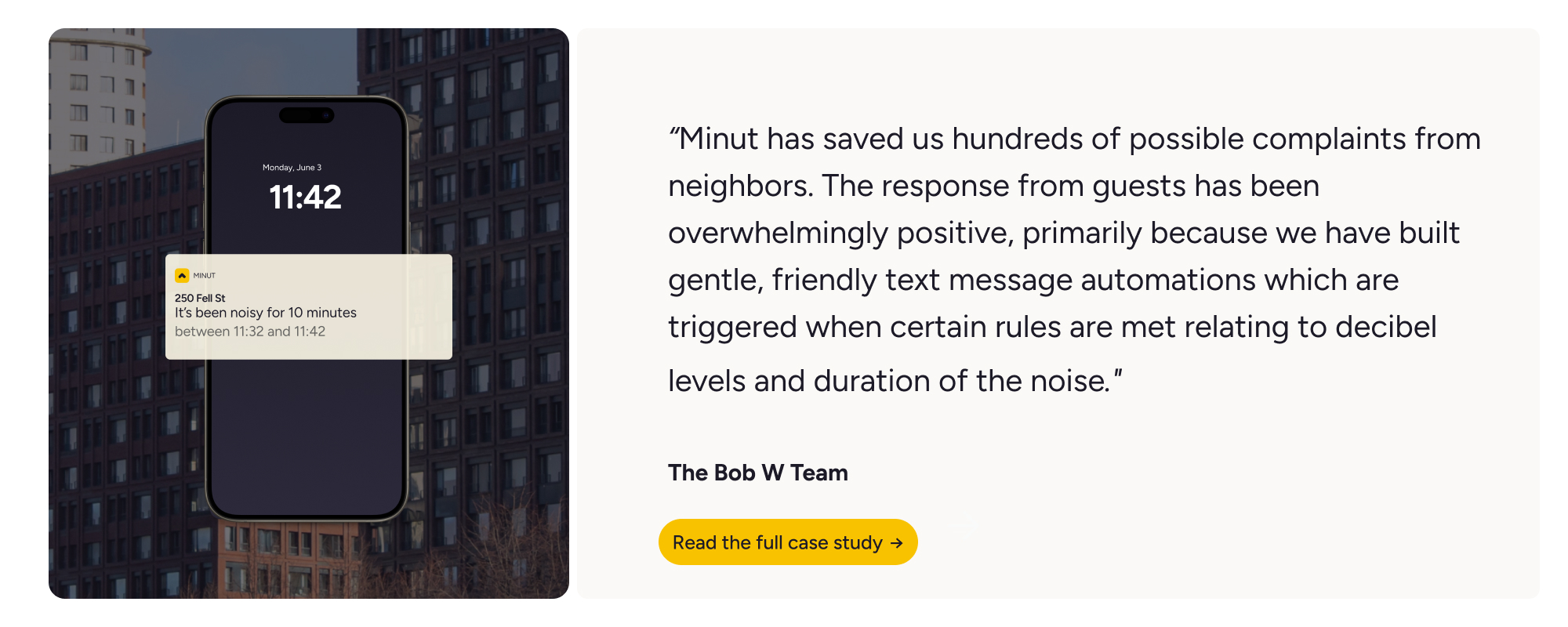
For noise and house rule enforcement, privacy-safe monitoring can help you resolve issues before they escalate.
Final takeaways
Denver short-term rental laws are clear and consistently enforced. To operate legally, you must live in the STR as your primary residence, secure the STR license and a Lodger’s Tax account, meet safety and insurance requirements, and follow strict advertising and operational rules. The City’s timelines, tax obligations, and 2025 noise standards make proactive, privacy-forward operations essential. When you combine meticulous compliance with smart guest communication and noise prevention, you protect your reputation, your neighbors, and your revenue.
FAQs
Can I short-term rent an investment property or second home in Denver?
No. Only a host’s primary residence is eligible for an STR license in Denver. Non-primary residences seeking nightly operations may require a lodging facility license in a permitted zone district.
Can tenants operate a short-term rental?
Yes, but tenants must meet all licensing and safety requirements and obtain a landlord permission affidavit.
Do platforms handle my taxes?
Sometimes. Denver emphasizes that platforms may not collect every applicable tax for you. You must maintain a Lodger’s Tax account and remit when required.
Do I need insurance?
Yes. STR rules require you to notify your insurer and maintain at least $1,000,000 aggregate liability coverage or conduct each transaction through a platform with equivalent coverage.
What about noise and events?
Denver’s 2025 noise ordinance sets typical residential limits at 55 dBA by day and 50 dBA at night. STRs cannot be used for events and must rent to a single party at a time.
Disclaimer
This guide is provided for informational purposes only and does not constitute legal or tax advice. Regulations and tax rates change, and enforcement practices evolve. Always consult the City and County of Denver’s official resources and your legal or tax advisor before making operational decisions.










.png)