Quiet hours rules for vacation rentals: what hosts need to know
Learn how quiet hours rules work for vacation rentals, what hosts are responsible for, and how to prevent noise complaints while staying compliant using privacy-safe monitoring tools.
Noise is one of the most common friction points in short-term rentals. It’s the root of many city citations and a frequent trigger for listing penalties on booking platforms.
Your first line of defense is having clear, enforceable quiet hours rules. They preserve sleep, head off neighborhood noise complaints, and protect both your revenue and reputation.
This article will break down what quiet hours rules mean in practice, the typical acceptable decibel levels at night, how enforcement works, and how privacy-safe noise monitoring helps you comply without compromising guest trust. It will also cover best practices for communicating guest noise rules, what to avoid, and how Minut can help you automate enforcement across an entire portfolio.
What are quiet hours rules?
Quiet hours rules define the times when sound must be reduced, to protect rest and quality of life. While general nuisance or “disturbing the peace” standards can apply 24/7, quiet hours focus on the night window, when acceptable decibel levels are lowest.
Jurisdictions typically set nighttime starting around 10:00 p.m. and ending between 7:00 a.m. and 9:00 a.m. For example, the Los Angeles Municipal Code defines nighttime as 10:00 p.m. to 7:00 a.m. and presumes residential nighttime ambient noise around 40 dB(A), which informs enforcement thresholds.
It’s also useful to distinguish between city-by-law “local noise ordinances” and platform policies. Cities enforce quiet hours through fixed decibel caps, “plainly audible” tests, or bans on amplified sound. Platforms can apply their own guest noise rules and sanctions, including warnings, suspensions, and delisting for repeat violations. You need to meet both: local law and platform standards such as Airbnb quiet hours.
Quiet hours rules for vacation rentals vs. residential rentals
Vacation rental quiet hours rules tend to be stricter and more prescriptive than those in long-term residential housing. There are three reasons for this higher scrutiny:
Transience and turnover increase the risk of gatherings.
STR regulations often prioritize neighborhood peace to balance tourism with livability.
Enforcement needs to be simple and fast for field officers, which favors bright-line standards.
Many STR regulations go beyond basic night windows and ban specific sound sources at all times. Palm Springs, for example, bans amplified sound outdoors around the clock.
As a host or property manager, your short-term rental compliance plan should reconcile city code, building policy, and platform expectations, and set clear vacation rental quiet hours guests can understand and respect.
Acceptable noise levels during quiet hours
If you manage a mixed portfolio across cities, you’ve no doubt already noticed there are different approaches to thresholds. Some jurisdictions define interior nighttime caps directly. San Francisco, for instance, sets a fixed interior night limit of 45 dB(A) in sleeping and living rooms from 10:00 p.m. to 7:00 a.m.
Others rely on a blend of “ambient + X dBA” and “plainly audible” standards for practical enforcement in the field. Miami Beach treats noise plainly audible at 100 feet between 11:00 p.m. and 7:00 a.m. “as prima facie evidence of a violation of the Ordinances.”
Beyond the code landscape, public health guidance is remarkably consistent. The World Health Organization recommends annual average night levels outside bedrooms below 40–45 dB(A) to protect sleep. In practice, that aligns with “normal conversation” inside a home and far below party music or shout-filled gatherings.
As a simple rule of thumb for hosts:
At night, interior acceptable decibel levels typically hover in the 40–45 dB(A) range.
Daytime allowances are higher but still subject to limits based on zone and measurement location.
Because noise levels by time of day and enforcement methods vary, expect exact caps to change city by city. That’s why clear quiet hours rules in your house manual help anchor guest behavior, especially when framed with examples like “quiet conversation on the balcony is fine, but music that carries beyond the property line is not.”
How quiet hours rules are enforced
Enforcement spans neighbors, city agencies, and platforms.
First, neighbors make complaints. In New York City, there were over 610,000 noise complaints, representing a 19% year-over-year increase, according to the State Comptroller’s monitoring tool.
Second, cities issue fines. Enforcement is getting smarter, with technology augmenting field response. New York City expanded automated “noise cameras” to cite vehicles at an 85 dB trigger, with fines up to $2,500. Although these cameras target vehicles, the approach mirrors the way many municipalities are codifying measure-based standards and tightening nighttime controls neighborhood by neighborhood.
Third, platforms take action. Airbnb enforces a global party ban and uses machine-learning screening to block or redirect high-risk bookings. During U.S. summer holidays in 2024 alone, about 51,000 bookings were blocked.
Finally, property managers intervene. Many STR codes require a local, 24/7 contact able to respond within a set window. Arizona law, for example, authorizes cities to require timely complaint response and a reachable point of contact at all times.
Together, these steps create real consequences for violating quiet hours rules, reinforcing why prevention matters more than reaction.
Are Airbnb hosts responsible for guest noise?
Yes. Host responsibilities include taking reasonable steps to prevent parties and to enforce noise rules for vacation rentals. Airbnb expects hosts to publish clear house rules, communicate quiet hours ahead of time, and act quickly if noise escalates. Repeated violations can damage your listing performance and possibly lead to suspension.
How to prevent noise violations without violating guest privacy
Guests deserve a relaxing, private stay. Neighbors deserve quiet. The right way to ensure both is privacy-safe noise monitoring. Indoor cameras aren’t permitted by most platforms, and would be an invasion of guest privacy. Similarly, recording audio is a non-starter.
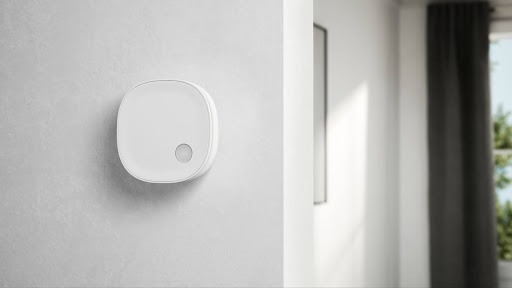
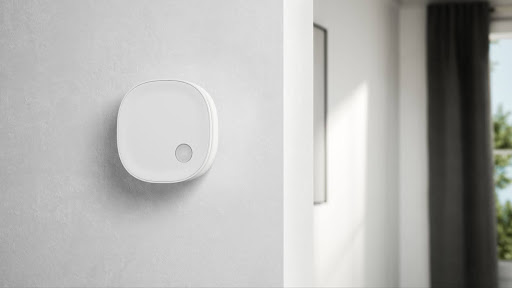
A noise monitor, such as Minut’s, measures sound levels, not speech, so no conversation is ever heard or recorded.
Minut's privacy-first monitoring sensor
Here’s what that means in practice:
A noise monitoring device should track decibel levels and duration, never content.
Processing should happen on the device whenever possible, transmitting only the essential data points required to resolve issues.
Clear disclosure to the guests sets expectations and supports consent-based automated messaging where applicable.
How Minut helps hosts enforce quiet hours rules
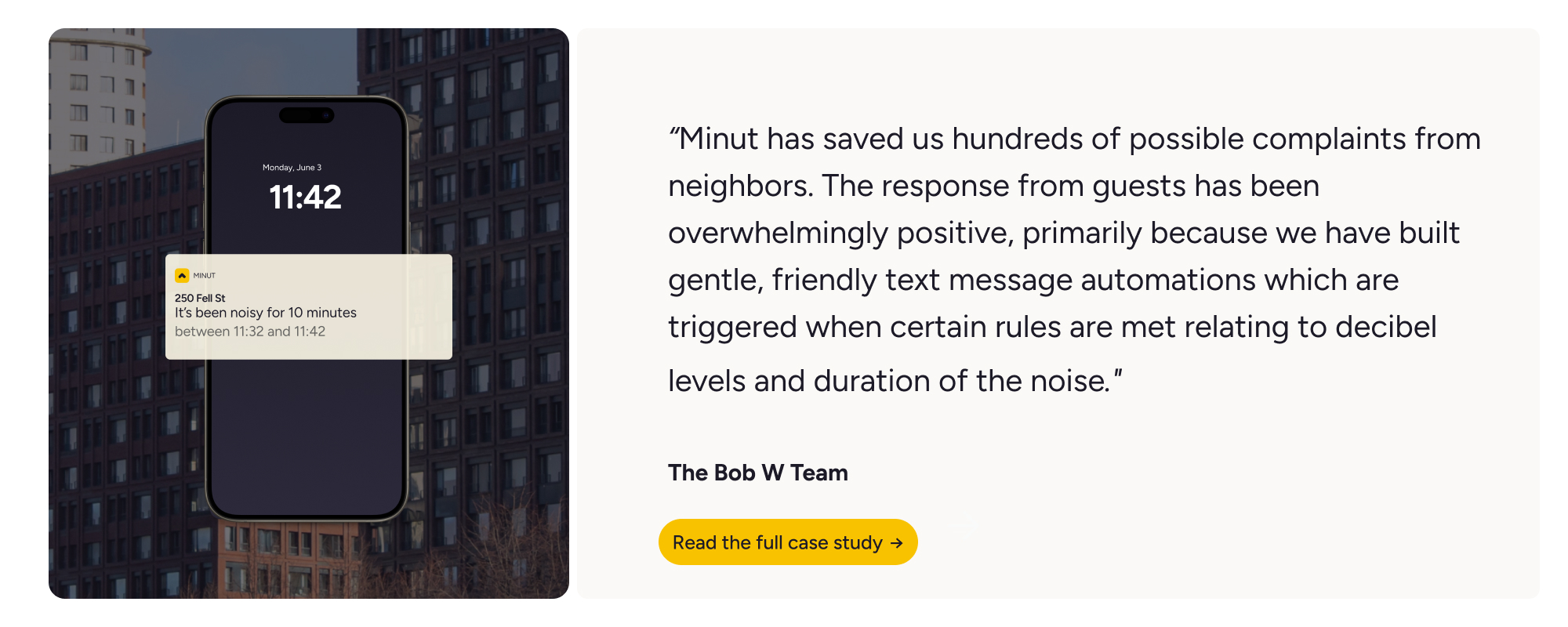
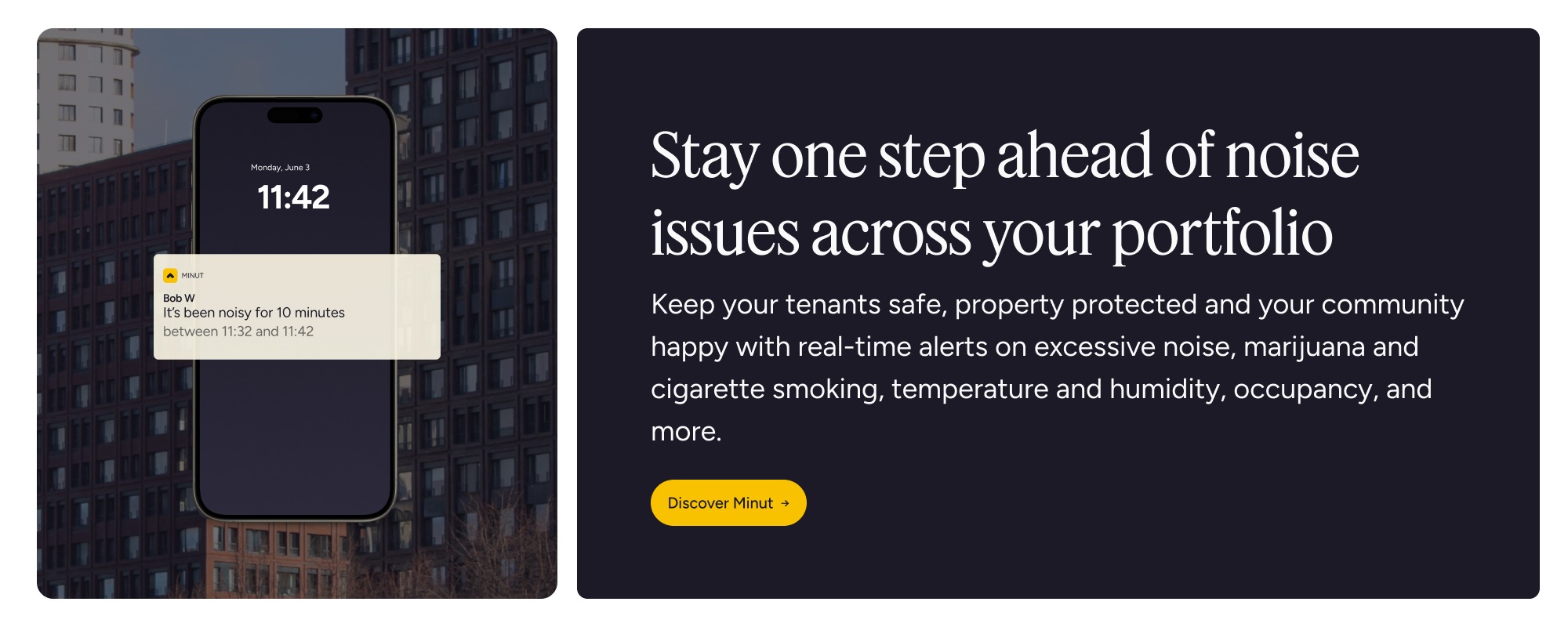
Minut monitors noise levels without recording audio, and you can set your own thresholds so daytime fun doesn’t turn into a nighttime violation. When noise exceeds your set threshold for a sustained period, Minut can send an automated, friendly reminder to the guest. This proactive approach helps hosts maintain compliance with local ordinances, like Miami Beach's "plainly audible at 100 feet" standard or San Francisco's decibel limits, without invasive surveillance, giving guests a chance to self-correct before issues escalate.
For added peace of mind, Minut provides detailed noise reports and historical data logs that can be easily shared with authorities or platforms like Airbnb. These records demonstrate a host's commitment to quiet hours, helping avoid fines or suspensions.
Best practices for setting and communicating quiet hours rules
Clarity is your friend. Post your vacation rental quiet hours in the listing, in your house manual, and on a visible sign inside the home. Use plain language: “Quiet hours are 10 p.m.–7 a.m., please keep voices low outside and move conversations indoors after 9 p.m.” works better than legalese.
Automate messaging so reminders arrive at the right moment. Scheduling a pre‑arrival note that summarizes guest noise rules, plus a friendly check‑in evening reminder, reduces the odds of accidental violations. Then, if measured noise persists during quiet hours, your system should send an automated text. Because thresholds are based on your local noise ordinances and your property’s layout, you can calibrate for your market and building.
Common quiet hours mistakes hosts make
The most frequent pitfalls are all preventable:
Not clearly defining quiet hours. Vague or missing house rules create ambiguity. Be explicit about start and end times, behavior expectations, and whether outdoor areas can be used at night.
Relying only on guest trust. Most guests are considerate, but a small percentage drives most issues. Proactive, privacy-safe noise monitoring during quiet hours removes guesswork and ensures you hear about a problem before a neighbor does.
Reacting too late to complaints. If your first alert is a neighbor’s message or a city warning, you’re already in a corrective mode. Automated reminders and early escalation protect relationships and compliance.
Ignoring local ordinances. Cities are codifying standards, and some now mandate technology. Fort Lauderdale, for example, requires a noise level detection device.
Quiet hours rules by city and region
Quiet hours rules vary widely by market, so it’s important to check your local code before you publish house rules. Here are representative approaches you’ll see across North America:
Los Angeles emphasizes a 10:00 p.m.–7:00 a.m. night window, presumes a 40 dB(A) nighttime ambient in residential zones, and targets “party houses” with escalating penalties when gatherings are loud or plainly audible at a distance. Read our guide to Los Angeles regulations here.
San Francisco fixes an interior nighttime limit of 45 dB(A) in sleeping and living areas from 10:00 p.m.–7:00 a.m., a clear benchmark for acceptable interior noise during quiet hours rules.
Miami Beach uses “plainly audible” at 100 feet between 11:00 p.m.–7:00 a.m. as prima facie evidence.
Scottsdale combines licensing with neighbor communication and a Good Neighbor Guide that emphasizes quiet from 10:00 p.m. to 9:00 a.m.
Palm Springs sets quiet hours from 10:00 p.m.–10:00 a.m. and bans any amplified outdoor music.
Final thoughts: stay compliant with quiet hours rules
Quiet hours rules protect what matters most: sleep, safety, and trust. For hosts and property managers, they also protect listing performance. The data is clear that noise triggers complaints, which is a symptom of your neighbors being unhappy. Prevention beats reaction every time.
Noise complaints in short-term rentals FAQs
What are quiet hours rules for vacation rentals?
They are time-based noise standards that require guests to keep sound below a particular level. Cities define the window and enforcement tests, and platforms can layer additional guest noise rules.
What time do quiet hours usually start?
Night quiet starting at 10:00 p.m. and ending between 7:00 and 9:00 a.m. is typical. Some resort towns, like Palm Springs, extend quiet hours until 10:00 a.m. and ban outdoor music entirely.
Are Airbnb hosts responsible for guest noise?
Yes. Hosts are expected to publish vacation rental quiet hours, communicate them clearly, and intervene if noise escalates.
Can hosts monitor noise without recording audio?
Absolutely. Privacy-safe noise monitoring measures decibel levels and duration only. Minut’s noise monitoring never records or listens to conversations and only monitors noise levels.
What happens if guests violate quiet hours?
Consequences can include neighbor complaints, city citations, platform penalties, and escalated host intervention. Persistent issues can put your listing at risk. Automated, friendly nudges during quiet hours resolve most incidents quickly, preserving guest experience and neighbor relations.
Do quiet hours rules apply during the day?
Most cities set stricter limits at night, but daytime noise is still regulated. Some jurisdictions also restrict outdoor amplified sound at all times for STRs.
How can hosts prevent repeat noise complaints?
Publish clear quiet hours for vacation rentals, automate pre‑stay and evening reminders, and use a privacy‑safe noise monitoring device that alerts you during quiet hours only.
Is using a noise monitoring device legal?
In most STR markets, yes, provided you’re measuring levels and not recording audio, and you disclose the device in your listing and house rules. Some locations even require noise monitoring devices, including Fort Lauderdale in the USA and Cantabria in Europe.







.jpeg)