Carbon monoxide in vacation rentals: A practical safety guide for hosts
Learn how to manage carbon monoxide in vacation rentals with practical guidance on prevention, detection, maintenance, guest communication, and safety routines.
Managing short-stay rentals means already juggling late check-ins, last‑minute fixes, and guest questions at odd hours. These things are all front and center clamoring for your attention.
Carbon monoxide (CO) belongs on that same operational list, but it’s much easier to overlook because it’s not frequently calling for you in the same way that issues with live bookings are. But if you’ve got anything in your property that could leak carbon monoxide, it’s essential that your routine workflow factors that in.
CO is an invisible, odorless gas created by incomplete combustion. That means guests can’t see or smell it to report it to you, and you won’t catch it on a video doorbell. That’s why the right mix of prevention, detection, and a clear response plan has to live in your day‑to‑day workflow, just like cleaning and key exchange.
Where carbon monoxide can come from in a vacation rental
To build a repeatable routine, you need to start by mapping your potential sources. This gives you a clear checklist to work from on every turnover and inspection.
Fuel‑burning heating systems and appliances
Furnaces and boilers that aren’t serviced on schedule are prime suspects. A cracked heat exchanger or poorly adjusted burner can create CO. Fireplaces are also a common source, especially when flues are blocked or dampers are left closed.
Kitchens and hot water
Gas stoves, ovens, and tank‑style water heaters create combustion byproducts every time they run. Ventilation should move these outside, but if vents are blocked or the appliance is mis‑installed, it’s a problem.
Attached garages and vehicles
You may think you don’t need a carbon monoxide detector if your rental unit doesn’t have any potential sources of CO, but that depends on whether it can still enter your unit from elsewhere. For example, vehicles running in an attached garage, or travelling through ductwork from a neighboring apartment.
Blocked or poorly functioning vents
Dryer vents jammed with lint. Bird nests in flues. Snow piled against high‑efficiency furnace intakes. These are the kinds of issues that are easy to miss, but can be very consequential.
Improper installation or malfunction
Malfunctions can mean that an appliance that was safe last month is now directing CO into your property, which is why inspections need to be on a regular schedule and not only at the time of installation or when you moved in.
How to prevent carbon monoxide in vacation rentals
The first step is to look at prevention as a part of your ongoing maintenance, like cleaning between bookings. If you’re checking your smoke and CO detector once or twice a year, or even once a month, you can’t be sure that it hasn’t stopped working and your current guests are unprotected.
Here are some steps to take to prevent that:
Book real servicing: Only let qualified techs service furnaces, boilers, fireplaces, and water heaters, and have this done on a set cadence, with combustion safety checks and written notes.
Keep vents and flues clear: During every property inspection, look for disconnected draft hoods, crushed ducts, or lint‑clogged dryer vents. After storms, make sure that exterior terminations aren’t blocked by snow or debris.
Install the right detectors, in the right places: A correctly installed, functioning CO alarm is part of responsible hosting, and platforms strongly encourage them. Many locations legally require them, too.
Test on a schedule: Put “press‑to‑test” on the turnover checklist. Replace batteries and whole devices per manufacturer guidance, and log each test.
Don’t rely on guests to spot issues: Guests don’t know your property, and they may not look for — or test — detectors. They’re relying on you to keep them safe during their stay.
Add CO tasks to inspections: On routine visits, have techs look at the integrity of vents, soot or scorch marks, and run a test draft at fireplaces. During turnovers, cleaners can look for obvious red flags like a blocked vent cover or a wall heater that won’t shut off.
Keep records: Maintain a log of inspections, detector tests, and service invoices. When something needs to be followed up, make it a visible tracked task, not a text.
Smoke alarms vs. carbon monoxide detectors
Smoke and CO are different hazards, and the devices that detect them are designed for different jobs. Unless you have a combined device, you’ll need both in order to get alerts for each.
Device
Detects
Why it matters in a short stay
Smoke alarm
Particles from flaming or smoldering fires
Alerts guests to a fire quickly
CO detector
Carbon monoxide gas
Warns when CO is present
Combined smoke + CO
Both hazards in one unit
Simplifies installs and testing, often the cleanest path for hosts
Communicating carbon monoxide safety to guests
Guests don’t need a lecture or a lengthy instruction book. Just provide clear, quick instructions they’ll remember during an emergency in the middle of the night. One short section labeled “Alarms and emergencies” in your house manual and arrival guide is enough:
What the CO alarm sounds like and what to do if it goes off.
Where to go outside and which number to call.
The host’s or manager’s 24/7 contact.
Minut’s Smoke & CO detector
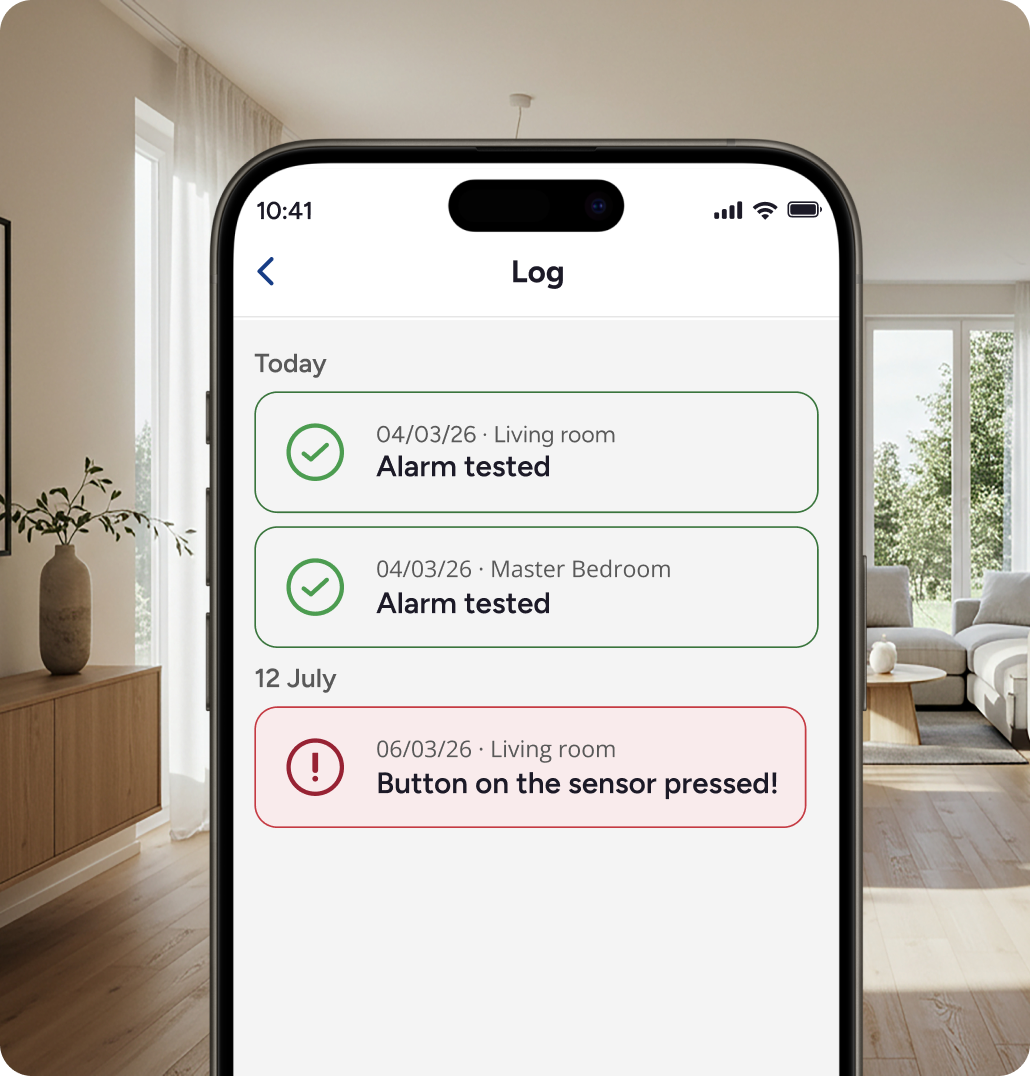
Minut A1 is our smoke & CO alarm designed for short-term rentals. Currently available in the US, it meets UL 217 & 2034 standards, can test itself between every booking, keeps a log of every test, and sends you a real-time notification if it detects smoke or carbon monoxide. At any time, you can open the Minut app and check the status of the detector in each of your rental units, giving you peace of mind that every guest is protected.
If you have multiple A1 devices in a property, they can interconnect so if one goes off, they all go off. This alerts the entire rental unit instead of only the room where the smoke or CO was detected.
Carbon monoxide safety in a short-term rental comes down to working, correctly placed detection; regular maintenance; clear guest communication; and a response plan everyone can follow in an emergency. Because hosts often manage properties remotely, and guests are unfamiliar with the space, those systems need to work without someone being on site.
Minut’s A1 Smoke + CO alarm was built for the realities of short-term rentals. Beyond standard alarm functionality, it adds automatic testing between stays, real-time alerts, tamper detection, and a compliance record. That helps you confirm detection was in place for every booking, while keeping guest privacy front and center.
For more on building robust safety into your vacation rentals, including CO protection, watch our interview with safety rental expert Justin Ford:
FAQs
What causes carbon monoxide in vacation rentals?
CO in vacation rentals comes from the same places it comes from in any other property, and common sources are furnaces and boilers, gas water heaters, fireplaces, gas stoves and ovens, and vehicles in attached garages.
Where should a CO detector be placed in a vacation rental?
Follow the manufacturer’s instructions and any local rules. Generally, alarms should be near sleeping areas and on each level, with additional coverage near fuel‑burning appliances and garages when required.
How often should vacation rental CO detectors be tested?
Detectors should be tested between every reservation, as that’s the only one you’ll know that every guest is protected. This is why Minut A1 can test itself before every stay begins.
Can a smoke detector detect carbon monoxide?
No, standalone smoke alarms detect particles from fire. CO detectors sense carbon monoxide gas. However, you can buy combined smoke and CO devices which cover both hazards in one unit, like the Minut A1.








.png)
.png)