Aparthotels don’t quite fit the mold. They blend the independence of serviced apartments with the brand standards and reliability of hotels. Stays can stretch from a couple of nights to a few months. Guests might never meet a front-desk agent, and housekeeping schedules flex with length of stay, not just room status. That’s why a standard hotel property management system often feels like an awkward suit: formal, structured, and just a little too stiff for the job.
But the story doesn’t end there. The modern hotel property management system has evolved. Cloud-native platforms, open APIs, and app marketplaces mean aparthotels can configure hotel software to run self-service operations at scale, without sacrificing control or guest experience. Layer in integrations for access control, privacy-first monitoring like Minut, and automated communications, and you have a stack that bridges the gap between hotel-grade infrastructure and serviced apartment flexibility.
In this guide, we'll look at how to adapt a hotel property management system to the aparthotel model, where to expect friction, and the integrations that close the gap.
Why hotel systems often miss the mark for aparthotels
Hotel PMS platforms were built around nightly stays, front desk check-ins, and rapid room turnovers. Aparthotels rarely follow that choreography. Extended stays complicate things like housekeeping cadences. Unmanned buildings require robust identity, payments, and access control orchestration. And hybrid demand that mixes leisure, corporate, and mid-stay guests requires different reporting and communications.
It’s no surprise many aparthotel teams try a PMS and feel constrained by default workflows. Still, the market is shifting. Persistent labor gaps mean operators need automation and mobile workflows more than ever, with 65% of U.S. hotels reporting staffing shortages at the turn of 2025, most acutely in housekeeping and front office roles, which accelerates demand for smarter systems and self-service journeys. If your tech can pick up more of the load, you’ll scale with consistency.
Understanding the aparthotel model
Aparthotels replace corridors of identical rooms with a mix of studios and apartments, then deliver on hotel-level brand standards. Differences matter:
Self-service vs staffed: Many aparthotels are lean, with minimal on-site teams. Identity, payments, and access need to work in concert without a traditional check-in desk.
Stay patterns: Longer stays drive variable housekeeping cycles and mid-stay maintenance needs. You need workflows that are triggered by stay length or guest preferences rather than rigid departure rules.
Dual mandate: Aparthotels balance hospitality (service, standards, reviews) and property management (asset care, compliance, neighbor relations).
In a market where occupancy and revenue performance have become more uneven, flexibility is a commercial advantage. The operators that tailor operations to extended-stay and urban demand can defend profitability even when the cycle shifts.
Why hotel property management systems still matter
PMS platforms are the operational backbone connecting availability, reservations, rates, billing, housekeeping, and reporting. And that backbone is modernizing.
For aparthotel teams, a modern hotel property management system offers:
Centralized control across multi-property, multi-building portfolios
Consistent brand standards and audit trails
Native hooks for automation and integrations across access, communications, monitoring, maintenance, and accounting
Where standard hotel PMS falls short for aparthotels
Even updated hotel systems can feel rigid out of the box. Common friction points include:
Fixed arrivals and departures: Standard workflows optimize for nightly stays and scheduled check-ins, not rolling, identity-first, contactless arrivals across time windows.
Access orchestration gaps: Without built-in, flexible access control, you’re juggling spreadsheets of codes or manual key handoffs. Yet only 14% of branded hotel guests used a digital key in real-world stays industry-wide, despite significant interest — proof that execution and integration matter.
Housekeeping cadence: Nightly “clean on departure” logic doesn’t solve mid-stay refreshes for 10-, 30-, or 60-day bookings.
Reporting blind spots: Hybrid B2B and B2C demand, longer folios, and unit-level maintenance events demand a different reporting vocabulary.
Amenity and maintenance oversight: In-room appliances, HVAC, and mid-stay issues become more like multifamily operations than classic hotel engineering.
None of these are deal-breakers. Rather, they’re the to-do list for configuration and integration.
Customizing a hotel property management system for aparthotel operations
Here are some of the ways a hotel PMS can be configured for aparthotels:
Adapt bookings, billing, and housekeeping to stay length
Start with the core. Configure your hotel property management system to support weekly and monthly rate plans, prorated billing, and longer folios. Map housekeeping to length of stay rather than departure, and trigger mid-stay cleans and inspections based on rules, not manual spreadsheets. Teams that build automation into housekeeping and tasking workflows get more done with fewer steps.
Orchestrate contactless operations end to end
When arrivals, identity, payments, and access line up, your front desk becomes a digital flow. That orchestration happens best in your PMS and connected apps:
Identity and payments: Use pre-arrival flows to validate IDs and settle deposits before check-in.
Access control: Connect your PMS to smart locks or keypad systems so that codes or mobile keys are generated and revoked automatically at reservation boundaries.
Guest messaging: Automate pre-arrival guidance and on-stay communications via your CRM or messaging app to reduce inbound questions.
Add privacy-first monitoring to protect experience and assets
For aparthotels operating in residential buildings or mixed-use blocks, proactive, privacy-safe monitoring is essential to protect guest experience and community relations.
Combine that with environmental monitoring — temperature, humidity, and mold risk — and you reduce maintenance surprises and protect units throughout longer stays.
A stack that works: PMS + keyless entry + Minut + accounting
We often see aparthotels succeed with a focused, interoperable stack:
Cloud PMS as the source of truth for reservations, folios, and unit status
Access control integration that issues and revokes keys automatically
Minut for privacy-first noise and occupancy monitoring with automated guest communication
Accounting that supports prorated billing and corporate invoicing
With the right plumbing, many tasks become background workflows, such as quiet-hours enforcement or mid-stay cleans.
Critical integrations to close the gaps
The difference between “this PMS isn’t built for us” and “this runs itself” is usually integration depth. Focus on these categories, and prioritize API-friendly systems.
Access control and digital keys
Connect your hotel property management system to smart locks, keypad systems, or mobile key providers. Trigger code issuance and revocation from reservation events, not manual tasks. Strong guest adoption requires hardware readiness and a frictionless mobile journey, which is why orchestration inside the PMS and brand apps is key.
Monitoring and disturbance prevention
Add Minut across your portfolio for decibel-only monitoring, occupancy trend detection, and automated guest messaging. A small number of incidents can drag down reviews, and disturb the neighbors. Automation keeps teams off the phone while protecting experience and community relations.
Accounting and invoicing
Long-stay and corporate accounts need flexible invoicing, deposits, and payment terms. Connect your PMS to accounting and streamline multi-week folios and consolidate billing for business clients.
Guest experience and communications
Integrate pre-arrival and on-stay messaging, digital guidebooks, and review management with your PMS so communications reflect the right reservation context automatically. Mobile-first communications are not only efficient, they correlate with higher satisfaction in recent studies, making them a lever for your brand reputation.
Example of an aparthotel tech stack that delivers
Consider a mid-sized aparthotel brand operating in European capitals. The team uses a cloud PMS to manage inventory and rates across multiple buildings, then layers in access control and privacy-first monitoring:
PMS powers weekly and monthly rate plans, prorated billing, and mid-stay housekeeping schedules.
Smart locks generate access codes automatically at booking, and revoke them at checkout.
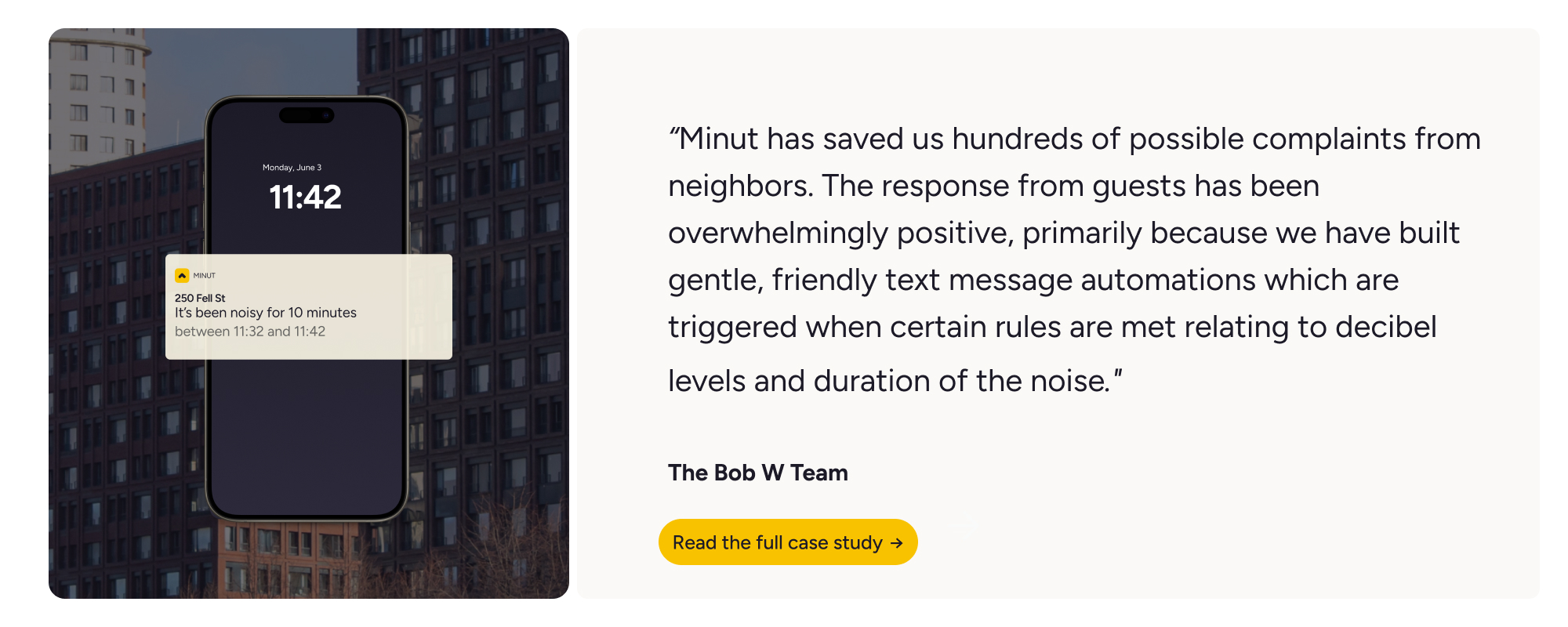
Minut monitors for sustained noise patterns and automates guest-friendly nudges when thresholds are exceeded, while environmental monitoring flags humidity spikes to prevent mold in longer stays.
Accounting integrations handle consolidated billing for corporate guests and long-stay folios.
The result is a lean operation where teams spend less time on manual admin and more time on proactive care. For a real-world look at how hospitality brands weave privacy-first monitoring into a broader tech stack, take a look at our case studies.
Conclusion: the best PMS is the one that adapts
Aparthotels don’t need a different category of software. They need a different configuration. Start with a cloud, API-forward hotel property management system. Extend it with access control, guest communications, and privacy-first monitoring. Map housekeeping and billing to stay length. Then automate the moments that repeat: identity, access, quiet hours, mid-stay cleans, and invoicing.
When your PMS “talks” to the rest of your stack, you run more like a platform and less like a patchwork of one-off tools. Guests get reliable, contactless service. Neighbors get a quiet night. Your team gets to focus on the work that grows the business.
FAQs
What’s the difference between a hotel management system and a PMS?
“Hotel management system” is often used interchangeably with PMS, but strictly speaking, the PMS is the core operating system for reservations, rates, folios, housekeeping, and reporting. A broader hotel management system can include or integrate with other modules like CRM, RMS, access control, and guest communications. For aparthotels, the PMS is your backbone, while the rest of your “system” is the integrations you add for self-service, monitoring, and accounting.
Can aparthotels use a standard hotel property management system?
Yes. The key is configuration. Enable weekly and monthly rate plans, schedule housekeeping by stay length, and connect access control, messaging, and monitoring.
What integrations should aparthotels prioritize in their tech stack?
Focus on access control, guest communications, maintenance/tasking, accounting, and privacy-first monitoring.
How does Minut integrate with hotel property management software?
Minut pulls stay data from your PMS or channel platform to match sensors and alerts to the correct reservation and contact details. When sustained noise is detected, Minut can automatically text or call the guest with a friendly reminder that aligns with your house rules. You keep a clear audit trail that supports brand standards and, when needed, dispute resolution.
What are the benefits of cloud-based PMS for aparthotels?
Cloud PMS reduces on-premise overhead, centralizes multi-property management, and unlocks faster integrations. With open APIs and standards, aparthotels can orchestrate contactless arrivals, automate housekeeping, and connect monitoring.








.jpg)