Noise complaints in student housing: Best practices for property managers
Learn the best practices for reducing noise complaints in student housing. Discover how property managers can improve after-hours operations, support resident wellbeing, and respond faster to disturbances.
At 11:52 p.m. on a Thursday, a party turns from music and laughter into thumps through the wall. By 12:07 a.m., two residents on the floor below have logged noise complaints. Your office is closed, the Resident Assistant is in bed before a 9 a.m. exam, and security covers three buildings across campus. This is the operational reality of purpose-built student accommodation. Noise rarely flares during office hours, and when it does flare, it spreads fast through high‑density floors and shared walls.
The goal isn’t to prevent students from making any noise, but to help property teams reduce after‑hours disturbances and repeat complaints. That’s the focus of this article: practical operations, better visibility, and quick, privacy‑safe interventions that protect resident wellbeing and your building’s reputation.
How to reduce after-hours noise complaints in student housing
The two big levers to cut after‑hours noise complaints in student housing without adding on‑site staff are improving operational visibility and intervening earlier. Pairing clear quiet‑hours policies with real‑time noise alerts that trigger automated reminders and defined escalations can resolve most incidents quickly, while creating timestamped records that support consistent enforcement.
The hidden cost of after-hours noise complaints
Noise complaints are likely to peak around evenings, weekends, holidays, exam celebrations, and game days. In other words, often falling outside of standard office hours, when teams have the least coverage and there's slower awareness and contact.
Noise is cited by 56% of university PBSA and 47% of private PBSA renters as a factor that would stop students recommending their term-time accommodation. Those figures make noise a bigger problem for students than room size, amenities, and even infestations.
Sleep disruption, pre‑exam stress, and chronic disturbance all drain resident wellbeing. The consequences of this are significant: that shows up as concentration issues, missed morning labs, and lower overall satisfaction.
Property teams spend more time managing complaints
Every post‑incident response creates a paper trail: emails, call logs, RA notes, and portal records. Now add investigations after the fact, when evidence is likely to be thin. Teams lose hours validating competing versions of “how loud” and “how long” the incident was, whereas an early warning would have allowed a friendly nudge that could stop the problem in minutes.
Why traditional complaint handling doesn’t always work
Most complaint workflows are reactive, relying on reports that arrive after the event.
Common approaches look like this:
Residents log issues overnight, staff review in the morning
RAs document incidents while juggling community duties
Security does timed patrols that may miss the actual event
Managers investigate the next day when audio proof doesn’t exist
In a lot of cases, the damage is already done by the time you get involved, and you’re back to issuing reminders and warnings that don’t change next weekend’s pattern.
Here are a few of the problems with a reactive process:
Complaints often arrive too late: Delayed awareness hinders resolution. Even a 30 minute lag means that neighboring units are angry and you’ve lost the easy path of a quick, friendly reminder that nips the issue in the bud.
Staff can’t be everywhere: You might cover multiple buildings with one night team. But on big weekends, the call volume can easily outstrip coverage. A campus with large portfolios or spread‑out sites will be challenging to cover,.
Resolving one complaint doesn’t prevent the next: A single warning rarely changes a building’s noise pattern if you can’t see the pattern. If the same stack of units spikes on Thursdays or the same lounge becomes a de facto party room after home games, case‑by‑case responses won’t stop the next round.
The best property managers focus on prevention, not resolution
The properties that get ahead of student housing noise complaints don’t simply handle tickets as they come in. Instead, they work to prevent repeating behavior. That starts with consistent expectations, better communication, and pattern tracking:
Build clear community expectations: Set quiet hours that are practical for students and specific by day. Put them in lease addenda, move‑in packets, and resident apps. Quiet hours in student accommodation work when they’re visible and enforced the same way on week one and week 41. Make it clear how you define “sustained noise” and where community standards apply, including any applicable communal areas like lounges and courtyards.
Improve communication before problems escalate: When a floor is celebrating a big win or the calendar says “end of exams,” pre-emptively send reminders. Short messages through your portal, email, and SMS should be sufficient. Residents don’t need a lecture, but a timely, friendly nudge can keep their plans and noise levels within quiet‑hour limits.
Identify patterns instead of individual incidents: Track where and when complaints cluster. Are Fridays 10 p.m.–1 a.m. your peak? Do certain wings spike after sporting events? Are repeat locations tied to shared lounge proximity? Portfolio‑level analysis helps you dedicate your focus on the areas it will have the biggest impact, including additional education, slightly different quiet thresholds for specific zones, and scheduled RA presence at the times it would make the most difference.
Managing after-hours noise without increasing staffing
Adding overnight staff to every building isn’t realistic. Budgets are tight, and hiring night coverage across multiple sites is tough. The answer is better visibility, not more bodies on the floor.
You don’t need someone in every hallway. You need to know when a specific room crosses a sustained noise threshold in real time, so you can act while the issue is still small. Early awareness lets you act in the most appropriate way, whether that’s sending a polite reminder or asking security to prioritize the correct building instead of patrolling aimlessly.
Balancing resident privacy with community wellbeing
Students expect privacy at home, and this includes where they live during their studies. Monitoring must track the environment, not the person. That means no cameras and no audio recordings.
Instead, a privacy‑friendly approach measures decibel levels, noticing only the volume levels and never being able to hear the content of conversations. The device should also create records, which you can share when you need to defend a quiet‑hours decision, and they help you look for behavioral patterns.
How Minut helps student housing teams stay ahead of noise complaints
Minut focuses on visibility, not surveillance, so you can respond fast and fairly across your entire portfolio.
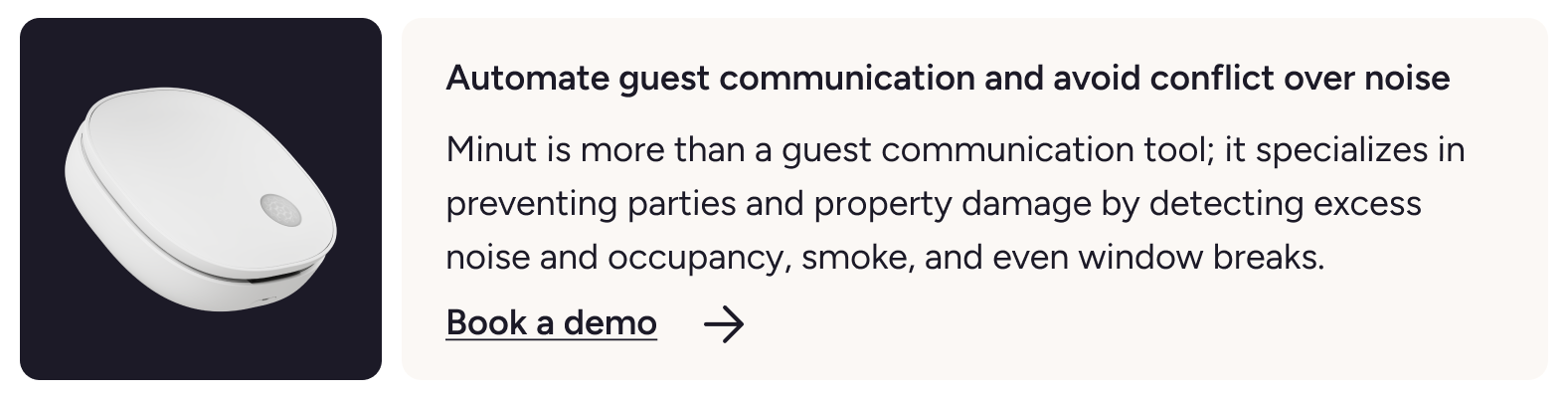
Minut follows privacy-first principles, so our sensor measures sound levels and recognizes sustained noise patterns without recording audio or using cameras. It gives your team earlier awareness, can send messages to students, and logs clear, timestamped incident histories.
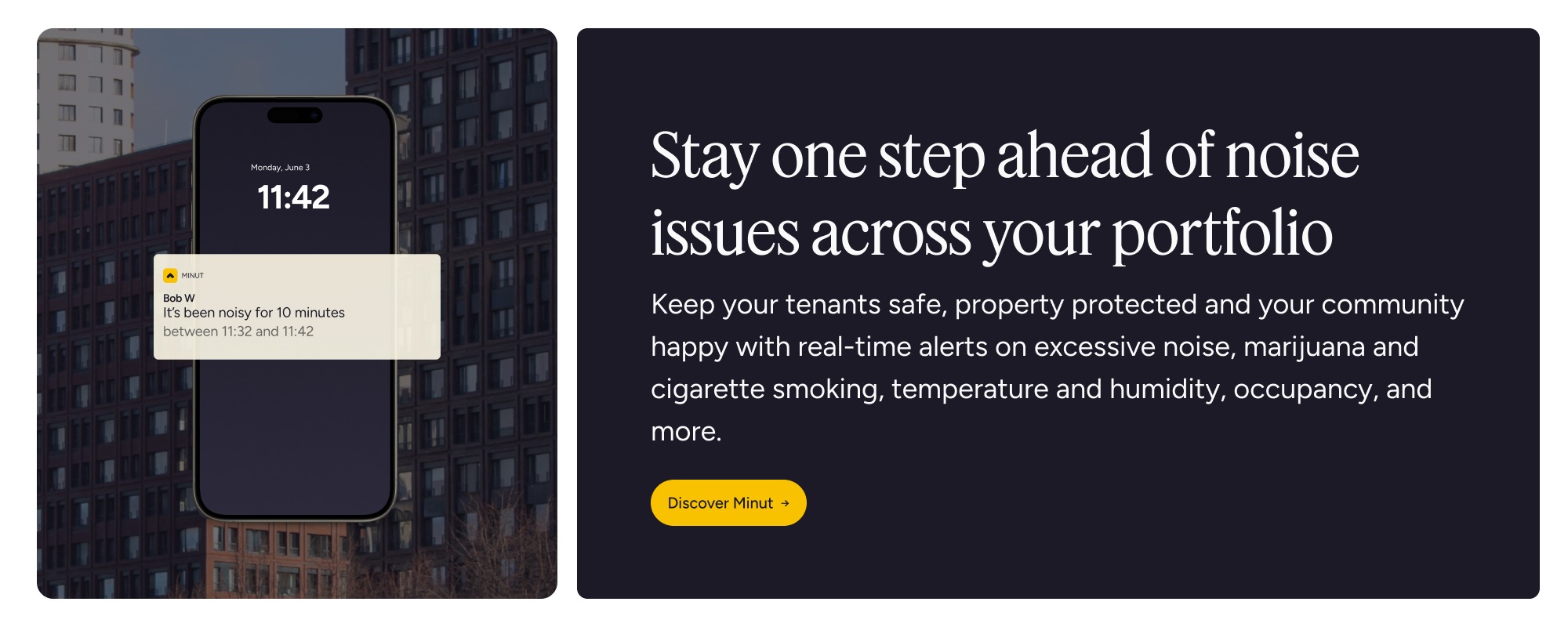
When sound crosses your set threshold for a defined period, Minut sends your team real-time notifications. You can configure quiet‑hours thresholds by building or zone, which is especially useful near lounges or busy courtyards. If needed, escalation can include live agent calls, so managers aren’t on call at 1 a.m. every weekend.
Here’s an example of how the noise monitoring works. The red line is your set threshold. A short spike doesn’t trigger an alert or response, so you won’t be notified if someone drops a glass. Instead, you’re only notified if the noise levels stay elevated, when it’s more likely to cause a disturbance to other residents and neighbors:
Minut also monitors for smoking and occupancy, helping to protect your properties from smoking damage and unauthorized parties.
Best practices checklist for reducing noise complaints in student housing
Establish clear quiet hours and share them at lease signing, move‑in, and before high‑risk dates
Set expectations before move‑in with simple examples of “sustained noise” and where community standards apply
Communicate community standards regularly through portal posts, email, and SMS nudges tied to events
Track recurring complaint patterns by location, day, and time at the property and portfolio level
Review after‑hours incident trends each term and annually, adjusting policies and thresholds where needed
Train staff on consistent response procedures, including friendly first contact and escalation paths
Improve operational visibility with 24/7 privacy‑friendly monitoring that alerts in real time
Final thoughts
A key challenge of noise complaints in student housing is that they often happen when your team has the least coverage, and reactive workflows chase last night’s issues and miss the pattern that will repeat next weekend.
The fix isn’t more overnight staff, but a preventive strategy built on three pillars:
Clear expectations that students see
Communication that arrives in time, for operators and guests
Real‑time, privacy‑safe visibility
With privacy-first monitoring, you’ll have the early insights and the record you need to act confidently.
Noise complaints in student housing FAQs
What causes noise complaints in student housing?
Most issues come from everyday student life amplified by high density: music in shared suites, conversations that run past quiet hours, hallway traffic, visitors gathering before or after events, and celebrations after exams or games.
How should property managers handle student housing noise complaints?
Lead with prevention: set clear quiet‑hour rules, communicate around high‑risk dates, and add privacy‑friendly monitoring for earlier awareness. When noise crosses a threshold, send a friendly reminder fast, then escalate appropriately if it continues. Centralize documentation so every incident creates a timestamped record you can use for lease enforcement or claims.
What are the best practices for reducing noise complaints in student accommodation?
How do you balance resident privacy with noise monitoring?
Choose systems that monitor the environment, not the resident. Minut never records audio or uses cameras. It tracks noise levels and timing, then sends alerts when levels stay high. This protects privacy while giving your team the operational visibility to support community standards.
What role does communication play in preventing noise complaints?
It’s central. In many cases, residents don’t realize they’re being too loud, so a timely, friendly reminder works effectively. Pair automated messages with clear policies so students know what’s expected of them.










.png)