Water damage prevention: Why early detection matters more than cleanup
Water damage prevention starts long before cleanup begins. Learn why early leak detection helps property managers reduce repair costs, operational disruption, and property damage.
Leaks can be particularly problematic, because they cause damage without you knowing anything is happening. It starts as a slow drip behind the cabinet, wicks into particleboard, then under the vinyl. Housekeeping misses it on turnover. By the time a dark line shows at the baseboard, the damage is significant enough that you’re pulling up flooring, cutting drywall, and moving a guest or resident. And it wasn’t caused by a flood, just a week of unnoticed moisture.
Water damage rarely starts as a major emergency
In day-to-day operations, most incidents begin with small, unnoticed leaks. Think of a supply line weeping under the sink rather than a burst main. Or the dishwasher connector loosened slightly. Or a slow plumbing failure behind an access panel that doesn’t get checked frequently.
These small issues can stay hidden for days, especially inside cabinets, behind appliances, and within walls.
That’s why remote and portfolio operators often take the biggest hits when there’s nobody on site, like overnight, on weekends, or during holiday lulls.
Leaks like these hide in places that aren’t checked every shift:
Under-sink cabinets and behind dishwashers
Utility closets, water heaters, and AC closets with limited access
Vacant units and guest rooms
Worst of all, the longer the leak goes unchecked, the more expensive remediation becomes.
Once water spreads, the repair list gets longer. You’re not just paying a plumber. You’re replacing flooring, cutting and refinishing drywall, and hauling (and replacing) damaged furniture. Restoration costs vary widely depending on the class of damage — Class 1 can be a few hundred dollars, but Class 4 can reach tens of thousands.
Operational disruption can be even more expensive
The outlay isn’t the end of the financial damage. The bigger hit is often downtime: units offline for drying and rebuilds, last-minute guest relocations, and stacked maintenance schedules. Nationwide puts average non-weather water losses at around $14,000 per incident and notes that costs are rising.
Water damage can affect guest experience
Wet floors, musty smells, dehumidifiers in hallways can all affect the quality of a stay. Operators may have to deal with refunds, complaints, room moves, and negative reviews. Those negative reviews drag occupancy, which is why preventing leaks is as much about guest experience as it is about property protection.
Hidden costs often continue long after repairs
Even after walls are back up, the ripple effects can remain: elevated maintenance costs, mold remediation, insurance implications that push premiums up, and a lingering reputational dent.
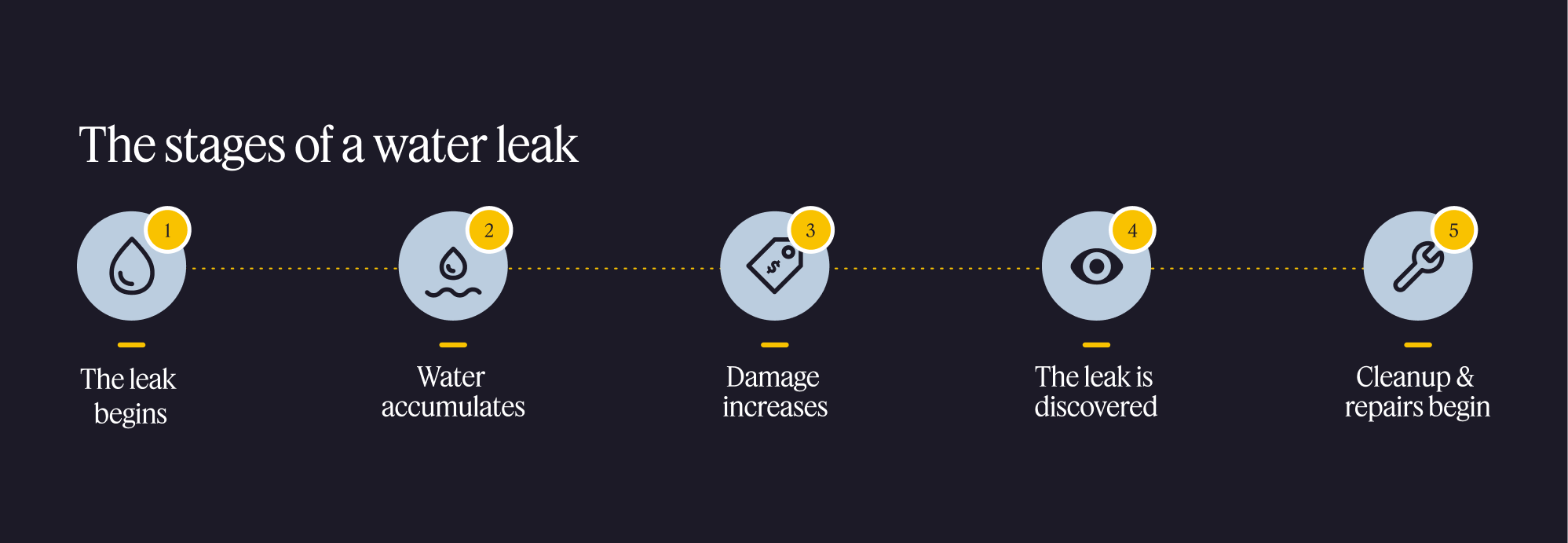
The timeline of a water damage event
Stage 1: The leak begins
A fitting loosens, an appliance malfunctions, or a pipe degrades, causing a hidden drip.
Stage 2: Water accumulates
Moisture pools inside cabinets or travels under flooring, and materials start absorbing water out of sight.
Stage 3: Damage increases
Flooring swells, drywall softens, and furniture wicks moisture. Mold risk rises in out-of-sight areas.
Stage 4: The leak is discovered
You notice moisture staining or a musty odor, or a guest reports damp floors. But by this point, secondary damage is already in play.
Stage 5: Cleanup and repairs begin
Fans, dehumidifiers, demolition, and restoration kick off. Costs and downtime rise in step with the delay.
Prevention and cleanup aren’t the same thing
Cleanup focuses on recovery: Restoration teams dry, remediate, and rebuild. The goal is to return the space to service. That work is important, but it happens after the damage has already occurred.
Prevention focuses on early awareness: Prevention is about stopping water before it spreads, using monitoring, detection, and intervention.The earlier a leak is found, the easier it is to contain.
Here’s how the two compare:
Factor
Prevention strategy
Cleanup strategy
Timing
Before damage spreads
After damage occurs
Repair costs
Lower
Higher
Operational impact
Reduced
Significant
Guest disruption
Limited
High
Downtime
Minimal
Extended
Where water damage risks are commonly overlooked
Under sinks and behind appliances
Slow leaks at supply lines and drain fittings often stay hidden inside cabinets or behind dishwashers and refrigerators, making them prime targets for water leak prevention.
Bathrooms and utility areas
Toilets, washing machines, AC condensate lines, and water heaters are repeat offenders. These fixtures are used often, and issues can easily go unnoticed.
Vacant units and unoccupied spaces
Areas that people don’t see frequently are much more likely to have delayed discovery.
Guest rooms and hospitality properties
Leaks can linger between stays, especially when rooms are cleaned quickly or left empty for days at a time. Across a large property, those small blind spots can add up across floors — or across buildings if you manage a portfolio.
Building a smarter water damage prevention strategy
Identify high-risk areas
Map sinks, dishwashers, washing machines, water heaters, AC closets, and any known weak points at each property. Prioritize the units or rooms where access is limited or turnover is frequent.
Improve response processes
Document escalation: who gets the first alert, who can authorize shutoff, and who communicates with guests. Practice it like a fire drill so an alert is responded to as quickly as possible.
Create continuous visibility
You can’t be everywhere. Monitoring systems deliver awareness in the hours when leaks are easiest to miss, like overnights, on weekends, and during the holidays.
Use technology to reduce detection gaps
Technology should support your inspections, not replace them. Routine checks are useful only when someone is physically in the room, but they don’t cover periods when the property is vacant.
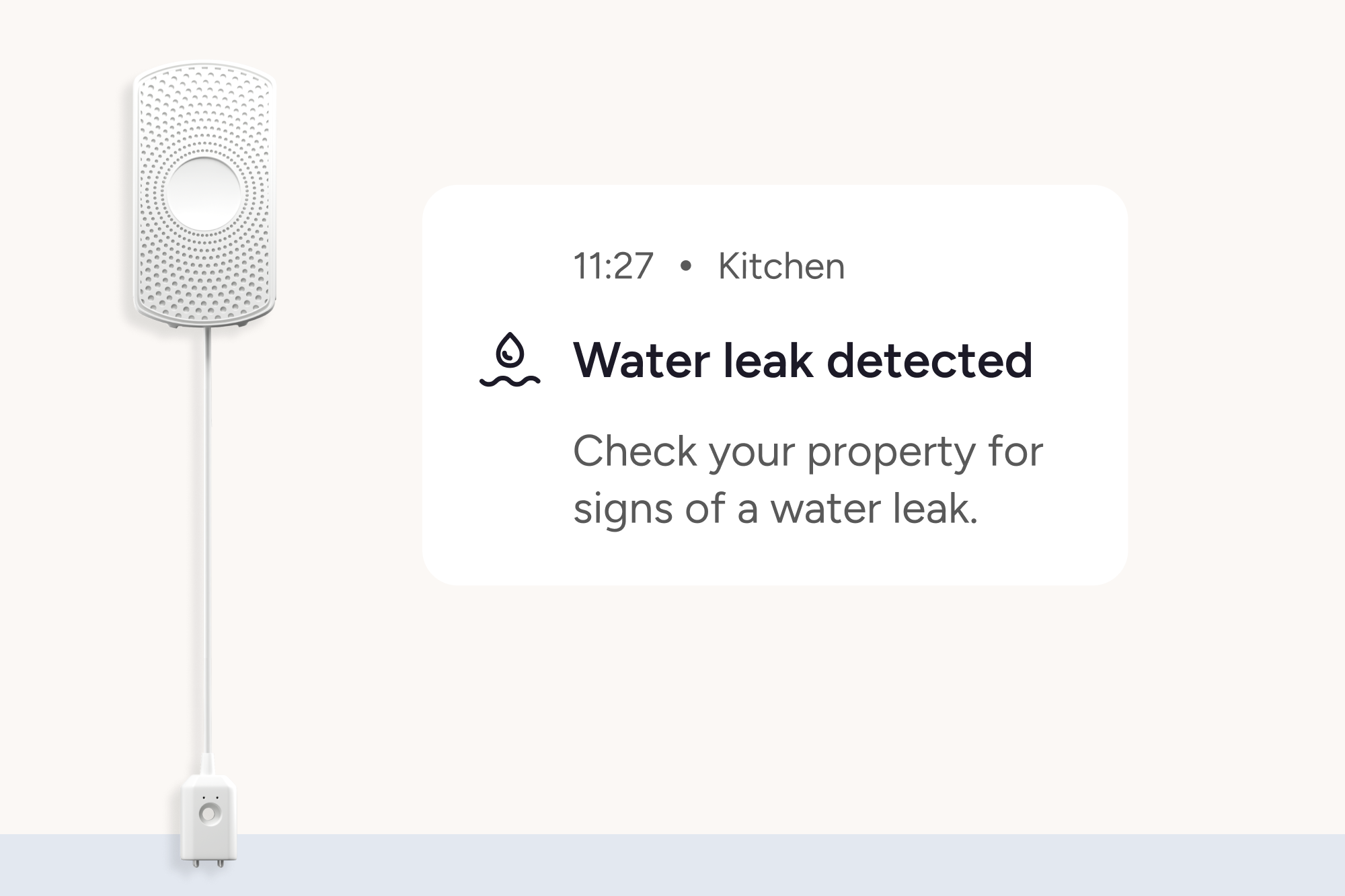
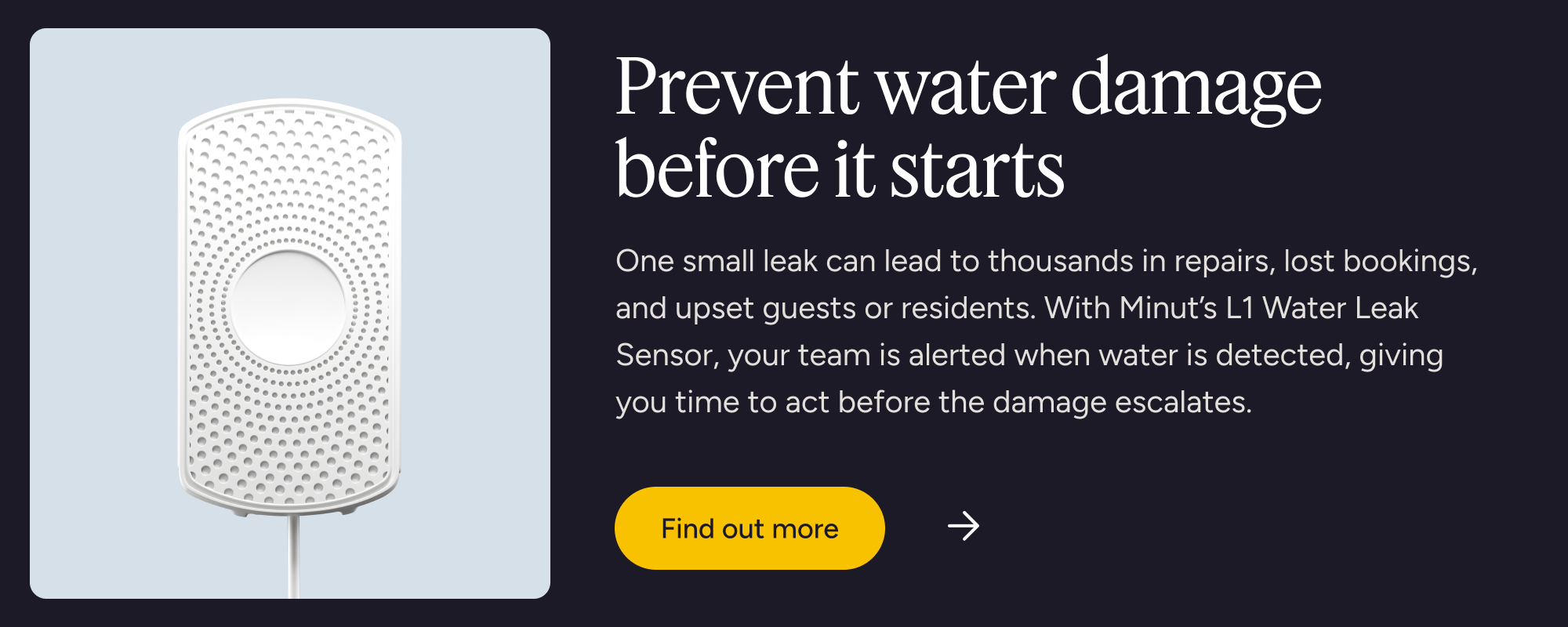
A leak detection system with water leak sensors closes this time gap to ensure continuous awareness. Smart detection prevents the majority of major incidents by sending instant alerts and triggering fast intervention.
Minut is built for operators who need early signals without surveillance concerns. The system monitors the environment, not people. Devices don’t record audio or use cameras, they only measure conditions.
Real-time water leak alerts
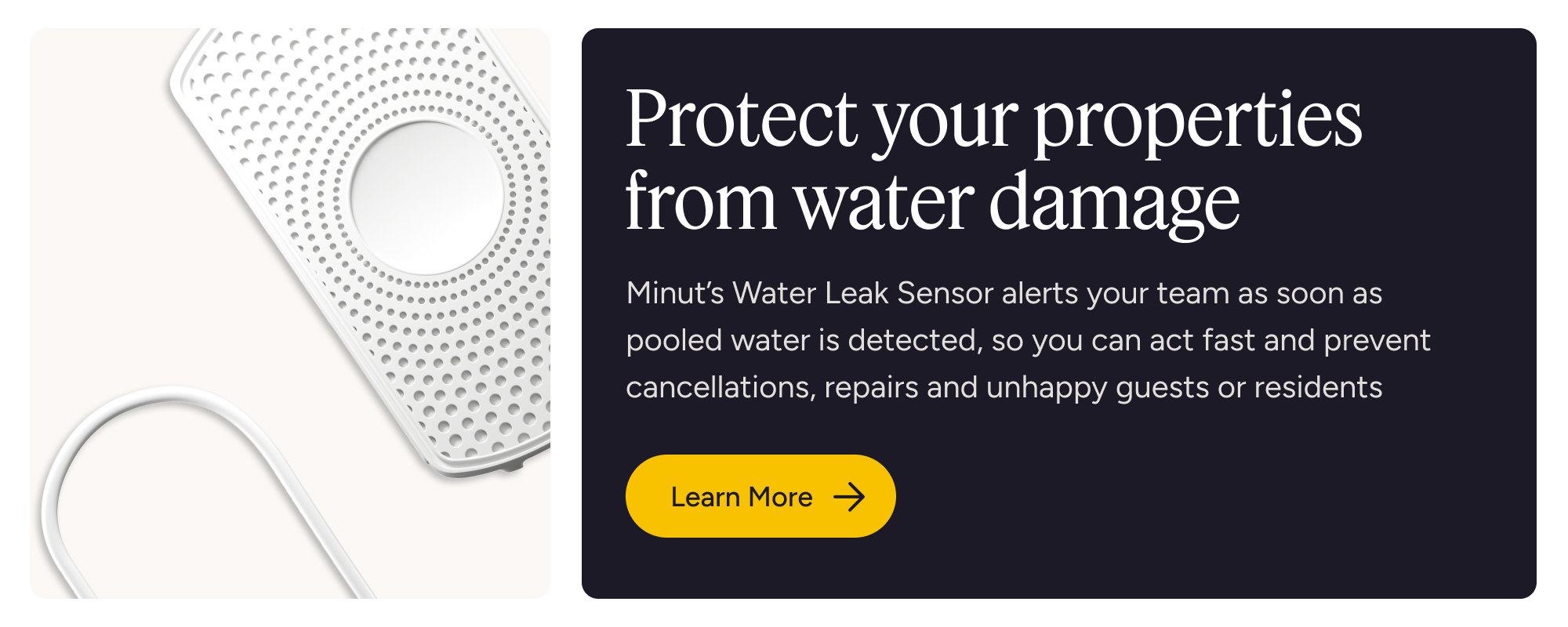
Place Minut’s Water Leak Sensor under sinks, next to toilets, behind dishwashers, by water heaters, or anywhere else you feel is likely to have a leak. The moment water touches its sensor probes, you’ll get notified. Alerts are also timestamped, giving you a record to support insurance or platform claims when you need proof.
Visibility across multiple locations
Run leak monitoring portfolio-wide from the Minut dashboard. Pair leak alerts with our M3 sensor for indoor climate tracking, so you’ll be made aware of mold risk in your property.
Reduce the risk of expensive repairs
Catching leaks early helps to limit water damage repair costs. Operators using a prevention-first approach avoid extended downtime and keep more units bookable.
Designed for hospitality and modern properties
Water leak detection for high-risk locations
Portfolio monitoring with straightforward deployment
Timestamped alerts for documentation and faster decisions
A water damage prevention checklist for property managers
Inspect high-risk plumbing areas and appliance connections quarterly
Establish a leak response playbook with clear on-call roles
Review maintenance records to spot repeated fixture or line failures
Prioritize high-risk units (vacant, low-access, or top revenue)
Improve visibility across properties with centralized leak monitoring
Implement a detection system with water leak sensors where leaks are most likely to start
Conclusion
Most expensive water incidents don’t start with a bang, but with hidden leaks that sit too long. Cleanup is necessary, but it addresses consequences only. Prevention, on the other hand, reduces the risk of damage happening in the first place. If your goal is to prevent water damage, protect revenue, and keep guests happy, early awareness is the lever that moves all three.
Water damage prevention FAQs
What is water damage prevention?
Water damage prevention is the set of practices and technologies that detect and stop small leaks before water spreads into building materials. It pairs preventative maintenance with leak monitoring to prevent water damage rather than respond to it.
What causes most water damage incidents?
The usual suspects are plumbing failures, appliance leaks, AC condensate issues, and slow fixture problems — small, hidden leaks that go unnoticed in cabinets, behind appliances, and utility closets.
How can property managers prevent water damage?
Combine scheduled inspections with real-time leak monitoring. Add water leak sensors in high-risk spots and document an escalation plan. This prevention-first approach reduces maintenance costs and keeps units online.
What are the most common sources of water damage?
Under-sink supply and drain lines, toilets, dishwashers, washing machines, water heaters, and AC condensate lines. Roof and envelope issues contribute during storms as well.
How do water leak detectors help prevent water damage?
They detect water the moment it’s present and send alerts so teams act fast.
Where should water leak sensors be installed?
Under sinks, behind or beside dishwashers and refrigerators, next to toilets, around washing machines, near water heaters, and in AC closets.
Can water damage occur from small leaks?
Yes. The most expensive events often start with hidden leaks that sit through nights and weekends, especially in vacant units or rooms between stays.





.png)