How to improve Airbnb ratings by managing guest noise issues
Learn how to improve Airbnb ratings by managing noise issues, preventing complaints, and delivering a better guest experience with proactive solutions.
A guest checks out in a happy mood, writes “Great place, spotless, easy check‑in” in their review, then drops a three‑star rating because “it was noisy at midnight.” If you’ve hosted more than a few stays, you’ve probably experienced this. Noise is one of the fastest ways a near‑perfect stay turns into an average review – which makes future guests skeptical of booking.
Even a small late-night disturbance can outweigh any thoughtful details that hosts spend time perfecting. If you want to improve Airbnb ratings, you need to manage the full guest experience, including what happens after guests go to bed.
Why noise has a direct impact on Airbnb ratings
Noise isn’t background detail for guests. It’s the 2 a.m. disturbance that they remember. When a stay goes sideways due to excessive noise, guests rarely shrug it off. They rate the whole experience lower, and they usually write “noise” in the review for the next traveler to see.
Noise is one of the most common guest complaints
Guests arrive expecting rest. They’re willing to forgive a missing wine opener, but they won’t forgive thumping bass or hallway chatter at midnight. In multi‑unit buildings and downtown cores, you might even be fighting noise from both inside the unit and outside.
Common culprits:
Loud neighbors or unauthorized gatherings that grow after quiet hours
Guests who don’t realize how clearly sound can travel in older buildings
Late‑night arrivals rolling luggage and talking in corridors
How noise affects reviews and ratings
One noisy night is all it takes for a guest to click three stars instead of five. Enough of those and your average drops. Lower averages can make future guests less confident about booking and may weaken one of the signals that contribute to listing performance.
Ratings reflect the overall stay. A quiet night is a big chunk of guest satisfaction. You can wow with a welcome basket, but traffic humming through the bedroom wall is far more likely to make it into the final review. Improving sleep quality is one of the most reliable Airbnb guest experience tips because it lifts the entire rating, not just a sub‑category.
Common noise issues that affect Airbnb ratings
Unauthorized parties
Parties don’t always begin as parties. Often they’re as innocent as “a few friends” having a drink, and they build from there. Before you know it, the volume rises as the night goes on, and neighbors complain. Disruptive gathering can lead to action under Airbnb’s community-disturbance policy, particularly when violations are severe or repeated. Preventing parties is one of the most direct ways to reduce Airbnb noise complaints and protect your ranking.
Loud guests and in‑unit disturbances
Music, slamming doors, chairs being dragged across floors, laughter that crescendos — these are all examples of common causes of noise, and they aren’t guests trying to be annoying or bad neighbors. They’re simply unaware of how sound carries. That’s why a well‑timed, friendly reminder can resolve cases in minutes.
External noise factors
Street traffic, deliveries behind the building, rooftop bars nearby, even elevator mechanics can leak into bedrooms. You can’t control the street, but you can — and should — set expectations. If outside noise is a common occurrence in the area, mention it clearly in the listing so guests can make an informed choice, instead of being unpleasantly surprised when they check in. You can also suggest tools like white‑noise machines to help mask the noise.
Lack of clear noise rules
“Please be respectful” isn’t a rule. If guests don’t know the exact quiet hours, they’ll default to their own idea of “reasonable.” When you spell out times, thresholds, and what happens if it goes on too long, guest behavior management gets easier, and guests will be more likely to follow your policies.
Managing noise comes down to setting clear rules, communicating early, and addressing problems while guests are still at the property. That’s how to improve Airbnb ratings without adding hours to your week.
Set clear quiet hours and house rules
Post quiet hours in three places: the listing, your digital guide, and an in-home guide near the entry. Keep it specific, for example: “Quiet hours 10 p.m.–8 a.m. inside the unit, balcony, and corridors.” Add a short and fair consequence ladder focused on resolution, not punishment, such as: friendly reminder, second reminder, further action if disruption continues.
Communicate expectations before and during the stay
A pre‑arrival message is a powerful way to set the tone: “This is a quiet residential building. Thanks in advance for keeping late‑night volume down.” Then automate a friendly in‑stay reminder that goes out at 9 p.m. on the first night. Tone matters here, so keep it helpful, not strict. Most guests appreciate the heads‑up.
Screen guests more effectively
Look for risky patterns: last‑minute locals for a Friday only, vague trip purpose, reluctance to confirm headcount. Ask simple verification questions inside the platform, confirm the guest count, and restate quiet hours. Clear communication is an effective method to deter party planning without scaring off good guests.
Create a better guest experience through clarity
Clear expectations are part of a satisfying guest experience. When guests know what’s expected, they’re less likely to make assumptions about what’s acceptable. This reduces the likelihood of an awkward confrontation, and guests will leave better reviews.
Why reactive approaches don’t improve ratings
Addressing issues after checkout is too late
Once a guest loses sleep, you’re on the backfoot and it may be too late to avoid the lower rating. You can apologize and refund, but if you want to improve Airbnb ratings, you have to prevent the incident, not just apologize for it.
Handling complaints doesn’t undo bad reviews
Handling complaints is an essential part of good hospitality. But a refunded night can’t guarantee that a disappointed guest won’t mention it in their review. That’s why hosts searching “Airbnb host tips improve rating” eventually land on prevention tactics.
The need for real‑time awareness
You can’t fix noise you don’t know about. Real‑time visibility during the stay is what lets you stop a problem at 10:15 p.m. instead of reading about it at 10:15 a.m. the next day. That’s the gap between rapid communication with your guests, and fielding more Airbnb bad reviews.
The role of noise monitoring in improving Airbnb ratings
Detect noise issues early
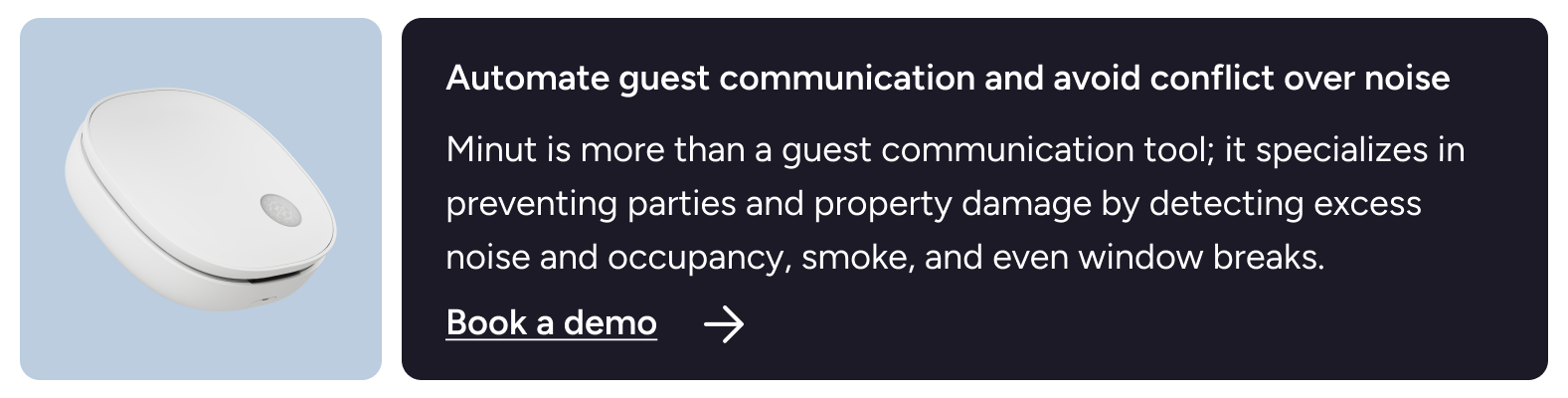
A privacy‑friendly noise monitor reads sustained decibel levels like a sound meter. If the level crosses your chosen threshold for a set period, you receive an alert. You can then send a templated, polite message, and most guests quiet down — preventing neighbors and other guests from waking and complaining.
Prevent guest complaints and negative reviews
Addressing a noise issue early can stop it from affecting another guest’s comfort, which in turn means it won’t be part of their review. Prevention can reduce complaints and create the calmer, more consistent experience that guests expect.
Maintain a consistent guest experience across stays
If you operate across multiple units, consistency is the whole game in short‑term rental management. Sensors give you the same early warning system in every listing, so you can hold the same line on quiet hours without being on‑site.
How Minut helps improve Airbnb ratings through noise management
Privacy‑friendly noise monitoring
Minut monitors the environment, not people. It doesn’t record audio or use cameras. For Airbnb listings, privacy-safe noise monitors like Minut’s are permitted, so long as its presence is disclosed and it’s placed only in permitted common areas – never in bedrooms, bathrooms, or sleeping areas.
Real‑time alerts for immediate action
When sustained noise crosses your threshold, you receive an instant notification and can message the guest. If you’d like, you can also send automated reminders. Every alert is timestamped, which means you have a clean record if you ever need to show Airbnb support or a neighbor exactly what happened, when it happened, and how you responded.
Designed for short‑term rentals
Minut supports multiple listings with centralized monitoring, so your team can see what’s happening across properties at a glance and jump on spikes fast. If you manage on behalf of owners, this is the kind of property monitoring that builds trust — preventing claims instead of filing them.
Why this matters for hosts
It gives hosts an earlier opportunity to protect guest comfort and ratings
It can reduce recurring complaints from both guests and neighbors
It supports more consistent standards across every stay, which is useful if you have a large portfolio
Conclusion
If you’re trying to improve Airbnb ratings, you need to control the variables that ruin stays (and ratings) fast, like noise. Set quiet hours in plain language. Message guests before they arrive and during the first evening. Use a privacy‑friendly sensor so you know what’s happening in real time and can send a quick nudge before anyone loses sleep. Most guests aren’t trying to cause a disruption, and a timely, friendly reminder can often resolve the issue early.
Disclose any indoor noise monitor in your Airbnb listing and house rules, so guests understand how it supports a more respectful stay. And when a guest does set the volume too high, tools like Minut give you a timestamped alert you can send to Airbnb if you ever need support. That’s how you prevent problems instead of apologizing for them, and how you improve Airbnb ratings steadily, across every stay.
Improve Airbnb ratings FAQs
How can I improve my Airbnb rating quickly?
Add clear quiet hours, send a pre‑arrival note and an evening reminder, and install a privacy‑safe noise sensor so you can act on sustained spikes.
What affects Airbnb ratings the most?
Sleep quality, cleanliness, and accurate descriptions. Noise control is the biggest swing factor because one noisy night pulls the whole rating down. Airbnb’s ranking inputs also reward listings with strong reviews, fast responses, and market‑matched pricing.
Do noise complaints affect Airbnb ratings?
Yes. Guests mention “noise” explicitly and rate lower when they lose sleep. Repeated neighbor complaints can also hurt your standing. If you need a simple plan to reduce noise complaints that Airbnb guests leave after their stay, catch and calm noise during the stay.
What are common reasons for low Airbnb ratings?
Sustained noise, cleanliness misses, inaccurate photos, and slow responses are all common reasons for low Airbnb ratings. If you’re tackling how to improve Airbnb ratings, start with quiet nights and quick replies.
Do quiet hours help improve Airbnb ratings?
Yes. Clear times create a shared standard. Pair quiet hours with a tool that lets you know when they’re being tested, and you’ll stop most incidents before they matter.





.png)