Airbnb doesn't have a universal ban on smoking, leaving the decision to hosts instead.
Hosts typically choose to not allow indoor smoking, as it can cause problems for both the host and other guests. Lingering odors, stains, residue, and possibly burns can increase your cleaning bill and require more frequent replacement of linens and soft furnishings. For non-smoking guests, the first thing they’ll notice when they enter the property for the first time is the smell of stale smoke in the air. That’s probably not the first impression you want to make, and it could be reflected in lower ratings.
So when you set a strict no‑smoking rule, you’re protecting guest comfort and your margins. But sometimes guests light up anyway, leaving you wondering whether the guest will accept responsibility or if you’ll need to escalate through Airbnb support.
Smoking violations are a frequent operational headache in short‑term rental management, even for listings with clear rules. In this article, we’ll explore Airbnb’s smoking policy, how to handle violations, and steps you can take to prevent guests from smoking in your Airbnb.
What is Airbnb’s smoking policy?
Does Airbnb allow smoking in listings?
The Airbnb smoking policy is for each host to disclose whether smoking is allowed, restricted to certain areas, or completely prohibited. If guests violate a clearly stated Airbnb smoking policy, hosts can document the issue and request compensation via the Resolution Center, typically for deep cleaning and any property damage.
Airbnb’s community standards also remind guests to respect “no smoking” rules, explicitly including tobacco, cannabis, and vapes, and to comply with applicable laws.
How hosts define smoking rules
Your Airbnb house rules smoking section should state whether smoking is allowed indoors or outdoors, identify any designated areas, and explain the consequences for violations. Setting expectations before booking is your best defense and the backbone of consistent house rules enforcement.
Where guests see smoking policies
Guests should be able to see your Airbnb guest smoking rules in multiple touchpoints:
Repetition matters because many travelers skim read, or may simply miss a key detail.
What happens when guests break smoking rules?
Common smoking violations
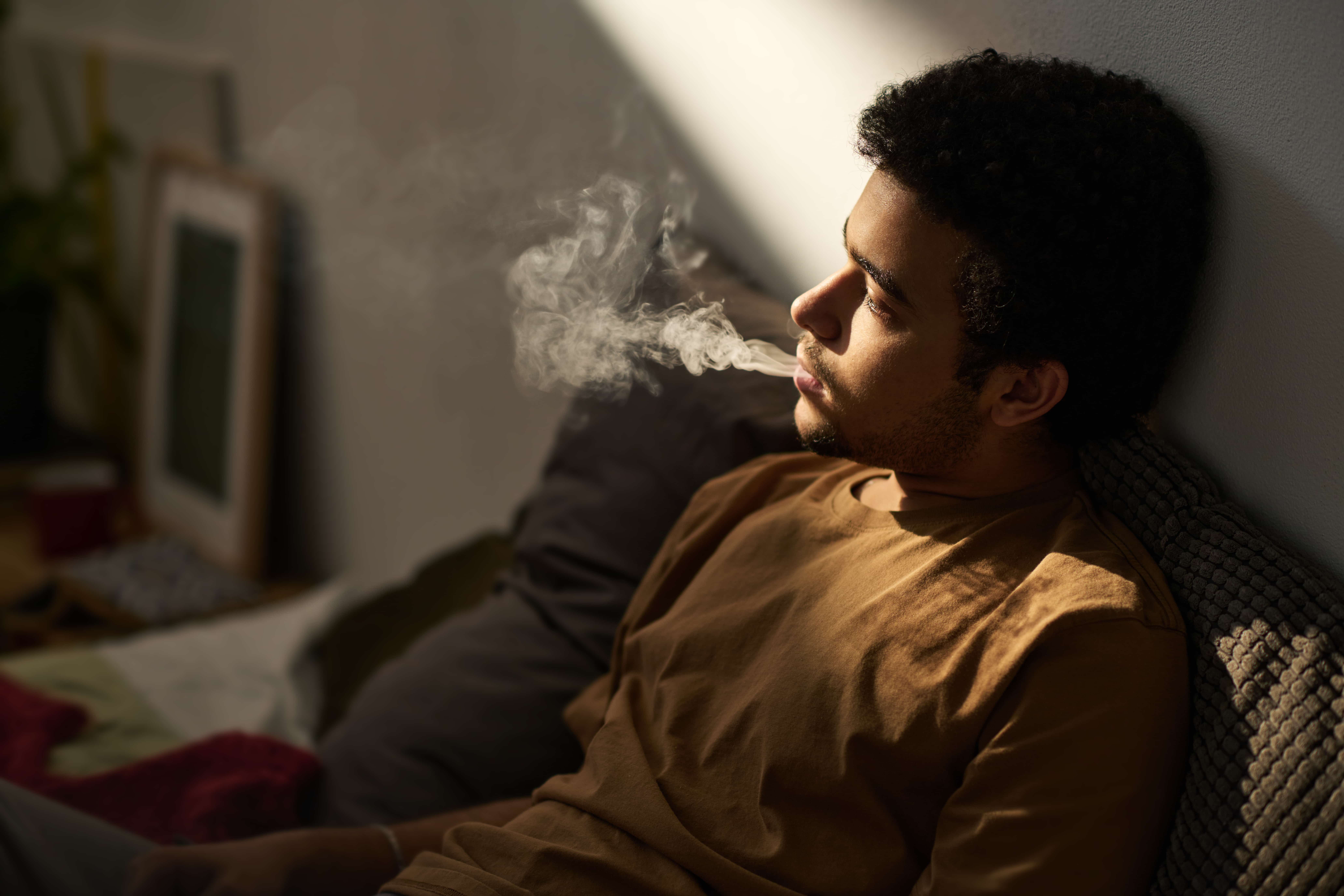
The typical scenarios are predictable: smoking inside a strictly non‑smoking property, sneaking cigarettes in bedrooms and bathrooms, or ignoring designated outdoor areas. Some guests assume the Airbnb no smoking policy is flexible or won’t be enforced.
Immediate impact on the property
Smoke odor settles quickly into fabrics, rugs, mattresses, and curtains. Indoor air quality drops. Longer term, yellowing and residue can stain walls and furniture. Even a single incident can affect an entire unit and trigger unexpected rental property maintenance between back‑to‑back stays.
Impact on future bookings
If the next arrival walks into a smoky unit that’s advertised as non-smoking, complaints are likely to follow. Refunds or discounts may be expected, and negative reviews can linger long after the smell is gone. Airbnb does allow cancellations if a listing is “significantly not as advertised,” which leads to lost nights and blocked calendars for odor removal and remediation.
How to handle smoking violations as a host
Document the issue properly
Strong documentation underpins effective dispute handling, and having a range of evidence helps to create a convincing case:
Take photos of ash, cigarette butts, and any burns or discoloration
Make a note of any visible residue on walls and furniture, and record timestamps
Save any cleaning invoices
Communicate with the guest
Reach out quickly and professionally. Reference the Airbnb host rules smoking section from your listing and stick to calm, factual language, without making accusations. A respectful tone increases the odds of cooperation and a smooth resolution.
Request compensation through Airbnb
Use the Resolution Center to seek reimbursement for extra cleaning or property damage. You can’t add a smoking fee into your pricing in advance, but you may request funds after a documented violation. Remember that clear evidence strengthens your case, and the claim may be dismissed without it.
When to escalate the issue
Escalate when a guest denies the violation, damages are significant, or communication breaks down. Airbnb support can step in, but solid proof will make or break your case.
The real cost of smoking violations in Airbnb
Cleaning and odor removal costs
If someone has been smoking in your property, turnover will almost certainly be affected. Depending on the severity of the smell or damage, you will need at a minimum extra time to ventilate, but also potentially professional deep cleaning, steam‑cleaning, or ozone or hydroxyl generators. These costs rise quickly and are compounded by the property being unavailable to rent out during this period.
Property damage and replacement costs
Beyond odor, smoke also accelerates wear. Upholstery, curtains, and bedding can absorb residues, sometimes beyond salvage. Nicotine staining may require cleaning and repainting. And there’s always the risk of items being burned, requiring immediate replacement.
Loss of revenue between bookings
Time is money. Every extra hour of odor removal and cleaning delays check‑in or forces cancellations. The knock‑on effect is considerable: fewer available nights, pressured cleaning schedules, and a risk to your ratings.
How to prevent guests from smoking in Airbnb properties
Having a no-smoking policy is only one consideration. Here are some recommendations to encourage guests to adhere to that policy.
Set clear and visible house rules
Clarity is helpful, leaving guests in no doubt about what’s expected of them during their stay. State “No smoking indoors” plainly, avoid vague phrasing, and repeat the message in listing copy, your guidebook, and pre‑arrival reminders. If you’re building a comprehensive standards program, don’t forget about including guest safety too.
Use strong but guest‑friendly communication
Start with helpful, human messaging. A pre‑arrival note that includes your Airbnb guest smoking rules, quiet hours, and parking helps guests succeed without feeling policed.
Create designated smoking areas
Where possible, offer a clear alternative. An outdoor seating spot with an ashtray, a small table, and signage reduces temptation to smoke indoors and keeps butts from ending up in gardens. If this area looks inviting and offers shelter from rain, guests are more likely to use it.
Set consequences clearly
State that violations will incur additional cleaning charges and, if applicable, damages for burns or replacements. Make sure fees align with real remediation costs and are backed by invoices, so guests know that the costs are genuine and fair.
How Minut helps enforce Airbnb smoking policy effectively
Detect smoking without cameras
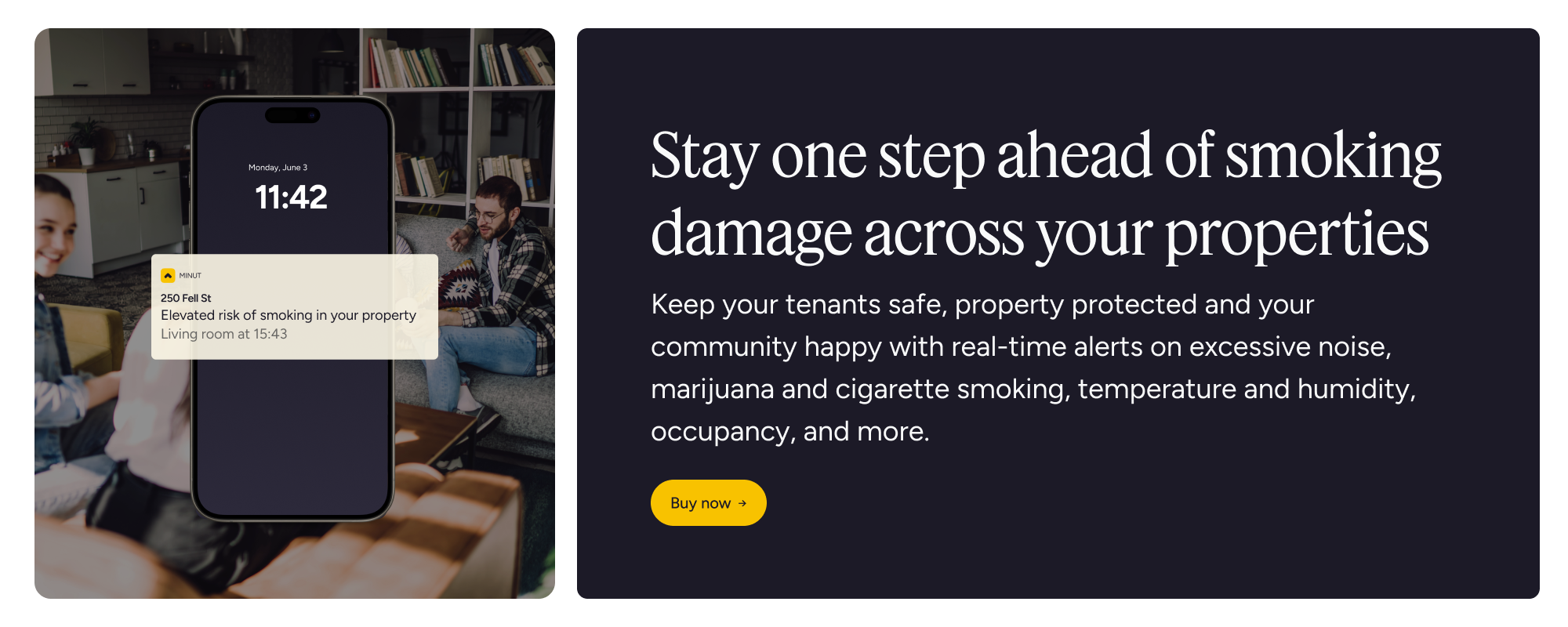
Minut helps you enforce your Airbnb smoking policy without intruding on privacy. It monitors indoor environmental patterns and can identify cigarette smoke events in real time, without using cameras or microphones. This way, you can act before odors spread and damage occurs.
Get real‑time alerts during the stay
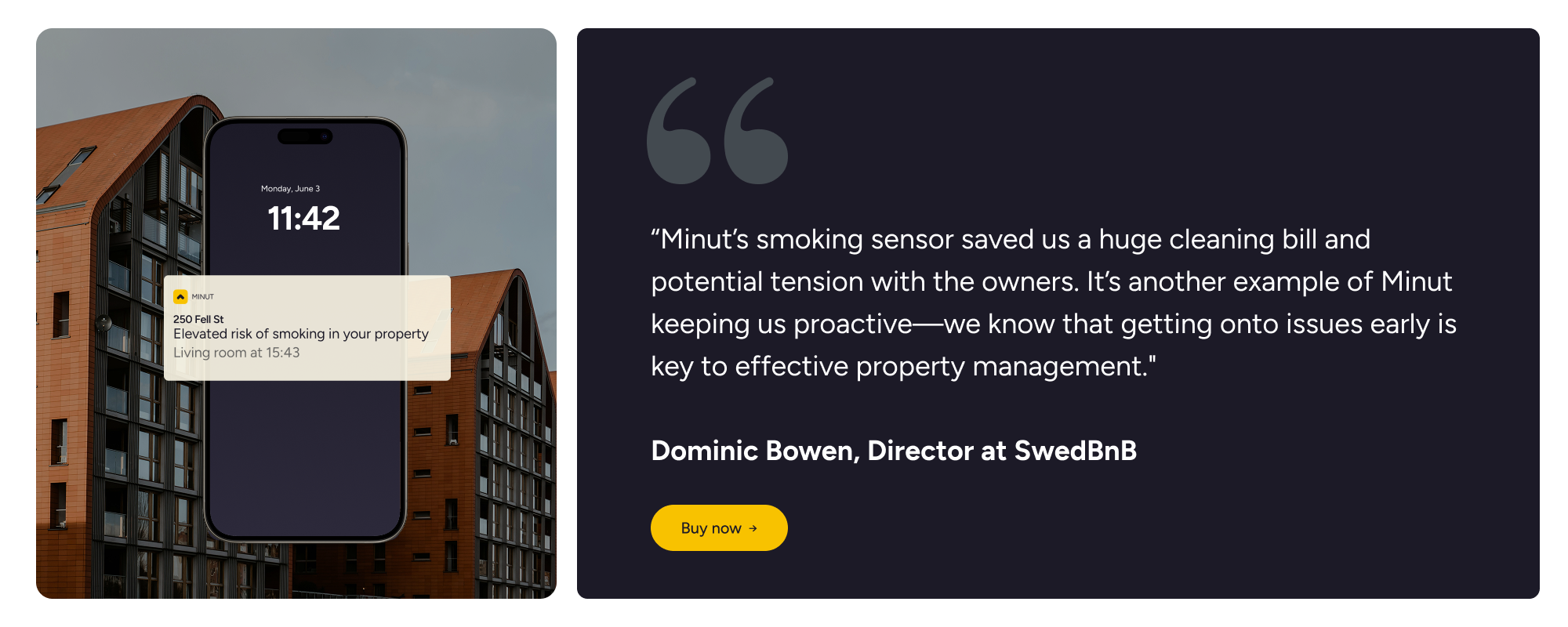
When cigarette smoke is detected, you receive a timestamped alert. From there, you can send a friendly reminder, call the guest, or send local staff to visit if needed. Every incident is logged, which strengthens documentation for fees and claims.
Designed for Airbnb hosts and property managers
Whether you manage single homes, aparthotels, or distributed STR portfolios, Minut centralizes control and automates parts of house rules enforcement, so you can focus on guest experience and operations. Proactive awareness dramatically lowers operational stress and supports consistent short‑term rental management at scale.
Common mistakes hosts make with smoking policies
Not clearly communicating rules: If house rules are hard to find or vaguely worded, you invite confusion and pushback. Keep your Airbnb house rules smoking language clear, visible, and repeated at key moments.
Acting only after checkout: Waiting until cleaners arrive means you’ve already absorbed most of the cost. Real‑time awareness empowers you with insights, so you can send quick nudges to guests and prevent residue and lingering odors.
Not enforcing consequences: Enforce stated consequences consistently and document everything from the first alert to the final invoice.
Ignoring preventive measures: Relying only on listing text leaves you with blind spots. Designated outdoor areas, visible signage, proactive messaging, and privacy‑safe detection fill the gaps and help to streamline dispute handling.
Compliance and privacy: important notes for hosts
Airbnb allows smoke and carbon monoxide detectors and permits certain non‑recording monitors when properly disclosed and placed in appropriate areas. It prohibits cameras or recording devices in interior living spaces. Minut’s design adheres with this policy by avoiding video and audio, keeping you compliant while helping enforce your Airbnb smoking policy.
Conclusion
A clear Airbnb smoking policy is essential. Violations create odors that linger, cause property damage, and can derail your schedule and ratings. The smart strategy blends clear rules, guest‑friendly communication, designated outdoor options, and proactive, privacy‑safe monitoring.
Preventing issues beats fixing them every time. With privacy‑first tools, you can enforce your Airbnb smoking policy consistently while maintaining trust and hospitality standards.
Airbnb smoking policy FAQs
What is Airbnb’s smoking policy for hosts and guests?
Airbnb lets hosts define their own smoking policy. Guests must respect “no smoking” rules, including tobacco, cannabis, and e‑cigarettes, and comply with local laws.
Can Airbnb hosts ban smoking on their property?
Yes. You can prohibit smoking entirely, or allow it only in specific outdoor areas. Make your stance explicit in the House Rules and guest communications.
What happens if a guest smokes in a non‑smoking Airbnb?
Document evidence, communicate calmly, and request reimbursement for cleaning and any property damage via the Resolution Center.
How do Airbnb hosts prove a smoking violation?
Combine photos, time‑stamped alerts, vendor invoices, and housekeeping notes. Device logs from privacy‑safe monitors like Minut can strengthen your claim.
Are guests allowed to smoke on Airbnb balconies or outdoor areas?
Only if your rules allow it. If you permit smoking outdoors, specify where and consider including an ashtray to prevent litter.
How can hosts enforce a no‑smoking policy on Airbnb?
Publish clear Airbnb host rules about smoking, use friendly reminders, create designated zones when possible, and use privacy‑safe detection so you can act in real time.
How can hosts prevent guests from smoking in Airbnb properties?
Reinforce your airbnb no smoking policy across touchpoints, set up an outdoor alternative, use clear but welcoming signage, and enable real‑time detection. These steps are how to stop guests from smoking in Airbnb homes while preserving hospitality standards.








.png)