The best noise monitoring device for Airbnb can save you many an angry text and a frosty relationship with a neighbor. It’s the middle of the night and the music from your listing is shaking their bedroom wall, but you’re 40 minutes away.
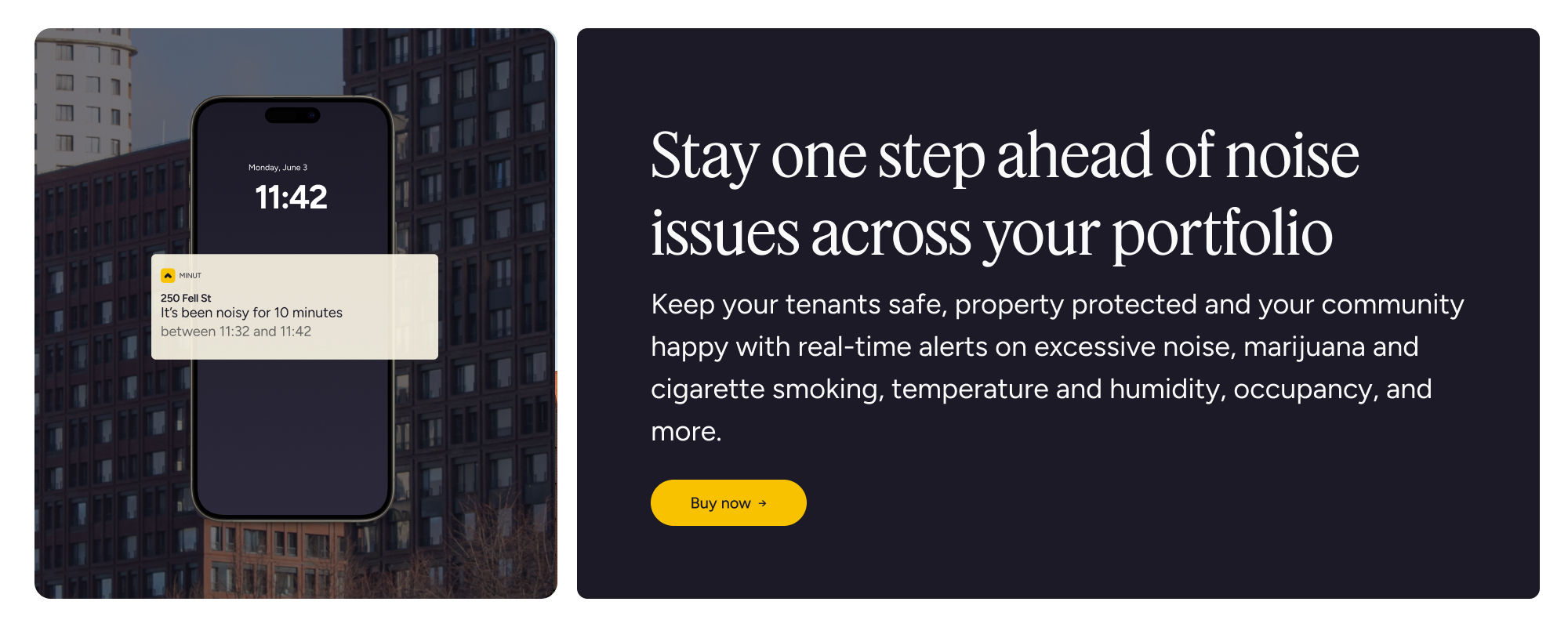
With a noise monitoring device, though, you simply open your phone, see a sustained 78 dB spike, and trigger a polite, automated message through the booking app. The noise drops before you can put your shoes on. You skip the confrontation entirely, and there’s no refund dispute waiting for you the next morning.
That’s why hosts look for the best noise monitoring device for Airbnb: something quick to set up, accurate enough to not confuse a dropped pan with 20 people in the kitchen, and privacy-safe so guests still feel welcome.
Why Airbnb hosts need a noise monitoring device
If you manage even a single listing, you already know the pattern: a gathering grows louder after quiet hours, neighbors complain, and suddenly your ratings and calendar are on the line. Elevated noise isn’t just about a one-off party. Sometimes it’s a balcony conversation that travels further than guests realise or a few extra friends “stopping by.” These moments add up to refunds, fines, or listing restrictions if they escalate.
Guest experience matters more than ever
Most guests don’t mean to be the problem, and a quick message lets them know if they’ve become too loud before a neighbor knocks or the host has to step in. This way, the loud guest hasn’t had their stay soured with confrontation and their review is likely to be positive. Similarly, if you have other people staying nearby, their visits weren’t affected by a rowdy guest and they’re likely to leave positive reviews too.
Left unchecked though, even one noise incident could potentially lead to multiple negative reviews and reduce your overall rating.
Why hosts need visibility without sacrificing privacy
Indoor cameras are off the table. Not only do guests expect privacy, Airbnb also bans interior cameras entirely. Indoor noise decibel monitors are allowed if they don’t record audio, are disclosed, and aren’t placed in bedrooms, bathrooms, or sleeping areas. That makes privacy-friendly monitoring the only path for indoor coverage.
What makes the best noise monitoring device for Airbnb?
When considering the best devices for your property, look for the following features:
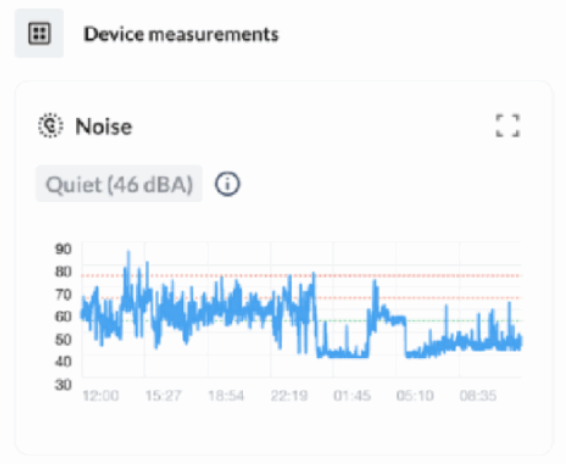
Real-time noise alerts: Fast alerts stop escalation. The device should look for sustained volume above a threshold you set, then be able to notify you and message the guest automatically.
Privacy-friendly monitoring: There’s a hard line between measuring sound and recording it. The best Airbnb noise monitoring device will use a sound meter approach — decibels over time — without capturing or transmitting audio, so guest privacy is never violated.
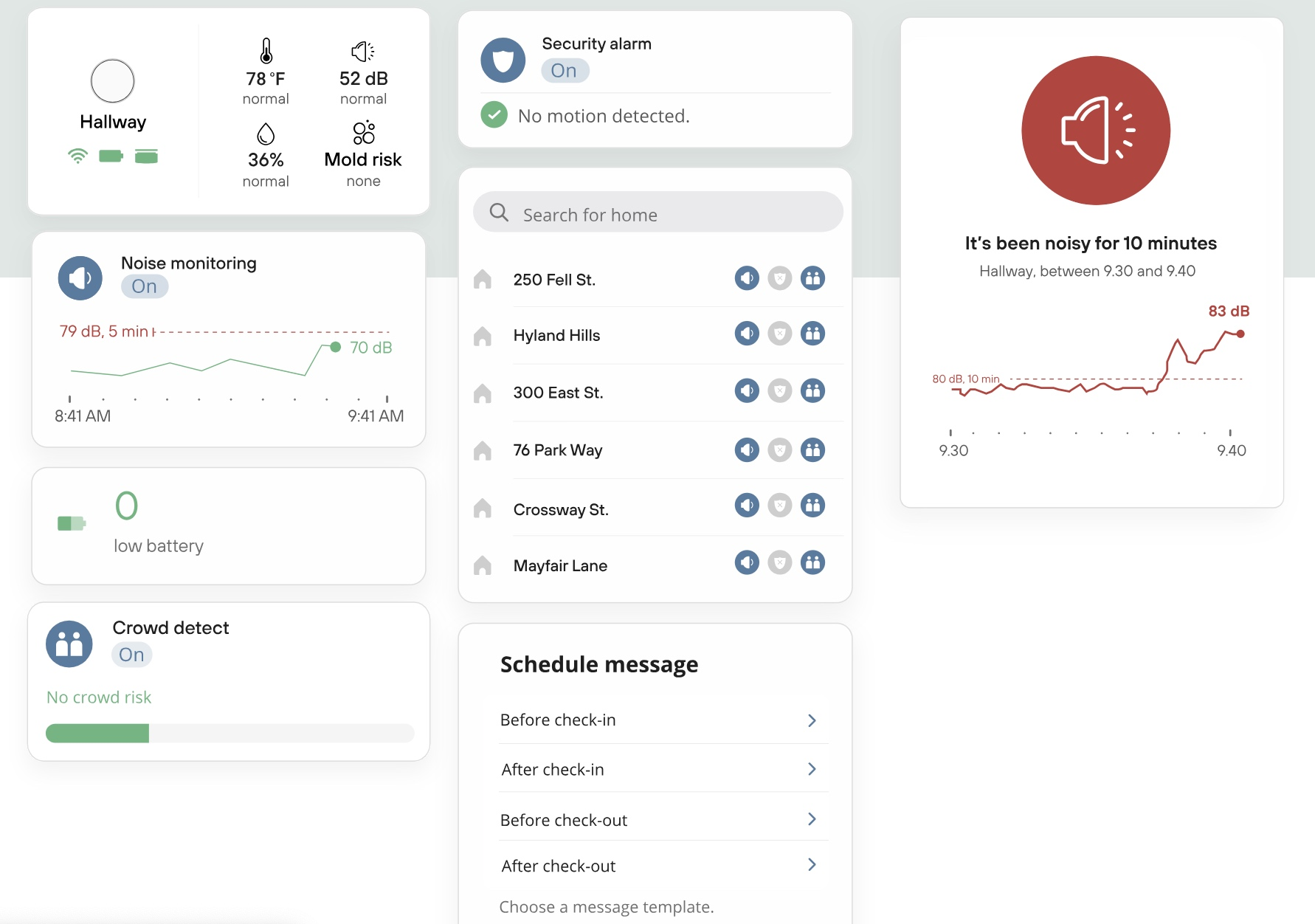
Occupancy and property insights: Parties aren’t just loud, they’re crowded too. The stronger tools add occupancy awareness, like estimating crowd risk from device signals, plus property monitoring like temperature, humidity, and mold risk. That gives you an early read on guest behavior monitoring and vacation rental safety without adding cameras or mics.
Ease of installation and multi-property management: When choosing the best noise monitor for vacation rentals, you want a quick setup and a dashboard that makes it easy to see what’s happening across your properties. The less manual checking involved, the better.
Best noise monitoring device for Airbnb in 2026
1) Minut (best overall for Airbnb hosts and vacation rentals)
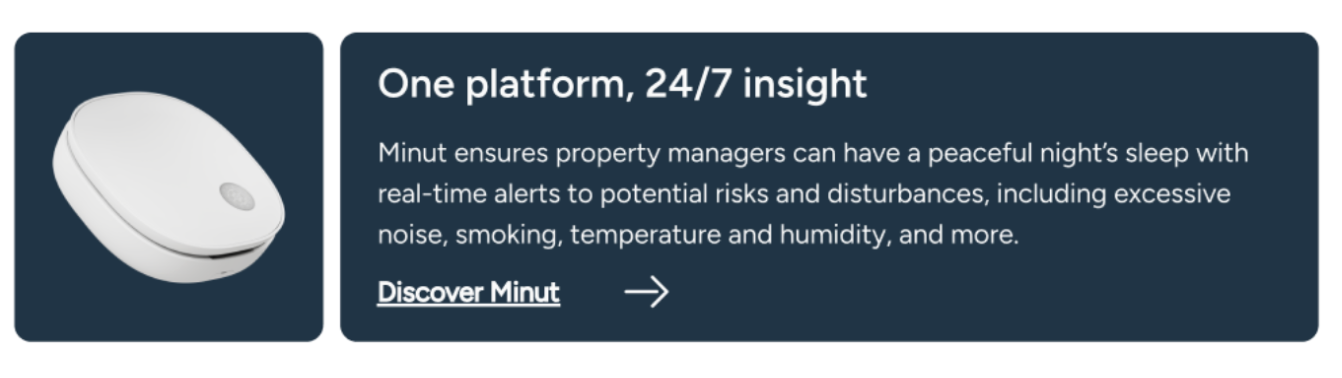
Minut is built for short-term rentals. Its M3 sensor tracks real-time noise without recording audio, estimates crowd risk, watches temperature and humidity, and even detects cigarette smoke. Hosts like it because it’s privacy-safe, the setup is quick, and it can text guests automatically through platform messaging when noise crosses your limit.
Pros
All-in-one monitoring across noise, occupancy, indoor climate, and cigarette smoke
Real-time alerts and automated guest messaging via booking platforms
Strong privacy stance: no cameras, no audio recording
Potential considerations
It’s a premium tool compared to entry-level, noise-only devices
If you’re comparing NoiseAware alternatives because you also want smoking detection or richer property monitoring, Minut tends to be one of the best Airbnb noise monitors for a portfolio that needs more than decibels.
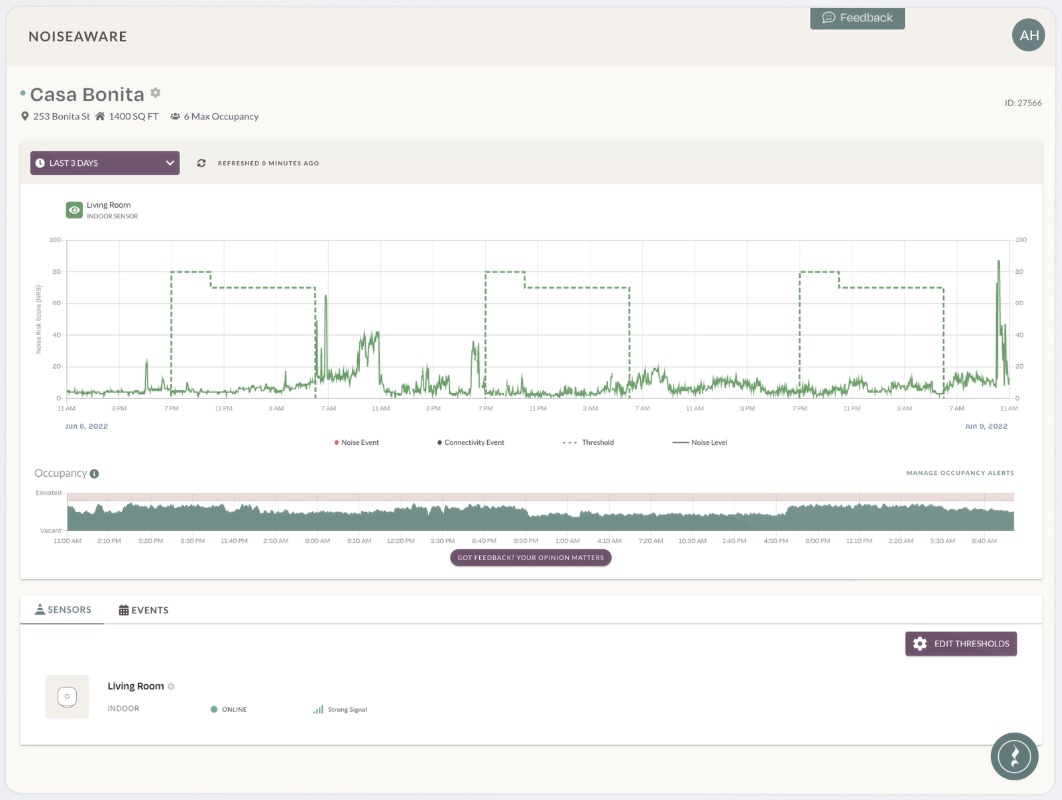
NoiseAware is a solid pick if you want noise-only coverage, especially outdoors. The company offers a separate outdoor noise sensor, which is handy for pools, decks, and patios where many problems start. Their “Noise Score” filters out short spikes, so you’re less likely to get woken up by someone dropping a glass. It’s simple, effective decibel tracking with a straightforward setup.
Pros
Easy setup and reliable indoor/outdoor noise coverage
Outdoor sensor advantage for entertainment-heavy spaces
Potential considerations
Limited beyond noise detection and fewer hospitality features
Roomonitor pairs noise detection with occupancy tracking and simple analytics, so it fits hosts who want party prevention and visibility at a glance. It also offers a human intervention service in select European cities, similar to a mediation call.
Pros
Occupancy and noise focus to deter parties
Clear, purpose-built alerts
Potential considerations
Fewer integrations and broader property monitoring features
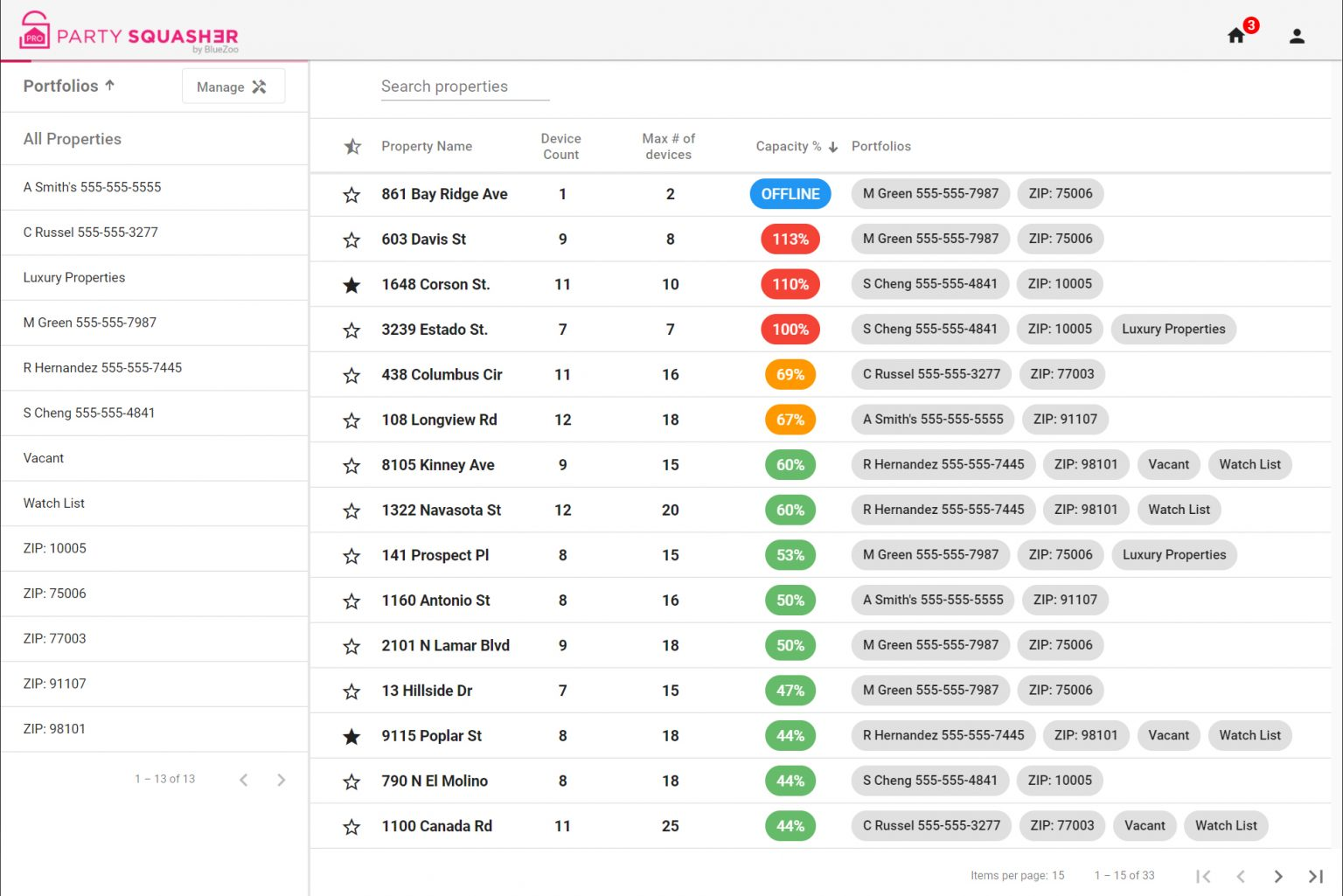
Party Squasher focuses on occupancy by estimating the number of mobile devices in and around the property. It’s effective as an Airbnb party prevention device when your main risk is extra people arriving. The tradeoff is that it’s not noise-first, and dense urban settings can introduce noise into the counts if neighbors are very close.
Pros
Strong at spotting large gatherings early
Simple guest-count thresholding
Potential considerations
Less helpful for tracking noise trends inside the unit
5) Alertify (best for all-in-one basic monitoring)
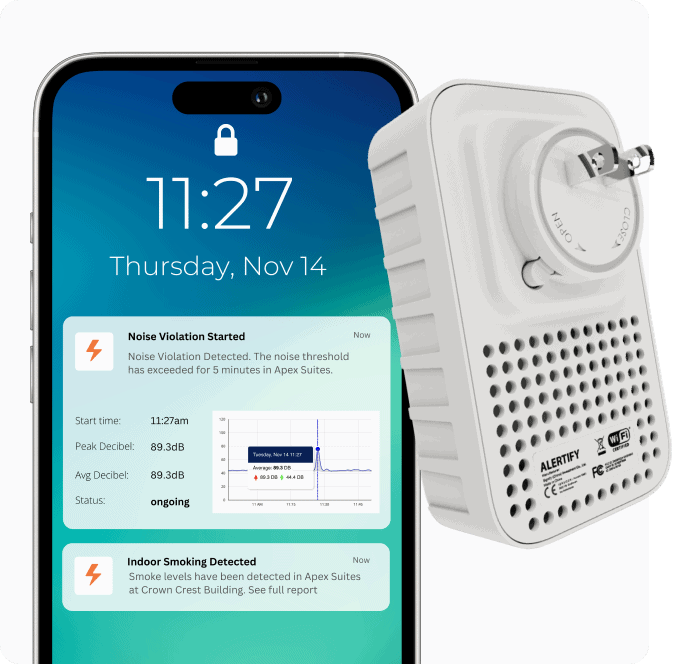
Alertify is a straightforward monitoring option that goes beyond noise alone. It includes indoor smoking detection, occupancy alerts, environmental monitoring, tamper alerts, guest messaging, and integrations, making it a solid fit for operators who want a broad but still relatively simple setup.
Pros
Covers the core monitoring basics well
Includes smoking detection, occupancy, and environmental alerts
Offers guest messaging and integrations for easier escalation.
Potential considerations
Not as broad or polished as Minut in overall platform depth
Better suited to straightforward monitoring than highly advanced operational workflows
Best noise monitoring device for Airbnb comparison table
Device
Best for
Real-time alerts
Privacy-friendly
Occupancy insights
Additional monitoring
Minut
Vacation rentals
Yes
Yes
Yes (crowd risk)
Indoor climate, cigarette smoke, occupancy
NoiseAware
Basic monitoring, outdoor areas
Yes
Yes
Yes
Noise and occupancy only
Roomonitor
Party prevention
Yes
Yes
Yes
Basic analytics
Party Squasher
Occupancy tracking
Yes
Yes
Strong
Guest count focus
Alertify
All-in-one monitoring
Yes
Limited details
Yes
Indoor climate, cigarette smoke, occupancy
What this comparison shows
There isn’t a universal “best.” The right pick depends on your property type, how many units you run, and how much you want to automate. If you only need noise alerts for a patio and pool, NoiseAware is compelling. If your biggest risk is guest count, Party Squasher flags crowding early. But for Airbnb hosts who want broader visibility with fewer devices and fewer late night calls, one option consistently covers more bases.
Why Minut stands out for Airbnb hosts
Noise is only one part of the risk. Today’s hosts need quiet nights and smoke-free interiors — and when something goes wrong, a timestamped record. They also need privacy-friendly monitoring that guests will accept. Minut lands here because it turns a single, camera-free sensor into a broader safety net: noise level alerts, occupancy awareness, environmental checks, and cigarette smoke detection, plus automation that handles the first nudge for you.
The M3 sensor can be placed indoors or outdoors, and Minut has dozens of integrations including with PMS and OTA platforms.Its automated guest messaging goes beyond nipping noise in the bud; it can immediately answer their questions during their stay. And because it has a unified inbox, your automated guest messages also appear in your Airbnb inbox..
How to choose the best noise monitoring device for Airbnb
For single Airbnb hosts
Prioritize affordability, fast setup, and false-alarm reduction. If the goal is a simple noise monitor for Airbnb hosts, NoiseAware and Alertify cover the basics. If you also want cigarette smoke detection and occupancy awareness without adding devices, Minut is the smart noise monitoring for Airbnb that grows with you as your calendar fills.
For multi-property managers
You need centralized visibility, automations that run 24/7, and features that reduce weekend escalations. Minut’s combination of noise, occupancy, and environmental monitoring keeps teams focused on turnovers and messaging, not firefighting. The ability to message guests automatically, log events, and pull reports supports owner conversations and policy enforcement.
For luxury and premium rentals
Your brand is the guest experience. You want privacy-friendly tools that stop noise quickly, detect smoking early, and give you a clean audit trail. Minut’s decibel-only approach respects privacy while still creating a timestamped record you can share with platforms or insurers, and its indoor climate tracking helps keep the home comfortable during swings in weather.
Common mistakes hosts make when choosing noise monitoring devices
Choosing based on price alone
Entry-level sensors can miss key signals. If your listing is near neighbors or in a permit-sensitive market, an all-in-one sensor that covers noise, occupancy, and cigarette smoke can pay for itself the first time a problem is resolved.
Ignoring privacy considerations
Airbnb allows decibel-only indoor devices if you disclose them and keep them out of sleeping areas. Avoid anything that records audio. Spell out the device in your listing and house rules, then keep your on-site signage short and friendly.
Choosing a device that only solves one problem
Occupancy awareness, indoor climate checks, and cigarette smoke detection give you a proactive layer for party prevention and property monitoring. That’s often the difference between a headed-off incident and a permit headache.
Conclusion
If you’re weighing the best noise monitoring device for Airbnb, start with what actually breaks quiet nights: sustained noise, unexpected crowding, and rule-breaking like indoor smoking. Then pick the tool that resolves those issues early, documents them, and respects guest privacy.
For most single and multi-unit hosts, Minut stands out because it combines decibel alerts, occupancy awareness, indoor climate checks, and cigarette smoke detection in one device, plus automation and plenty of integrations.
Best noise monitoring device for Airbnb FAQs
What is the best noise monitoring device for Airbnb?
For many hosts, Minut is the best noise monitoring device for Airbnb because it pairs privacy-safe decibel monitoring with occupancy awareness, cigarette smoke detection, and automated guest messaging in one sensor.
Can noise monitoring devices detect parties in Airbnb?
They detect the conditions that lead to parties: sustained loud noise and unusually high occupancy. Tools like Minut combine both, so you can step in before it escalates.
Does Minut record conversations?
No. Minut measures decibel levels only and doesn’t record audio or use cameras.
What features should Airbnb hosts look for in a noise monitor?
Look for decibel-only monitoring, real-time alerts, occupancy awareness, simple install, and multi-property automation. Extras like indoor climate and cigarette smoke detection add protection across seasons and stays.
How do noise monitoring devices help prevent complaints?
Noise monitoring devices alert you to sustained noise and can message guests automatically. Most guests don’t realize how loud they are, so a single message can resolve the issue, and a timestamped alert provides proof if you need to involve the platform.
What is the best privacy-friendly noise monitor for Airbnb?
Minut is designed specifically for privacy-friendly monitoring with no audio or cameras, clear disclosure, and platform-integrated messaging.
Do Airbnb noise monitoring devices work for multiple properties?
Yes. Choose a tool with a centralized dashboard, automation, and alert histories so you can manage several listings without adding overnight work.







.jpeg)