New Orleans short-term rental regulations: permits, zoning, taxes, and compliance explained
This guide explains New Orleans' strict STR rules, including permit categories (NSTR/CSTR), zoning eligibility, operator licensing, inspections, lottery allocation for residential blocks, and active enforcement.
New Orleans is a world-class destination with a uniquely strict approach to short‑term rentals. Unlike “list it and see” markets, the city runs a permit-driven program that ties legality to what you operate, where you operate it, and how you operate day to day.
Permits run through the city’s Short Term Rental Administration, backed by zoning rules, inspections, safety attestations, operator-level licensing, lottery allocations in residential blocks, and active enforcement.
If you manage properties in New Orleans, the practical question isn’t if you can host. It’s whether your exact unit, in its exact location, under the right permit category, can meet the city’s conditions.
Are short-term rentals legal in New Orleans?
Yes, if you have the right permit for the right place and comply with operating rules and taxes. New Orleans regulates short‑term rentals locally through permits, zoning eligibility, inspections, and operator licensing administered by the city’s Short Term Rental Administration. Many residential areas are subject to strict density caps, with lottery-based allocation where eligible demand exceeds the local limit.
What counts as a short‑term rental in New Orleans?
Most short‑term rental (STR) rules in New Orleans apply to stays of fewer than 30 consecutive days. The city distinguishes among several STR categories rather than using a single universal definition, which is why your permit type is central to compliance.
Historic districts, like the Vieux Carré/French Quarter, can carry additional rules, so it’s worth verifying district‑specific provisions through the city’s zoning resources and permitting program. The city’s current policy direction is reflected in the Transient Lodging Study and related interim zoning actions.
The city framework: permit‑based regulation, not statewide preemption
Louisiana does not run a statewide STR permit system for New Orleans. Instead, STRs are regulated locally through the municipal code, the Comprehensive Zoning Ordinance (CZO), and the permitting process overseen by the Department of Safety & Permits’ Short Term Rental Administration.
How New Orleans classifies STRs
New Orleans recognizes multiple STR categories:
In the current program and study materials: Non‑Commercial Short Term Rentals (NSTRs) and Commercial Short Term Rentals (CSTRs). The Transient Lodging Study defines NSTRs as operator‑occupied rentals of less than 30 days “by any agent for income.” CSTRs are occupied units leased for less than 30 days but not operator‑occupied, typically in non‑residential districts.
In older ordinance structures, you may still see references to Type A (accessory), Type T (temporary), and Type C (commercial) licenses. While terminology evolved, the practical takeaway remains the same: your category determines where you can operate and under what conditions.
Why this matters
New Orleans doesn’t simply decide “yes” or “no” on STRs. It regulates:
the kind of STR you’re operating (operator‑occupied vs commercial)
whether the unit is eligible in its zoning/district
whether an operator is licensed and tied to the unit
whether the dwelling has passed inspections and is current on taxes and fees
If any of these fail, your operation is not compliant.
Permit and licensing structure
The city’s materials explicitly frame STR permits as a revocable privilege. Licenses can be suspended, revoked, or not renewed for non‑compliance, misrepresentation, failed inspections, or unresolved violations. That language reflects New Orleans’ enforcement posture, which has strengthened as the program matured.
Operator permit
New Orleans’ operator permit authorizes an individual to operate or manage STRs, subject to city requirements. This brings a number of obligations, including identity documentation, maintenance of guest registration records, nuisance‑prevention and neighborhood response planning, and acknowledgements of compliance with City Code Chapter 26 and the CZO.
Non‑Commercial Short Term Rental (NSTR)
For residential neighborhoods, the flagship category is the Non‑Commercial Short Term Rental (NSTR). NSTRs are operator‑occupied, and eligibility is tightly limited. When eligible applications exceed the local limit, the city uses a lottery administered by the STR office to assign licenses. This is a vital consideration if you’re underwriting a deal, because it means that receiving an NSTR license is not guaranteed.
Commercial Short Term Rentals (CSTR) and legacy license types
Commercial Short Term Rentals generally occur in non‑residential districts under rules that are distinct from NSTRs. In legacy code materials you’ll see Type C licenses tied to commercial activity and Type A/T for accessory/temporary use. The city’s current study and proposed updates continue to align CSTRs with broader transient lodging oversight.
Zoning and location: the real gatekeeper
Zoning is often the make‑or‑break factor in New Orleans. Eligibility for STR licensing is tied to the Comprehensive Zoning Ordinance, and special districts carry additional restrictions. For example, the Vieux Carré/French Quarter imposes some of the strictest limits, and certain areas are prohibited for STR licensing entirely, such as portions of the Historic Garden District. The city’s official lookup tool “Where Y’At” provides “zoning, district, and service information for your location” so always use this as a first step.
Application requirements, inspections, and ongoing compliance
As reflected in its short term rental handbook and related program materials, New Orleans requires more operational documentation than many cities, including the following:
proof of liability insurance, smoke and carbon monoxide alarms, a fire extinguisher, and visible emergency contact posting
a floor plan or egress/evacuation diagram
confirmation of building/property maintenance compliance and no outstanding taxes or liens
owner consent if the applicant is a renter
City of New Orleans' STR handbook
There are also neighborhood notification components, written sanitation and noise‑abatement plans, and documented operator availability standards. The city’s Transient Lodging Study outlines required placards and on‑site information: the permit must be prominently displayed on the front facade with:
the license number
owner/operator contact
license type (Non‑Commercial or Commercial)
occupancy/bedroom limits
Taxes: what New Orleans STR operators must handle
Louisiana state layer
Louisiana imposes taxes on sleeping rooms and similar accommodations. The state adjusted elements of its tax framework effective January 1, 2025, so you should verify current requirements for your property type and location with the Louisiana Department of Revenue.
New Orleans local layer
In addition to the state tax, operators owe city-level taxes and fees. New Orleans references city sales tax, an STR equalization occupancy tax, and occupancy‑related fees that vary by STR type. Rather than rely on a static rate table here, review the city’s tax pages before filing or forecasting.
Platform collection caveat
Don’t assume that marketplace collection covers everything. Even if a platform collects state or city taxes on your behalf, registration, permit compliance, and in some cases return filing can remain your responsibility. The cleanest approach is to register properly, maintain permits, and verify with both the city and the state if filings are still due.
What this means for operators: a practical summary
New Orleans allows STR activity, but it’s highly structured, permit-driven, and operationally demanding. The wrong category, the wrong location, or a weak compliance setup can stop an STR business before it starts. Here’s a checklist to help you stay compliant:
Confirm the exact address is eligible through Where Y’At.
Determine the correct permit category, whether NSTR or CSTR, and check for any lottery caps in residential areas.
Complete all operator-level and unit-level requirements.
Prepare safety, sanitation, and nuisance-response documentation.
Keep an inspection-ready binder.
Register with tax authorities and verify current city and state tax obligations.
Don’t assume marketplace tax collection replaces your filing duties.
Stay reachable 24/7 and document complaint resolution.
Review leases, condo documents, and HOA rules before listing.
Conclusion
New Orleans remains one of the South’s most carefully controlled STR markets, and its approach is deliberate: permit the right activity in the right place with the right safeguards, then enforce consistently.
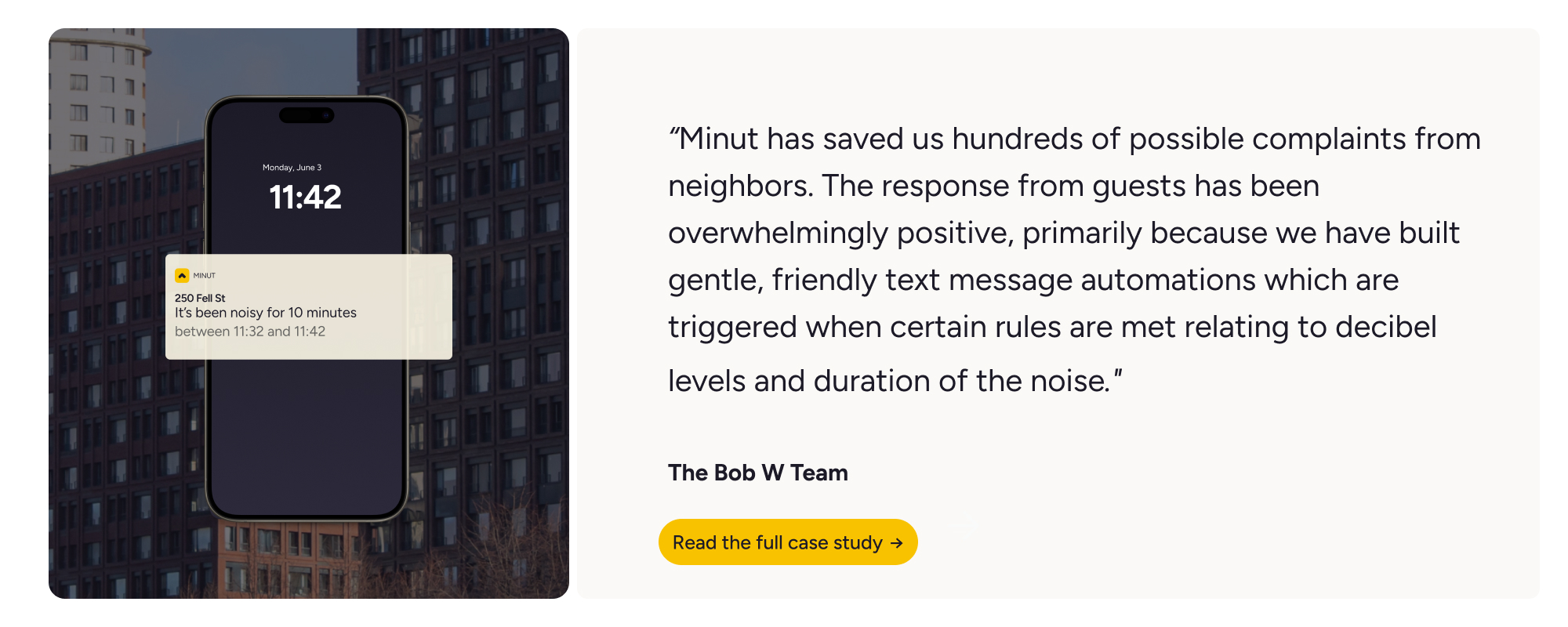
If you manage multi‑unit portfolios and want to strengthen nuisance‑prevention without compromising guest privacy, explore privacy‑safe monitoring and response workflows alongside your permitting and tax programs. Thoughtful, proactive operations are your best asset in New Orleans.
FAQs
Are short‑term rentals legal in New Orleans?
Yes, STRs are allowed in New Orleans with a valid permit for the correct category and location. The city regulates STRs locally through permits, zoning eligibility, inspections, and operator licensing.
What’s the difference between an operator permit and an STR permit?
An operator permit licenses the person responsible for operating or managing STRs, while the STR license attaches to the specific unit. Many New Orleans STRs require both.
What is a Non‑Commercial Short Term Rental (NSTR)?
An NSTR is an operator‑occupied STR in a residential area. Many residential areas are subject to severe density caps, including lottery-based allocation where eligible applicants exceed the area limit.
What taxes apply to New Orleans short‑term rentals?
Expect state and city layers. Verify state rules through the Louisiana Department of Revenue and city rules at City of New Orleans sales tax and revenue. Rates and fees can change, so check before filing.
Disclaimer
This article is provided for informational purposes only and does not constitute legal or tax advice. Regulations change, and their application depends on specific facts. Always consult the City of New Orleans’ official resources, including the Short Term Rental Administration, the Where Y’At address lookup, the city’s tax and revenue pages, and the Louisiana Department of Revenue, or seek qualified counsel before making decisions.











.jpeg)