Ohio's short-term rental rules are shaped by a mix of state lodging taxes and city-by-city ordinances covering zoning, permits, noise, and occupancy. This guide explains the current compliance landscape and highlights pending legislation that could limit some local restrictions.
Ohio’s short-term rental laws can look refreshingly straightforward at first glance. There’s no statewide STR license to obtain, and the state’s role is largely confined to taxes and general legal parameters. But dig a little deeper and you’ll find a patchwork of city and county rules that govern where you can operate, which permits you need, the number of guests you can host, and how your property must be managed day-to-day.
The result is a local‑first framework that varies block by block in some metros.
This article explores Ohio’s short-term rental rules in 2026 and beyond, and explores how to translate the rules into practical, privacy-first operations.
Ohio short-term rental laws at a glance
Ohio regulates short-term rentals through a combination of state tax law and local ordinances. The state applies a tax to transient lodging and authorizes local lodging taxes, while cities and counties set most operating rules through zoning, permitting, occupancy, and nuisance standards.
What counts as a short-term rental in Ohio?
Ohio law does not define a single, statewide “short-term rental.” Instead, STRs are defined locally, often under terms like “short‑term rental,” “transient rental,” or “vacation rental.” Many jurisdictions draw the line at stays under 29 or 30 consecutive nights, but the cutoff is in the city or county code you operate under. For tax purposes, the Ohio Administrative Code interprets a “transient guest” as someone staying under 30 days.
State-level rules that apply everywhere in Ohio
State tax on transient lodging
Ohio applies a state‑level tax to transient lodging (often around 5.75–6%), and additional county and city lodging taxes may apply. That state tax generally applies to the full price of the stay, including rent, cleaning fees, and required charges. Ohio’s sales and use tax chapter authorizes and structures how lodging is taxed statewide. Operators typically register with the Ohio Department of Taxation unless they exclusively use a platform that fully collects and remits on their behalf.
County and municipal lodging taxes
Counties and cities often impose their own lodging, bed, or excise taxes with separate registrations and filing schedules. For example:
Columbus imposes a 5.1% city lodging excise with monthly filings spelled out in city code §371.02.
Cincinnati administers a 7% city excise and confirms that Airbnb remits under a city agreement, leaving hosts on other platforms to collect and remit directly.
Cleveland has a 3% excise “on transactions by which lodging by a hotel is, or is to be, furnished to transient guests.”
State authority vs. local control
Ohio currently doesn’t have a comprehensive short-term rental preemption law, so cities and counties currently have broad authority to regulate land use, licensing, and nuisance issues related to STRs.
However, pending legislation (SB 104 and HB 109) would limit some local tools if enacted, such as outright bans, caps on the number of STRs, and owner-occupancy mandates. Operators should monitor state activity closely, as the regulatory balance may shift.
City and county regulation
For now, most of what matters happens locally. Cities and counties decide:
whether STRs fit in residential districts
how they’re licensed
what operating standards apply
Zoning compatibility, occupancy caps, parking, signage, and noise controls are all set in local code. This is why two STRs across a municipal line, or even across a zoning boundary, can face different requirements, fees, and enforcement intensities.
Common local STR frameworks in Ohio
Zoning-based compatibility
Ohio cities and counties often decide whether STRs are a residential use, a lodging use, or a conditional use. Some jurisdictions allow STRs broadly with standards. Others limit non‑owner‑occupied STRs to certain mixed‑use or commercial districts, or require a conditional use approval for detached homes in low‑density neighborhoods. As a result, verifying the underlying zoning district for each property is a foundational due diligence step.
Permit, registration, and licensing programs
Licensing is where the day‑to‑day rules live. Columbus requires a license for any STR, the permit number to be posted inside the unit and in listings, and mandates a 24/7 local emergency contact. The city also requires BCI fingerprint background checks for the applicant, the on‑call contact, and any property manager, with annual fees set by whether the unit is a primary residence.
Cincinnati runs a citywide registry and registration is valid for three years. Like Columbus, Cincinnati requires displaying the registration ID both within the unit and on listings.
Across programs, three elements recur: posting the permit ID in ads, naming a 24/7 local contact, and renewing on a strict cadence.
Owner-occupancy and use limits
Historically, some Ohio jurisdictions have drawn distinctions between primary‑residence STRs and non‑owner‑occupied units, or limited the number of days per year non‑primary residences can be rented. As an example of a strict approach, Dublin limits STR activity to two seven‑day increments per calendar year, while also requiring registration and a local point of contact.
Because the General Assembly is debating bills that could curb such tools, operators should treat owner‑occupancy mandates and annual caps as subject to change rather than permanent features.
Taxes: what Ohio STR operators should expect
State + local tax layering
The state’s transient lodging tax typically runs around 5.75–6%, with local lodging taxes for counties and cities stacked on top. In many Ohio markets, the combined rate falls between 9% and 15% once state, county, and city components are added.
Can platforms collect taxes?
Major platforms may collect some layers of tax automatically, often the state rate and sometimes a county or city excise if a collection agreement exists. But “platform collects” isn’t a blanket exemption from compliance. Codes in cities like Columbus make clear that hosts are responsible for any taxes a platform doesn’t collect, and they must still register and file returns where required. In ordinance 41-2021, Cincinnati similarly explains how its 7% excise is remitted when a platform has an agreement and when it does not.
Safety, noise, and nuisance regulation
Noise and quiet hours
Noise is regulated locally and quiet hours are common, often running from 10 p.m. to 7 a.m. Many ordinances also restrict parties and events.
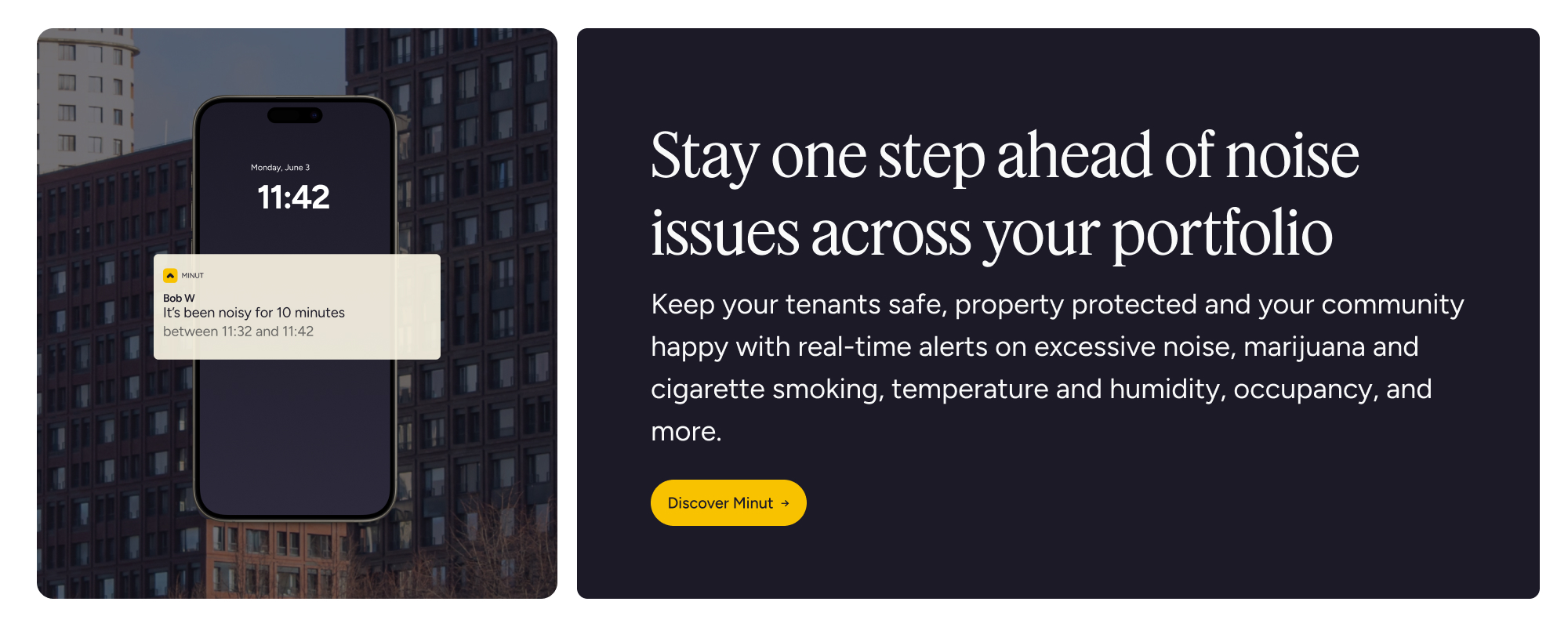
For professional operators, prevention is better than cure. Privacy‑safe monitoring that detects sustained noise above permitted thresholds and automates courteous reminders can defuse issues before they escalate, and keep you on the right side of regulations.
Occupancy and parking
Ohio cities often limit overnight occupancy to two adults per bedroom, sometimes allowing two additional guests beyond that, such as in Toledo. Parking plans are often part of the permit submission, especially in dense neighborhoods where on‑street competition is a recurring complaint.
Safety and inspections
Local programs typically require basic life‑safety equipment, such as smoke alarms, carbon monoxide detectors, and fire extinguishers, and many of these require initial or periodic inspections. Columbus details sleeping room square‑footage minimums and interior posting requirements in its STR guidance, underlining that STRs are expected to meet minimum housing and fire standards.
Bottom line
Ohio’s short-term rental laws can be deceptively complex: the state sets the tax baseline and leaves most operating rules to cities and counties, which means compliance is hyperlocal and evolving. Success comes from understanding your zoning, securing the right permits, stacking state and local tax registrations properly, and running a professional operation that minimizes neighbor impacts.
With the right playbook, you can scale compliantly in cities, suburbs, and resort communities.
Identify the city or county ordinance that governs each address and confirm the property’s zoning compatibility.
Map the licensing, inspection, and display requirements, including the 24/7 local contact and any background checks.
Register for state and applicable local lodging taxes and verify exactly which layers your platform collects.
Build guest‑facing communications around quiet hours, occupancy, and parking to reduce neighbor impacts and calls for service.
FAQs
Are short-term rentals legal in Ohio?
Yes, STRs are legal in Ohio, but they’re governed primarily by local ordinances. You must comply with your city or county’s zoning, licensing, and nuisance rules and collect the appropriate state and local lodging taxes.
Does Ohio require a statewide STR license?
No, there is no statewide STR license. The state sets tax and general legal parameters, while cities and counties handle land‑use, licensing, and nuisance issues.
What taxes apply to Ohio short-term rentals?
Expect a state‑level tax on transient lodging plus local lodging excises where applicable. Combined rates frequently fall between 9% and 15%, depending on the city and county.
Do platforms collect Ohio lodging taxes?
Sometimes. Platforms like Airbnb may collect the state rate and, in certain cities, a local excise under a collection agreement. Cincinnati confirms platform collection for Airbnb, for example, but hosts remain responsible for any taxes a platform doesn’t collect and for required registrations and filings. Always verify your obligations with each jurisdiction.
Disclaimer
This article is for informational purposes only and does not constitute legal or tax advice. Laws and policies change, and their application depends on specific facts. Always consult with qualified legal or tax professionals and verify requirements with relevant state, county, and municipal agencies before operating a short‑term rental in Ohio.






.png)



.jpeg)