Noise complaints are a major operational risk for vacation rentals, and noise complaints in short term rentals threaten the two things that hosts value most: reputation and regulatory standing.
They also travel fast online, shaping negative reviews. While platforms have improved screening for party-prone stays, you can’t outsource responsibility for how your guests behave.
The good news: prevention doesn’t require cameras or invasive monitoring. Privacy‑safe noise technology, combined with clear expectations and timely communication, can stop problems early while keeping guest trust intact.
This article explains what drives short-term rental noise, how local rules define compliance, and what actually works to prevent noise complaints in short term rentals, without compromising guest privacy.
Why noise complaints are the #1 risk for short-term rentals
Noise complaints in short term rentals can ripple quickly across your business. In fact, most operators discover that short term rental noise complaints are the fastest way to damage neighbor trust and platform standing. A single late‑night incident can lead to messages from neighbors, a police call, and an Airbnb case that jeopardizes account health. Even though platforms report that the rate of party allegations is low and declining, with Airbnb citing a more than 50% drop in party reports since its 2020 global ban, incidents carry outsized consequences for operators in regulated cities.
In many regulated markets, even one incident of noise complaints in short term rentals can lead to fines or listing penalties.
The impact often stretches far beyond a single weekend:
Guest reviews: Even guests who were not involved can rate a stay poorly if they’re approached by neighbors or asked to lower the volume late at night.
Neighbor relations: Neighborhood noise complaints build opposition to short‑term rentals, and can strain relationships with the local community.
City compliance and fines: Many cities have noise restrictions, including quiet hours and decibel limits, such as Palm Springs’ “not audible at the property line” noise standard.
Airbnb account health: Repeat cases can trigger listing suspensions or removals when noise complaints Airbnb receives stack up against your property.
The current regulatory climate expects early intervention, which is why privacy‑safe noise monitoring has become the modern standard for preventing noise complaints in short term rentals while honoring guest privacy and platform policies.
What causes noise complaints in short-term rentals?
Short‑term rental noise tends to be predictable in timing and type. Evening and late‑night hours, especially on weekends, see the highest volumes of neighborhood noise complaints, with many markets seeing spikes during the summer and holiday weekends.
These peak periods are exactly when noise complaints in short term rentals tend to increase the fastest.
Common triggers include:
Parties and gatherings: Unauthorized celebrations, birthdays, and “open invite” events.
Late‑night activity: After‑hours balcony chatter, backyard pool music, and echoes in urban courtyards.
Lack of guest awareness: Travelers often do not know local quiet hours or building norms.
Expectation gaps also play a role. Hotels have staffed front desks and built‑in sound dampening, but urban apartments place guests closer to neighbors than detached homes, and outdoor areas can magnify bass and voices. In residential neighborhoods, what seems like normal socializing to travelers can read as disruptive to long‑term residents, which is why noise complaints in short term rentals can escalate more quickly than disputes in traditional leases.
Are hosts responsible for guest noise?
The short answer is yes, in practice and often in law. Airbnb policies prohibit disruptive gatherings and require guests to follow house rules. The company deploys targeted anti‑party screens around holidays, blocking tens of thousands of high‑risk booking attempts in the U.S. during summer and New Year windows.
This reflects how serious party prevention Airbnb strategies have become for protecting hosts, neighbors, and communities.
If repeated noise complaints Airbnb receives are linked to your listing, you risk penalties up to temporary or permanent suspension. That’s why proactive prevention protects listings better than trying to resolve disputes after the fact.
Quiet hours, decibel levels, and noise rules explained
“Quiet hours” are specified periods when cities and buildings expect lower sound. Many U.S. municipalities define nighttime quiet hours roughly from 10 pm to 7 am, with stricter limits and enforcement during those windows.
Understanding decibel levels for rentals helps translate policy into practice:
Duration over spikes: A single laugh or a slammed door is less important than sustained noise above a threshold.
Hosts should define clear quiet hours rules short term rentals can follow, set different thresholds for day and night, and communicate in plain language. The goal is not silence, but managing sustained disturbance that travels beyond the property line, especially during quiet hours Airbnb guests agree to observe.
Why traditional noise control methods fail
Most hosts start with house rules, which are necessary but insufficient for reducing noise complaints in short term rentals long term. Guests on vacation rarely memorize quiet hours, and text reminders alone can arrive too late. Relying on neighbor reports means you hear about problems after they have already escalated.
Manual checks don’t scale for busy managers. Cameras aren’t a solution either. In 2024, Airbnb banned all indoor cameras globally to prioritize guest privacy and align with community expectations, while permitting privacy‑safe decibel monitors as long as they aren’t placed in bathrooms or bedrooms, and guests are informed of their presence.
To prevent noise complaints Airbnb and cities expect early intervention, which requires consistent detection, polite nudges, and clear evidence of action.
How to prevent noise complaints without violating privacy
To stop noise complaints in short term rentals, set clear guest noise rules, define quiet hours, and use a privacy‑safe noise monitoring device for rentals to alert you to sustained disturbances. Pair real‑time alerts with polite, automated guest messages before issues escalate to neighbors or city hotlines, and document actions for platform and city compliance.
Start with transparent communication, then layer in automation so you can act quickly and consistently. Here’s how it could look in practice:
Clear guest communication before and during stays: Set guest noise rules on your listing, in pre‑arrival messages, and in‑home guides. Explain what quiet hours mean in your area and how to enjoy outdoor spaces responsibly.
Automated reminders before quiet hours: Schedule a friendly “quiet hours begin at 10 pm” message. This small nudge is effective because it closes the awareness gap.
Use alerts instead of confrontations: When noise crosses your threshold for a set duration, send a polite, automated text. This can resolve most issues in minutes, without a heated in‑person interaction.
Make privacy‑safe noise monitoring your compliance backbone: A sound level monitor creates the early signal you need to stop neighborhood noise complaints before they start.
How privacy-safe noise monitoring works
Privacy-safe technology is one of the most reliable ways to prevent noise complaints in short term rentals without invading guest privacy. Privacy-safe noise monitoring measures sound levels without recording or transmitting conversations.
Sound level monitoring vs audio recording
Whereas audio recording captures and stores the content of conversations, a sound level monitor works by continuously measuring decibels and detecting when levels reach or exceed a custom threshold for a certain duration. It doesn’t capture speech content.
What devices measure and why duration matters
Modern short‑term rental noise monitoring devices track average and peak sound levels, focus on sustained thresholds, and can distinguish environmental noise from human activity. This means an ongoing party will be flagged, but a dropped plate won’t.
Alerts empower early, polite action
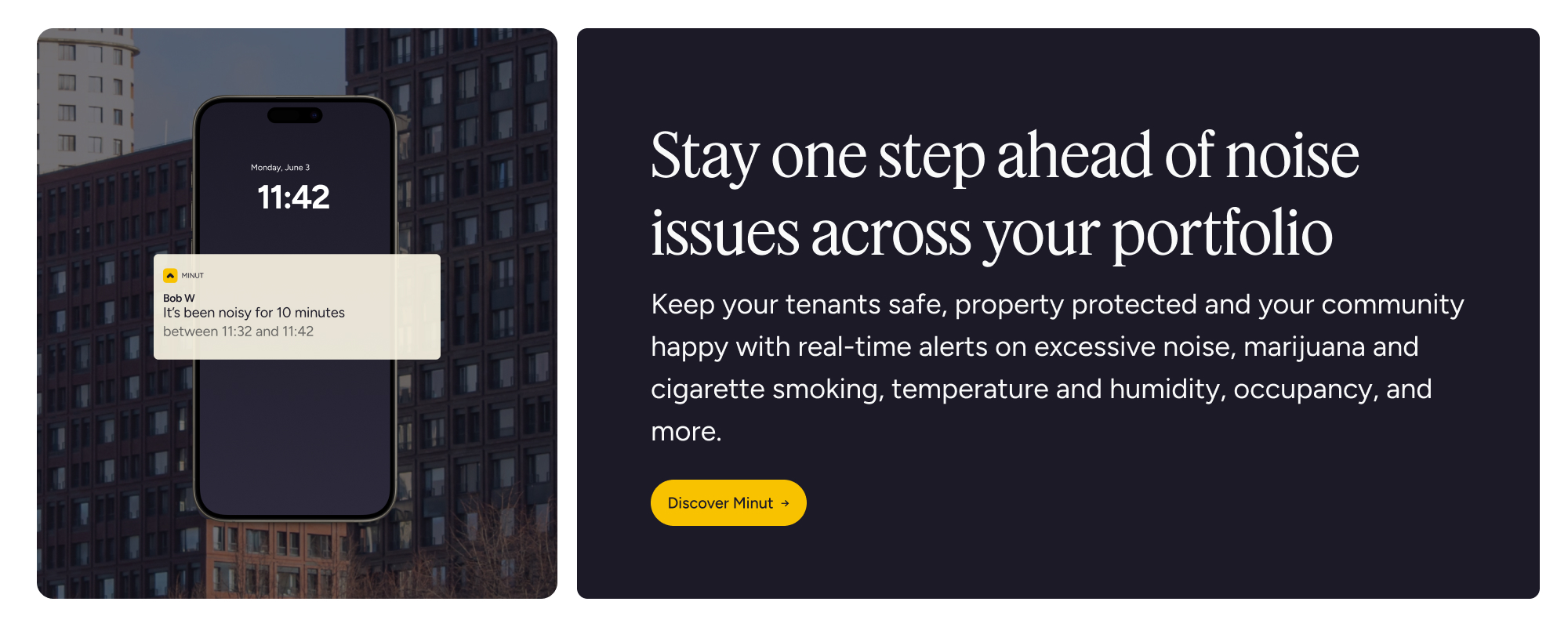
When noise persists above your chosen threshold, you receive a real‑time alert. Many operators pair that alert with an automated SMS or platform message to guests. This approach prevents neighborhood noise complaints while minimizing friction.
Address guest privacy directly
Transparency builds trust. It also supports STR compliance by showing you have proactive systems in place. Disclose devices on your listing and explain that they measure sound levels only, and respect their privacy.
How Minut helps prevent noise complaints in short-term rentals
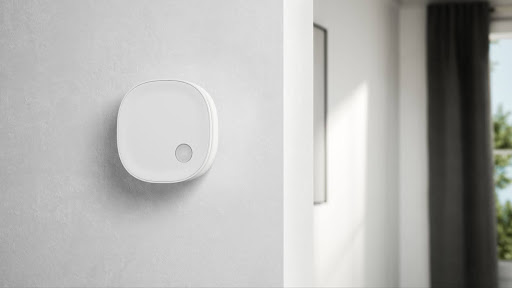
Minut was built for hospitality operations, supporting quiet hours enforcement, guest accountability, and neighborhood protection across indoor and outdoor spaces.
For single‑listing hosts, Minut’s all‑in‑one app makes it simple to set day and night thresholds, automate messages, and demonstrate that you acted promptly if a case is raised. Minut also integrates with property manager tools and PMS platforms, so portfolio‑level monitoring, reporting, and workflows happen in one place.
Preventing repeat noise complaints across multiple listings
To stay one step ahead of noise complaints across multiple listings, try to identify patterns:
Weekend vs weekday trends: Nights from Friday to Sunday routinely carry higher risk, with holiday weekends a special case. Airbnb’s targeted screening on those dates demonstrates how concentrated the risk is, as shown in the holiday policy results.
Event‑driven spikes: Local festivals, sports finals, and graduation weekends tend to increase short‑term rental noise, particularly outdoors.
Building and block‑level patterns: Courtyards, hard surfaces, and shared walls can amplify bass and voices. Adjust thresholds by unit and time.
At scale, portfolio‑level dashboards reveal where neighborhood noise complaints originate and which guest segments need clearer pre‑arrival expectations. Use this data to tune quiet hours Airbnb guests see in your listing, update house copy, and adjust minimum stays or pricing around high‑risk nights.
What to do if a noise complaint still happens
Even with strong prevention, incidents can occur. A simple, consistent response plan protects your business:
Acknowledge and act: As soon as you receive an alert or neighbor message, send a polite text to guests explaining the quiet hours and asking them to lower the volume. Most events resolve at this stage.
Escalate incrementally: If noise persists, send a second message or place a calm call. Consider on‑site support if the disturbance continues. Avoid confrontation. Focus on safety and community standards.
Document everything: Save your device data, screenshots of messages, and notes. This record shows you acted promptly and reasonably, which matters for Airbnb support and city compliance.
Follow up with neighbors: Let them know you acted within your policy window. This builds goodwill and reduces future neighborhood noise complaints.
Common mistakes hosts make with noise complaints
Several missteps repeatedly show up across markets:
Reacting instead of preventing: Waiting for a neighbor to call means you’re already on the back foot.
Using invasive tools: Cameras in living areas violate platform rules and erode guest trust. Privacy‑safe noise monitoring is the accepted standard.
Ignoring local rules: Many cities specify response times and audibility standards. Failing to meet them can be cited as a separate violation.
Treating noise as only a guest issue: Without clear workflows and property manager tools, even well‑intentioned hosts struggle to respond fast enough.
Choosing the right tools to prevent noise complaints
The right system helps stop noise complaints in short term rentals early, before neighbors or platforms ever get involved.
If your goal is to prevent noise complaints in short term rentals, choose a solution built for hospitality:
Privacy: The device must measure decibels without recording.
Accuracy: Look for features that reduce false positives, including algorithms that handle wind and bass.
Alerts and automations: Real‑time notifications with configurable thresholds and polite, automated guest messaging.
Scalability: Integrations with PMS, smart locks, and messaging systems help multi‑property teams work from a single dashboard.
STR‑specific solutions outperform generic devices because they’re built around guest communication, unit‑level configuration, and platform integrations that accelerate resolution.
Minut’s privacy-safe noise monitoring system helps hosts detect sustained noise early, enforce quiet hours, and prevent complaints without recording conversations.
Noise complaints in short-term rentals FAQs
1. What causes noise complaints in short-term rentals?
Parties and late‑night socializing are the most common triggers, especially on weekends and holidays. Lack of awareness about local quiet hours and building norms drives many incidents.
2. What decibel level is considered a noise violation?
It varies by jurisdiction. NYC caps “commercial music” at 42 dB(A) inside nearby dwellings with added bass limits, whereas Las Vegas uses a 50‑foot audibility rule outdoors. Define decibel levels for rentals based on local standards and enforce quieter thresholds at night.
3. Are Airbnb hosts responsible for guest noise?
Yes. Hosts must prevent disruptive gatherings and respond quickly to complaints.
4. How can I prevent noise complaints without using cameras?
Use privacy‑safe noise monitoring to detect sustained disturbances, pair alerts with automated guest messages, and set clear quiet hours. This approach prevents noise complaints Airbnb receives while protecting guest privacy.
5. Do noise monitoring devices record conversations?
No. Privacy‑safe devices measure sound levels only. They can’t and don’t record. This is the accepted, compliant approach to managing short‑term rental noise.
6. Can noise complaints get an Airbnb listing suspended?
Repeat or severe incidents can lead to penalties up to suspension. Platforms also deploy anti‑party controls around high‑risk dates to reduce incidents in the first place, as explained in Airbnb’s enforcement update.
7. How fast should hosts respond to noise alerts?
Immediately. Some cities mandate response within an hour of a complaint, and fast action usually resolves issues before neighbors involve authorities. Automation helps you meet those expectations.
8. Are apartments more prone to noise complaints than houses?
Often yes, due to shared walls and courtyards that amplify voices and bass. Outdoor areas in houses also create risk, which is why outdoor monitoring matters.
9. What is the best way to prevent repeat noise complaints in STRs?
Review incident data across your portfolio, adjust thresholds and messaging by time and unit, and focus on high‑risk nights. Use automation for pre‑quiet‑hour reminders and post‑alert follow‑ups.







.jpg)