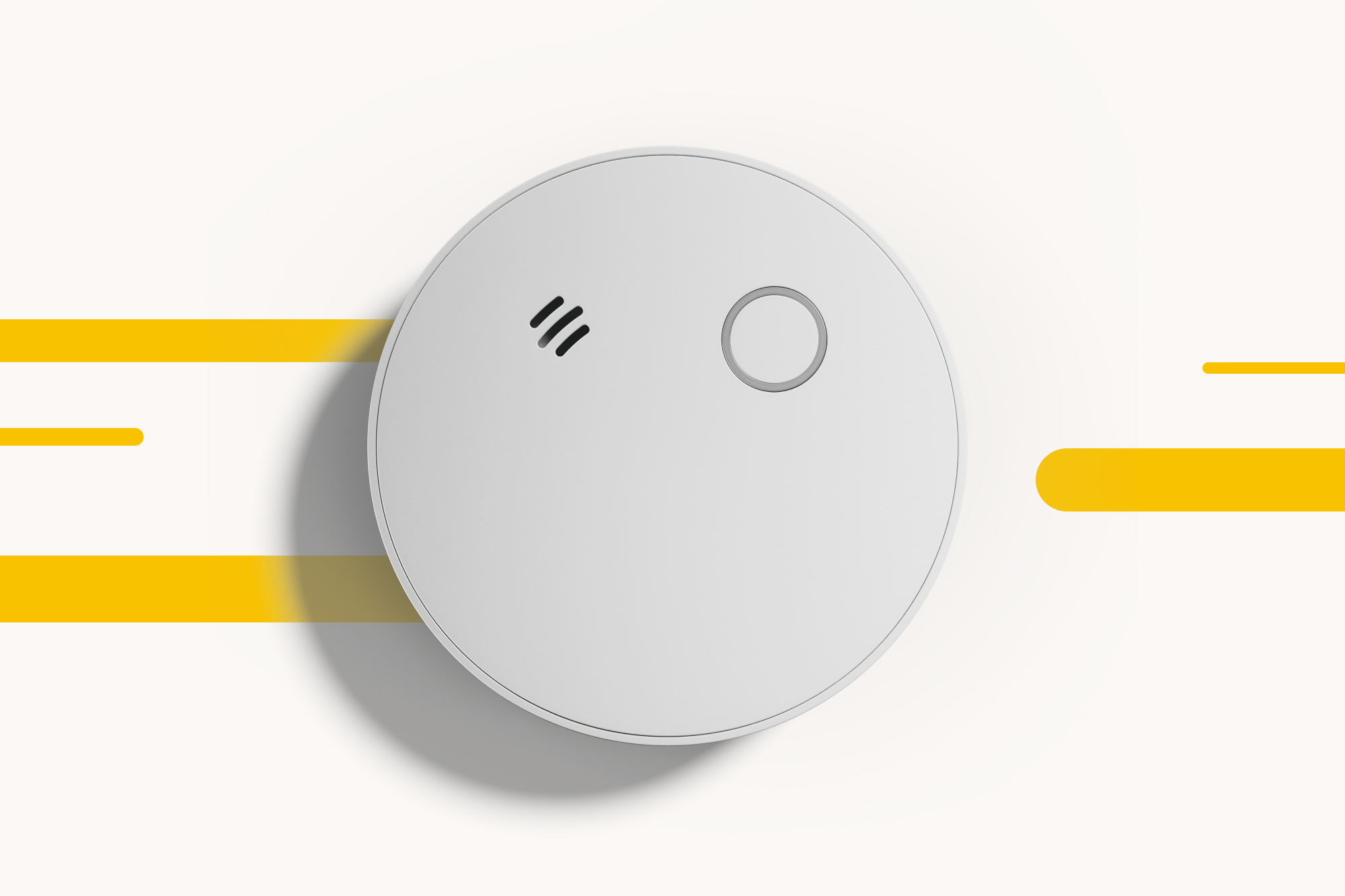
Picture this: a guest leaves a pan of bacon unattended on the stove while they step out to the patio. Within minutes, the kitchen fills with smoke. If there isn't a proper smoke detector installed, or if it's got a dead battery, that small kitchen incident quickly results in severe smoke damage or a full-scale fire.
Choosing the right smoke detector for rental property safety isn't just about passing an annual fire inspection. A delayed response increases the risk of property damage and serious injury.
Upgrading your smoke detection setup protects your guests, your physical property, and your business.
Why every rental needs a smoke detector for rental property safety
Short-term guests are unfamiliar with your appliances, emergency exits, and property layouts. When someone is cooking on a stove they've never used before, mistakes are more likely to happen.
Cooking is the leading cause of residential building fires, accounting for approximately 49% of all residential fire incidents, with an average loss of $73,000, and hospitality fire safety data shows that transient guests are statistically more likely to leave stovetops unattended.
The US Fire Administration notes that other common causes of smoke incidents in rentals include smoking indoors, appliance misuse, and overloaded electrical outlets. Temporary occupancy creates unpredictable safety behavior, which means you can't rely on guests to act with the same caution they'd use in their own homes.
Adequate detection of fire and smoke is essential. It helps to prevent injuries, reduce evacuation delays, and minimize emergency escalation, and the National Fire Protection Association (NFPA) reports that working smoke alarms cut the risk of dying in a home fire by roughly 60%.
Types of smoke detectors for rental property use
Ionization smoke detectors
Ionization alarms use a small radioactive source to ionize the air inside the device. When smoke enters the chamber, it disrupts the current and triggers the alarm.
They're best at detecting fast-flaming fires that produce small combustion particles, like burning paper or wood. However, they have a major limitation: they're highly prone to false alarms near kitchens and bathrooms. In a rental where guest cooking habits are unpredictable, this often leads to guests pulling the unit off the wall or removing the battery to stop the noise.
Photoelectric smoke detectors
Photoelectric alarms use a light beam aimed away from a sensor. When smoke enters the chamber, it scatters the light into the sensor, triggering the alarm.
These are much better for slow-smoldering fires that produce large smoke particles, like a cigarette dropped on a couch or overheating electrical wiring. Because they're less likely to trigger from normal cooking smoke, they're often recommended for bedrooms, living spaces, and hospitality environments.
Smart smoke detectors
Smart smoke detectors connect to your property's WiFi. They offer mobile alerts, remote monitoring, and interconnected systems.
These are incredibly valuable for property managers, vacation rentals, and remote operations. If an alarm goes off while the property is vacant, or while guests are sleeping with white-noise machines running, a smart detector pushes an alert directly to your phone so you can take immediate action.
Interconnected smoke alarm systems
With interconnected alarms, when one trigger activates, all alarms in the property sound simultaneously.
This is a massive benefit for larger homes, hotels, and multi-unit properties. If a fire starts in a basement game room, it'll instantly wake a guest sleeping on the third floor, closing a critical gap identified by fire safety experts.
Smoke detector comparison for rental properties
Feature
Basic Smoke Alarm
Smart Smoke Detector
Interconnected System
Remote alerts
No
Yes
Yes
Mobile app support
No
Yes
Sometimes
Best for
Small properties
Vacation rentals
Hotels/multi-unit
Installation complexity
Low
Medium
Higher
Guest safety visibility
Basic
Advanced
High
Real-time awareness
Limited
Strong
Strong
What property managers should prioritize
Rental properties need more than "minimum compliance." Meeting the basic fire code is your floor, not your ceiling.
When evaluating options, your key buying considerations should be real-time alerts, remote monitoring, scalability, and reliability. If you manage multiple properties, operational efficiency matters. After all, you can't drive to every unit to check if a battery is chirping. You need systems that tell you exactly what's happening, giving you a timestamped record you can use if you need to file an insurance claim or dispute a guest issue.
Where smoke detectors should be installed
Bedrooms and sleeping areas: Smoke alarms should be placed inside every sleeping room and outside every sleeping area. Nighttime fire risks are severe because of delayed awareness during sleep. If a fire starts in a bedroom, a hallway detector might not trigger fast enough to save the person inside.
Hallways and shared spaces: Hallway coverage, stairways, and shared guest spaces are critical for evacuation pathway safety. If you have a long corridor, place units every 30 feet to maintain proper coverage — guests need to hear the alarm clearly as they navigate out of an unfamiliar building.
Kitchens and high-risk areas: Kitchens carry the highest fire risk, but placing an alarm directly over the stove guarantees false alarms. To reduce false alarms while maintaining safety, keep alarms at least 10 feet from cooking appliances. If your space is too small for a 10-foot gap, mount it as far from the cooktop as practical and use a photoelectric sensor.
Common installation mistakes
Installing too close to vents or windows: Drafts blow smoke away from the sensor, delaying the alarm.
Poor coverage across floors: Missing a basement or a converted attic is a major code violation.
Lack of testing and maintenance: Even hard-wired alarms need routine test pushes.
What rental property owners should look for in a smoke detector
Real-time alerts and notifications: Immediate awareness matters for remote properties. If a fire starts on a Tuesday afternoon when your guests are out, a standard alarm just rings to an empty house. The benefits of app notifications and remote monitoring mean you get an alert on your phone instantly, allowing you to dispatch emergency services or a local property manager immediately.
Reliability and maintenance: Look closely at battery life, testing requirements, false alarm management, and maintenance schedules. A sealed 10-year lithium battery unit eliminates the risk of a guest stealing the 9-volt battery for a toy. It also severely cuts down on your maintenance trips.
Smart monitoring capabilities: Connected monitoring systems and integrated safety ecosystems give you operational visibility. You aren't just hoping the property is safe; you have a dashboard showing you the status of your devices.
Scalability for multi-property operations: If you're managing 50 or more units, you need centralized monitoring. Checking individual consumer apps for dozens of different properties doesn't scale.
Why traditional smoke detection is no longer enough
Delayed awareness creates bigger risks
Basic alarms only help if someone is physically present and awake. In vacant rentals, remote properties, or multi-unit buildings, a local alarm is purely reactive. NFPA data shows that 16% of home fire deaths occur in homes with alarms that fail to operate. If nobody hears the alarm, it can't do its job.
Manual safety checks are limited
Periodic inspections leave gaps between checks. If your cleaner tests the alarm on the first of the month, and a guest disables it on the third because of cooking smoke, you won't know until your next formal inspection weeks later. This creates serious operational challenges for property managers trying to maintain compliance and leaves the property vulnerable for multiple bookings.
Modern hospitality requires proactive monitoring
Hospitality operations are shifting toward connected safety systems, proactive incident prevention, and centralized monitoring. You need to know about a problem the minute it starts, not when a neighbor calls to complain about the smoke.
How smart property monitoring supports fire safety
Smart property monitoring supports fire safety in a few important ways:
Real-time safety awareness: Smart systems provide faster alerts, quicker action, and operational visibility. When you receive a notification that an alarm is sounding, you have a timestamped record of the event, which is invaluable if you need to prove exactly when an incident occurred.
Supporting guest safety without intrusion: You have to balance safety, guest comfort, and operational oversight. Specifically, you need privacy-friendly monitoring approaches that track the environment without recording audio or video.
Why integrated safety systems matter: When you combine smoke detection, environmental monitoring, and operational alerts, you build a much safer property. Integrated systems improve efficiency because you aren't juggling five different apps to check on noise, temperature, and fire safety.
How Minut supports safer rental properties
Minut helps property managers maintain safer environments, operational awareness, and proactive monitoring. It doesn't replace your code-compliant smoke alarms, instead it listens for them. The Minut M3 sensor recognizes the sound of an alarm going off and sends you a real-time notification.
Minut doesn't record audio or use cameras. It measures decibel levels and sound patterns, like a sound meter, so guest privacy is strictly maintained.
With always-on monitoring and centralized visibility, you’ll find out the moment the sensor detects a problem whether you're down the street or in another country. It also tracks indoor climate, helping you monitor temperature and humidity to prevent property mold.
Smoke detector checklist for rental properties
Use this essential safety checklist to keep your properties compliant and safe:
Smoke detectors installed inside and outside every sleeping area.
Every floor covered, including basements and habitable attics.
Devices tested regularly.
Batteries replaced on schedule (or use 10-year sealed units).
Choosing the right smoke detector for rental property safety
You can't afford to cut corners on fire detection. Investing in smarter smoke detection helps protect your guests, your physical property, and your long-term reputation. When you upgrade from basic, reactive alarms to connected, proactive systems, you shift from reactive guesswork to proactive property control.
Smoke detector for rental property FAQs
What's the best smoke detector for rental properties?
The best option is a hard-wired, interconnected photoelectric (or dual-sensor) system with a 10-year battery backup, paired with a smart monitor like Minut that sends push notifications to your phone if the alarm sounds.
Where should smoke detectors be installed in a rental property?
Install them inside every bedroom, outside every sleeping area (like a hallway), and on every level of the home, including the basement. Keep them at least 10 feet away from stoves to prevent false alarms.
How often should smoke detectors be tested in rental properties?
For short-term rentals, it's best practice to test the alarms during turnovers and log the result.
How many smoke detectors should a rental property have?
It depends on the size and layout, but you need at least one in every bedroom, one in the hallway outside the bedrooms, and one on every floor.
What should landlords look for when choosing a smoke detector?
Look for interconnected capabilities, 10-year sealed batteries, photoelectric sensors to reduce kitchen false alarms, and remote alert features so you're always informed about your property's status.







.jpg)