Airbnb welcome book: Why hosts need one for their guests
Learn why an Airbnb welcome book helps hosts guide guests, communicate house rules clearly, and improve the overall guest experience during every stay.
After a long journey, most guests enter a short‑term rental with the same three questions: How does everything work, what are the rules, and what’s worth doing nearby? An Airbnb welcome book answers those questions before they need to be asked, smoothing arrivals, reducing back‑and‑forth messages, and setting the tone for a respectful, five‑star stay.
For professional operators, an Airbnb house manual like this is a standard of smart hosting that can both improve guest satisfaction as well as streamline operations for consistent stays.
In this article, we’ll explore what Airbnb guest welcome books are, what they should include, plus tips and templates for creating your own.
What is an Airbnb welcome book and why do hosts need one?
An Airbnb welcome book is a concise, guest‑friendly guide that explains how your property works, including sharing important details like how to use the appliances, and what the house rules are. The best ones also share local recommendations to help guests make the most of their stay.
Hosts use welcome books to reduce repetitive questions, prevent misunderstandings, and provide a consistent, professional experience from check‑in to checkout. Done well, an Airbnb welcome book becomes a “silent co‑host” that improves satisfaction and reviews while saving time.
What an Airbnb welcome book is
Think of the Airbnb welcome book as a combination of your user manual and curated guest guide. Its purpose is to centralize the information that guests commonly look for, so they can enjoy their visit without digging through old booking messages or asking you for help. Specifically, think about details like internet access, check-in instructions, how to use your appliances, where to park, house rules and safety, and recommendations for what to do in the area.
A modern Airbnb guest guidebook is flexible in format: it can be either a printed binder for quick on‑site reference, a digital Airbnb welcome guide for pre‑arrival access, or both. Just make it easy to find and read, as you’re trying to enhance the hospitality experience.
If you do opt for a digital version, think about the best ways to make it valuable for the guest. For instance, you could:
Embed videos for appliance walkthroughs.
Include a link to maps.
Update instantly when hours or instructions change (a capability that platforms describe as a “silent co‑host” guiding guests 24/7)
Why Airbnb hosts create welcome books for guests
Hosts build welcome books for two strategic reasons: guest experience and operational efficiency. As Guesty’s guidance on rental welcome books explains, guest communication can drop significantly because they can find what they need without having to ask for help.
That’s not all, though. Sunver reports that digital guidebooks can yield the following benefits:
Up to 61% fewer guest enquiries.
A 58% increase in guest satisfaction.
Increased income per booking of 33%.
Without a welcome book, there’s a higher likelihood of friction. Guests will probably have questions they want answered, which means more support requests for you. Even if you answer those questions adequately, the friction can show up in reviews and ratings.
The key information guests expect in an Airbnb welcome book
Knowing what to include in an Airbnb welcome book is the difference between making a great one and a not so great one. A great one makes essential details effortless to find. The not so great one is more likely to miss important details, or be unintuitive in its layout.
One guiding principle is to organize sections by putting urgent and frequently used items at the top — such as the WiFi password, access instructions, and emergency contacts.
Property information and instructions
Guests look for quick wins that get them settled:
WiFi network and password
Access codes and lock instructions
Thermostat and HVAC guidance, plus appliance how‑tos
Parking rules and directions
Including brief, visual walkthroughs reduces confusion further. Consider adding photos, short clips, maps or QR codes.
House rules and expectations
Clear, friendly rules prevent problems. Explain quiet hours, visitor policies, smoking rules, trash and recycling, and use of amenities. When discussing noise, define expectations with context. Many successful hosts share quiet hours with a rationale (such as respect for neighbors) and include suggested decibel ranges to keep expectations objective.
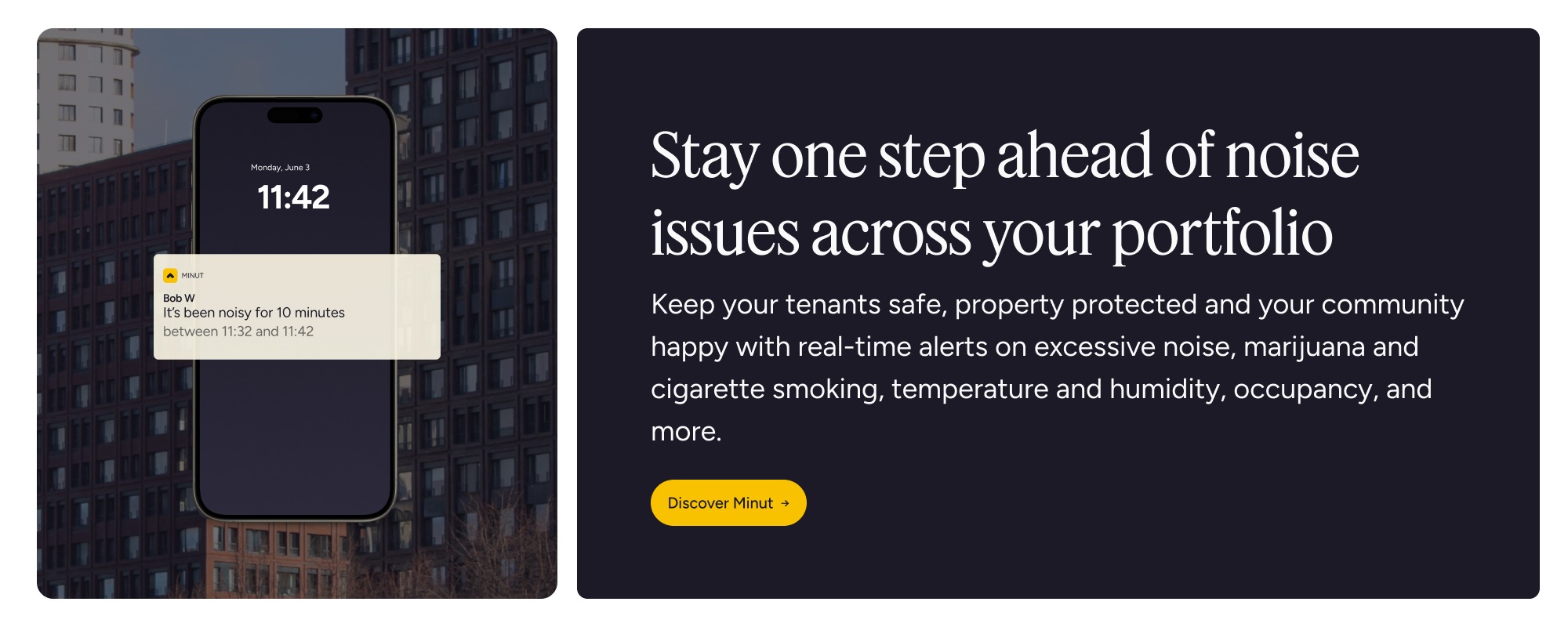
Some operators use privacy‑safe monitoring tools to maintain a comfortable environment and nudge guests if volumes rise. Minut’s camera‑free sensor tracks sound levels, not content, and can send a gentle, automated reminder via text or call when thresholds are exceeded for a set duration.
Safety information Airbnb guests appreciate
Always bear in mind that your guests are likely to be in an unfamiliar space, which means clarity is extra important in emergencies. Your welcome book should include the property address in full, emergency contacts, and what to do if something goes wrong. Consider a simple, prominent section with:
Local emergency services and non‑emergency numbers
The nearest hospital or urgent care, police, and pharmacy
Procedures for utilities, fire safety, and severe weather
Our guest safety checklist can help you structure this content. Also consider that safety goes beyond emergencies, and touches factors like indoor climate. Air quality, humidity, and temperature influence sleep and comfort, which directly tie into overall satisfaction.
Finally, include maintenance awareness. Although you should be checking the properties for mold or moisture, and ensuring that smoke and CO alarms are working correctly, guests may also appreciate being able to look for themselves as well as know how to report issues. This shows transparency and care for your guests’ wellbeing.
Local recommendations that guests find helpful
The best Airbnb hosting tips are mindful of the fact that many guests want to live like locals, not just visitors. Curated neighborhood tips round out your Airbnb welcome book and save guests time too. Consider sharing a few personal favorites across categories (e.g. restaurants and cafés, grocery stores, transportation options, local attractions, parks, and seasonal events) along with when to go and how to avoid crowds.
Airbnb welcome books vs vacation rental guidebooks
It’s common for these terms to be used interchangeably within short-term rental management, but there are useful distinctions:
Airbnb welcome book: Focused on the stay at your specific Airbnb listing. Often includes platform‑specific expectations, such as check‑in via Airbnb messaging, communication guidelines, and how reviews work.
Vacation rental guidebook: A broader resource that can serve Airbnb, Vrbo, and direct bookings equally. It may be more brand‑led and reusable across channels.
Guest house manual: The operational core. Clear instructions and rules for using the property, sometimes separate from local recommendations.
In practice, many hosts blend them: a succinct house manual section plus a destination‑rich guide, tailored for Airbnb delivery.
Printed Airbnb welcome books vs digital welcome books
Both formats work and many professional hosts use both. The benefits of printed welcome books are that they’re easy to spot on arrival and encourage use inside the property. They’re a visible reminder that answers are close at hand. Digital welcome books are easier to update, mobile‑friendly, and accessible before arrival.
Digital welcome books also support interactive elements like maps, videos, photos, and links, making it capable of producing richer, more informative guides.
Hybrid approaches are increasingly common: a minimalist physical book with a QR code linking to a living, digital guide that updates in real time.
Common mistakes hosts make with Airbnb welcome books
A few pitfalls come up repeatedly across portfolios:
Overloading guests with unnecessary information or long paragraphs when quick answers suffice.
Letting details go out of date, particularly the WiFi password, access details, local recommendations, or emergency numbers.
Vague or unclear instructions for complex items like smart TVs or HVAC systems.
Poor organization that buries essential items. Lead with what guests need first.
If in doubt, remember that the best Airbnb guest welcome books are clear, concise, and easy to navigate, and ask yourself if yours is too.
Tips for creating an effective Airbnb welcome book
Start with your guest’s journey, then structure content by need:
Arrival instructions: access codes, parking, WiFi, quick start for climate and hot water.
During‑stay guidance: appliances, TV, trash and recycling, quiet hours, visitor policy, and amenity tips.
Checkout procedures: time, quick list of what to do, and how to leave keys.
As for the content itself, here are some key recommendations:
Keep instructions simple.
Short sentences and, where helpful, one photo beat a wall of text.
Set reminders to update the book regularly, such as once a quarter to catch changes to services and local info.
Refine sections over time based on guest questions.
Airbnb welcome book template ideas hosts can use
Templates offer a proven structure and reduce the chance of missing something important. They’re effective whether you prefer a printed guidebook or a digital guest guide and can be adapted to your brand voice and property type.
What an Airbnb welcome book template typically includes
Most templates follow a familiar, guest‑first sequence:
Warm welcome message and property overview
WiFi and internet details
House rules and quiet hours
Appliance and equipment instructions
Local recommendations and neighborhood tips
Emergency contacts and safety guidance
Parking, transport, and access information
Checkout instructions
Clarity and order matter more than length, so don’t feel a need to add unnecessary information. You can also make the welcome book easier to use by adding a table of contents or, in the digital version, jump links.
Tools hosts use to create Airbnb welcome book templates
Your choice of tools depends on format and brand preferences:
Canva templates: Great for polished design with customizable layouts and imagery.
Google Docs templates: Simple to edit, easy to share, and perfect for rapid updates.
Microsoft Word templates: Common for printed welcome books that live inside the property.
Digital guidebook platforms: Purpose‑built tools offer mobile‑friendly design, instant updates, and interactive elements. Many also support multi‑language delivery and embedded media.
Final thoughts: how professional Airbnb hosts use welcome books today
Experienced hosts treat the welcome book as an essential, evolving tool. They share pre‑arrival instructions in a digital format, provide an easy on‑site reference, communicate rules in guest‑friendly language with a brief “why” behind each policy, and curate local tips that match their target guest.
The common thread is proactivity: anticipate needs, keep the guide current, and use technology to provide a warm, consistent experience at scale.
Together, a well‑crafted Airbnb welcome book and privacy‑first property management tools form a professional foundation that keeps guests happy, neighbors comfortable, and operations efficient — and give guests good reason to leave a glowing review.
Airbnb welcome book FAQs
1. What should be included in an Airbnb welcome book?
An Airbnb welcome book should include a concise welcome, property overview, WiFi and access details, house rules and quiet hours, appliance instructions, local recommendations, emergency contacts, parking and transport tips, and clear checkout steps. Organize by urgency so guests find essentials fast.
2. How do you create an Airbnb welcome book for guests?
Start with a template, tailor sections to your property, and write in short, scannable paragraphs. Lead with WiFi and check‑in, then cover rules and appliances, followed by local tips and safety info. Review and update quarterly.
3. What is an Airbnb welcome book template?
A welcome book template is a pre‑structured outline that helps you organize guest information and avoid omissions. Templates save time and improve consistency across listings.
4. Can you create an Airbnb welcome book using Canva?
Yes, Canva offers customizable designs ideal for branded, print‑ready or digital guides with strong visuals and clear typography.
5. Are there free Airbnb welcome book templates available?
Yes, many providers share free outlines and checklists for both printed and digital formats.
6. What apps can hosts use to create a digital Airbnb welcome book?
Digital guidebooks can be created on graphics platforms like Canva, in Google Docs, Microsoft Word, or dedicated digital guidebook platforms. The benefit of a dedicated platform is they should provide mobile‑friendly, multi‑language guides with instant updates and interactive elements.
7. How do you design a professional Airbnb welcome book?
When designing a professional Airbnb welcome book, use clear headings, consistent fonts, and high‑quality photos. Keep paragraphs short, add visual cues for complex items, and ensure a logical flow from arrival to checkout. Include a brief table of contents for easy scanning.
8. Should Airbnb welcome books be printed or digital?
Welcome books are ideally available in both printed and digital formats. A printed book is visible and handy on site, while a digital guide is easy to update and share pre‑arrival. Many operators use a hybrid: a slim physical guide with a QR code to a comprehensive, always‑current digital version.










.jpeg)