Smoke detector requirements for landlords: Responsibilities, laws, and compliance
Smoke detector requirements vary by state, city, and property type. Learn how responsibilities are divided between landlords, tenants, and property managers.
If you operate rentals, fire safety isn’t just another checklist item. It’s a legal obligation enforced by the applicable authority having jurisdiction, which may be a fire department, building department, housing agency, or code-enforcement office.
Aside from the legal obligation, the data is clear on why your rental properties need smoke detectors: NFPA research from 2018-2022 found that the death rate per 1,000 home structure fires was approximately 60% lower in homes with working smoke alarms than in homes with no alarms or none that operated. And 59% of home-fire deaths occurred in fires with no smoke alarm or an alarm that failed to operate.
Regulators focus not only on whether a required alarm is present, but also on whether the owner can show that it was required, installed, maintained, and repaired when issues were reported.
Smoke detector requirements for landlords: the short answer
Smoke detector requirements for landlords come from state landlord-tenant law, residential fire and building codes, and local fire ordinances, and they vary by property type, age, and location. You’re typically responsible for providing approved alarms where required by law, arranging repairs or replacements when legally responsible, and keeping records that help demonstrate compliance with applicable obligations. Local rules may also assign tenant smoke detector responsibilities, such as changing batteries or reporting malfunctions.
What are the smoke detector requirements for landlords?
Landlord duties don’t live in one statute. Instead, they flow from several sources that stack together:
State landlord-tenant legislation and habitability standards that set minimum “fit for occupancy” conditions.
Residential fire code and building code requirements adopted by your state and amended locally.
Local fire safety ordinances adopted by the relevant local government and enforced by the applicable authority.
Regulations tied to specific building classifications and ages, which can change what’s required in one- and two‑family homes versus multifamily or lodging houses.
It’s easy to confuse general fire safety recommendations with smoke detector legal requirements. National bodies like NFPA publish model codes, but your AHJ enforces the codes and standards adopted in your jurisdiction, including local amendments, deadlines, and documentation expectations. When in doubt, start with the AHJ, as they issue violations and review inspection records.
Which laws determine smoke detector requirements for landlords?
Several legal sources may apply to the same property:
State statutes set overall landlord fire safety obligations and sometimes codify device placement for certain dwelling types.
State-adopted fire and building codes may reference technical standards such as NFPA 72. Which provisions apply depends on the building, alarm type, and adopted code edition.
Municipal ordinances may add local requirements, while agency guidance explains how the relevant authority administers and enforces them.
Note that there is no single federal rule that sets smoke alarm regulations for rental properties across the private market. Federal requirements may apply to specific programs or categories, such as HUD‑assisted housing, but private residential rentals operate under state housing regulations and local fire ordinances.
Why smoke detector requirements for landlords differ by state
States assign responsibilities differently and often layer in city rules. Two quick examples show how landlord smoke alarm regulations can differ.
New York smoke alarm requirements for rental properties
The New York Attorney General’s Residential Tenants’ Rights Guide notes owner installation duties and practical battery guidance for occupants, but the statute goes further. Under Multiple Dwelling Law § 68, owners must equip each apartment or separate living unit with approved, operational smoke‑detecting devices meeting applicable placement and installation requirements and must provide operational devices to new tenants after a vacancy. If a device becomes inoperable within one year of installation due to a manufacturing defect and through no fault of the occupant, the owner must replace it within 30 days after written notice. For many covered class A multiple dwellings other than SRO units, tenants must keep and maintain devices in good repair and replace devices that become inoperable during occupancy, subject to the statute’s class and occupancy distinctions. Owners must also retain installation and maintenance records and make them available to local code‑enforcement officials on request.
However, MDW § 68 doesn’t apply within cities with a population of one million or more, which includes New York City. Within the city, the applicable NYC requirements are the operative rules for smoke‑detector duties.
Massachusetts landlord smoke detector regulations
Massachusetts adopts NFPA 1 with state-specific amendments under 527 CMR 1.00. For properties subject to the applicable code provisions, owner duties may include maintaining required fire protection systems in operable condition, inspecting and testing to the frequencies referenced by the applicable code sections and standards, and keeping records as those provisions require, available to the AHJ.
How local fire codes affect landlord obligations
Municipalities often add requirements on top of the state code. New York City’s HPD, for example, lays out owner and tenant responsibilities for smoke, CO, and, in some cases, natural gas detectors, and explains reimbursement in specific scenarios. In practice, that means two nearly identical buildings can have different smoke alarm requirements for landlords solely because of their city’s ordinance and AHJ interpretation. That’s why it’s important to confirm details on your city fire department website or by speaking directly with your local inspector.
Who is responsible under smoke detector requirements for landlords?
Ownership and day-to-day management are different roles. Applicable law determines the responsibilities of owners, tenants, and managers, and assigning work to a manager or contractor doesn’t necessarily transfer the owner’s legal duties.
Landlord fire safety obligations typically include:
Providing required alarms where applicable law requires them.
Meeting the applicable residential fire code standard for your building type.
Responding to reported defects.
Arranging any necessary corrective action.
Keeping rental housing compliance records that show what was done, when, and by whom.
Tenant responsibility for smoke alarms commonly includes:
Not removing or disabling the devices.
Reporting malfunctions promptly.
Following lease agreement terms.
In some states, handling specific battery‑related tasks the law assigns to occupants.
These are distinct but potentially overlapping responsibilities and they vary by jurisdiction.
Here’s a quick side‑by‑side you can share with staff and residents:
Responsibility
Landlord or owner
Tenant
Providing required alarms
Provide approved alarms where required by law
Usually not responsible for initial provision
Keeping alarms operational
Fulfil maintenance and replacement duties assigned by law
Fulfil any maintenance or battery duties assigned by law
Reporting problems
Maintain a clear reporting and follow-up process
Report missing, damaged, or malfunctioning alarms
Repairing or replacing alarms
Arrange corrective action where legally responsible
May have maintenance, replacement, or damage-related duties
Keeping records
Retain required records and evidence of corrective action
Keep relevant reports and communications
Note: This table is a general overview, and responsibilities vary by jurisdiction, property type, and applicable law. Reporting processes and additional recordkeeping are recommended practices unless expressly required.
Landlord responsibilities under applicable laws
Legal duties go beyond installation. Once a device is required, you may be responsible for keeping it operable, addressing known defects, and documenting inspection, testing, and maintenance to the standard your AHJ expects. In Massachusetts, for example, owners must maintain required systems and follow the inspection, testing, and maintenance provisions referenced by the applicable code sections, and keep records as required, available to the AHJ.
Tenant responsibilities and legal boundaries
Some jurisdictions specifically assign battery duties to occupants. New York materials say “tenants are responsible for keeping fresh batteries in the smoke detector,” while owners handle installation and replacement of the unit itself when required. For many multiple dwellings covered by Multiple Dwelling Law § 68 (outside NYC), tenants also have broader maintenance and replacement duties during occupancy.
Where property managers fit into the responsibility structure
Property managers can take on delegated tasks like coordinating inspections, logging reports, scheduling licensed contractors, and escalating issues, but delegation doesn’t always transfer legal accountability. For example, Massachusetts fire regulations require a written agreement documenting any delegation of the alarm-related responsibilities covered by the provision.
If you use a manager, spell out who receives safety reports, who orders corrective action, and who keeps the file, and keep those documents handy if your AHJ asks for them.
How should landlords respond to smoke detector problems?
Treat every report as an accountability timestamp. You need a simple process for tenants to notify you of problems, a way to acknowledge receipt, and a documented follow‑up.
There’s both a legal and a practical reason for this: the legal side is that landlord responsibilities for faulty smoke detectors often rest on whether you acted reasonably once on notice. The practical side is that clear records help you when an insurance adjuster or AHJ asks what happened.
When a tenant reports a faulty smoke detector
Have one inbox or portal for safety issues, and make sure residents and on‑site staff know it. Assign the report to a named person, schedule the visit, and make a note of the outcome e.g. repaired, replaced, parts ordered, or escalated, and keep the original message and any subsequent correspondence. Check applicable response deadlines and any immediate safety measures required by local law; documenting the report does not replace taking corrective action.
What happens when a landlord fails to respond?
Unresolved reports can turn into notices of violation, civil claims, or avoidable conflict with neighbors or city inspectors. That doesn’t mean every delay is negligence, but a pattern of unanswered reports is hard to defend. Your goal is a short cycle time from report to corrective action, with documentation you can hand to the AHJ.
What records help demonstrate compliance with smoke detector requirements for landlords?
Having a policy is not the same as having proof. For smoke alarm compliance documentation, you want an evidence trail that ties a requirement to an action:
The applicable legal requirement for the property and unit.
Inspection certificates where the AHJ issues them.
Tenant notifications and acknowledgements.
Reports of missing, damaged, or disabled alarms.
Contractor work orders and completion notes.
Replacement invoices that identify the device and location.
Records of corrective action with dates and responsible parties.
Written delegation agreements where the code or AHJ requires them.
Internal documents never replace official certificates required by the authority.
Documents that landlords should retain
Keep legal references that apply to the property, AHJ correspondence, inspection records, work orders, tenant communications, final invoices, and photos identifying device locations.
How to establish a clear record of responsibility
Every safety report should have a named responsible person, a date the report was received, the action chosen, and the resolution date. That timeline forms part of your compliance evidence. It clarifies who did what when responsibilities are delegated across owners, managers, and vendors.
What are the legal risks of ignoring smoke detector requirements for landlords?
Consequences vary by jurisdiction, but they tend to fall into three buckets:
Regulatory: notices of violation, required corrective action, inspection rechecks, and financial penalties where authorized by law.
Civil: allegations that a landlord’s failure to meet a legal duty contributed to injury or property loss.
Insurance: questions about policy terms, warranties, or conditions when a required device was missing or not maintained.
Regulatory non-compliance doesn’t automatically establish civil liability or invalidate insurance coverage. Outcomes depend on the applicable law, circumstances, and policy terms. If you’ve experienced a specific incident, seek qualified legal and insurance advice.
Does hiring a property manager change smoke detector requirements for landlords?
You can delegate work but you can’t always transfer legal accountability. A solid management agreement should clarify:
Who receives and logs tenant notification about alarms.
Who coordinates required inspections, testing, and repairs.
Who retains compliance documentation and for how long.
Who escalates unresolved safety concerns to the owner and AHJ.
Who speaks with the AHJ if a notice of violation arrives.
If your properties are in multiple jurisdictions, write down exactly which landlord fire safety obligations the manager is handling at each address.
Delegating compliance responsibilities
Assign operational tasks to managers and appropriately qualified contractors, and specify who must obtain any required authorization before systems are impaired or altered. If you delegate, retain copies of the delegation and vendor reports and be ready to share them with your AHJ when asked.
What landlords should include in management agreements
Spell out reporting paths, documentation standards, corrective action authority and timelines, and when issues must be escalated to ownership or the AHJ. Clarity here prevents disputes later.
How technology supports rental property smoke detector compliance
Inspection records need to be more than email chains and sticky notes. The right technology helps you keep property‑level visibility, establish clear timelines, and document relevant safety events. It won’t replace statutory fire safety requirements, official inspections, or the alarms your code requires, but it will help you prove what you did and when.
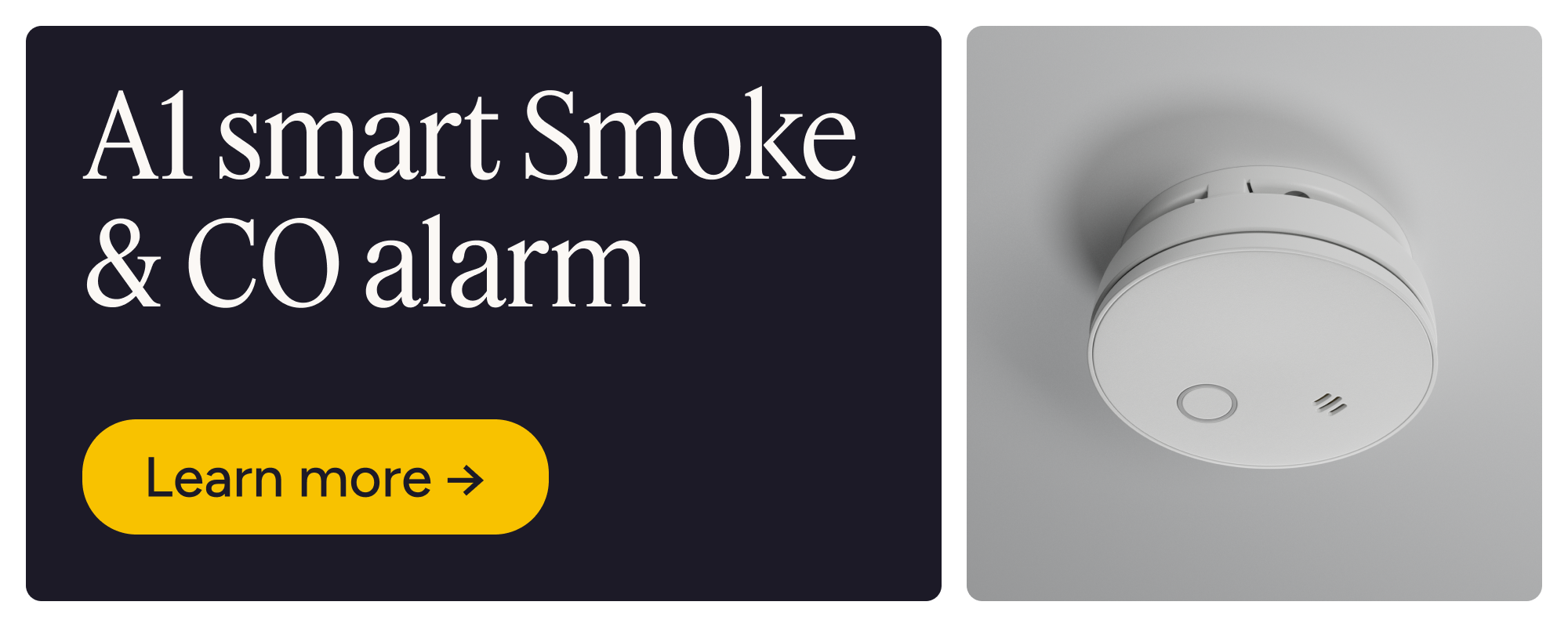
Minut’s approach is to support compliance oversight while protecting resident privacy. Minut’s A1 smoke and CO alarm was designed for short-term rentals, with the ability to automatically test itself between every booking. It also logs results of each test, alarms, and relevant events including tampering, giving you an audit trail you can reference alongside your official certificates.
Smoke detector requirements for landlords: a pre‑lease compliance checklist
Use this as a legal responsibility and documentation review before every new tenancy:
Which state and local smoke alarm laws apply to this property?
What landlord smoke detector responsibilities are assigned under those rules?
Which tenant smoke detector responsibilities can legally be assigned to occupants?
Does the lease explain the tenant’s duties and non‑tampering rules accurately?
Who receives and tracks reports of missing or malfunctioning alarms?
Who coordinates corrective work and in what timeframe?
What smoke alarm compliance documentation must be retained for this unit?
Are managers and contractors clear on their written delegation and escalation paths?
Where are compliance records stored and who can access them?
Who reviews changes to applicable fire safety regulations and updates procedures?
Smoke detector requirements for landlords aren’t one‑size‑fits‑all. They depend on your state statutes, the residential fire code of your state, and the local rules your AHJ enforces. Owners, tenants, and property managers should understand the duties that apply to them, including providing required alarms, reporting defects, arranging corrective action, and retaining required records.
If you manage multiple locations, build a consistent accountability system that adapts to different rules rather than trying to force identical rules onto every property. And if you want better oversight, Minut’s smoke and CO alarm can test itself before the start of every stay, notifies you of any events, and keeps a log in the app.
Smoke detector requirements for landlords FAQs
Are landlords legally required to provide smoke detectors?
Often yes, but the specifics come from state law and local codes. Many jurisdictions require owners to provide approved alarms and keep them operable, while assigning certain battery duties to tenants. Check your AHJ’s rules and state landlord‑tenant law.
Can landlords make tenants responsible for smoke detector maintenance?
Leases can clarify tenant duties, but they can’t transfer statutory obligations the law assigns to owners, such as providing required alarms or arranging repairs on notice. You need to check the regulations for your local area to make sure you’re following the laws correctly.
Can a tenant legally remove or disable a smoke detector?
What should a landlord do when a tenant reports a faulty smoke detector?
Acknowledge the report, schedule the fix, and keep the record. Your file should show the date of tenant notification, assigned action, and the resolution.
What records should landlords maintain for smoke detector compliance?
Keep the legal requirement for the property, inspection records, tenant notifications, contractor work orders, replacement invoices, corrective action logs, and, where applicable, written delegation and AHJ correspondence. Also check to see if your state requires you to keep inspection records in line with code and referenced standards.