Smoke detector placement guide for rental properties
Learn the best smoke detector placement strategies for rental properties, including room-by-room placement tips, common mistakes, and safety best practices.
At 2:18 a.m., a pan on the stove smolders in an upstairs rental unit. Smoke gathers on the kitchen ceiling, travels down the hallway, and only then reaches the lone alarm in the living room. The alarm sounds, but precious minutes have slipped away.
The property manager did the right thing by installing detectors. The problem was where they were installed.
In rentals and hotels where guests don’t know the layout, detector placement can be the difference between a contained incident and a full evacuation. This article will explore the importance of where detectors are placed in different rooms and properties, as well as look at some of the most common placement mistakes.
Smoke detector placement: the short answer
Install smoke alarms on every level, inside each bedroom, and outside each sleeping area
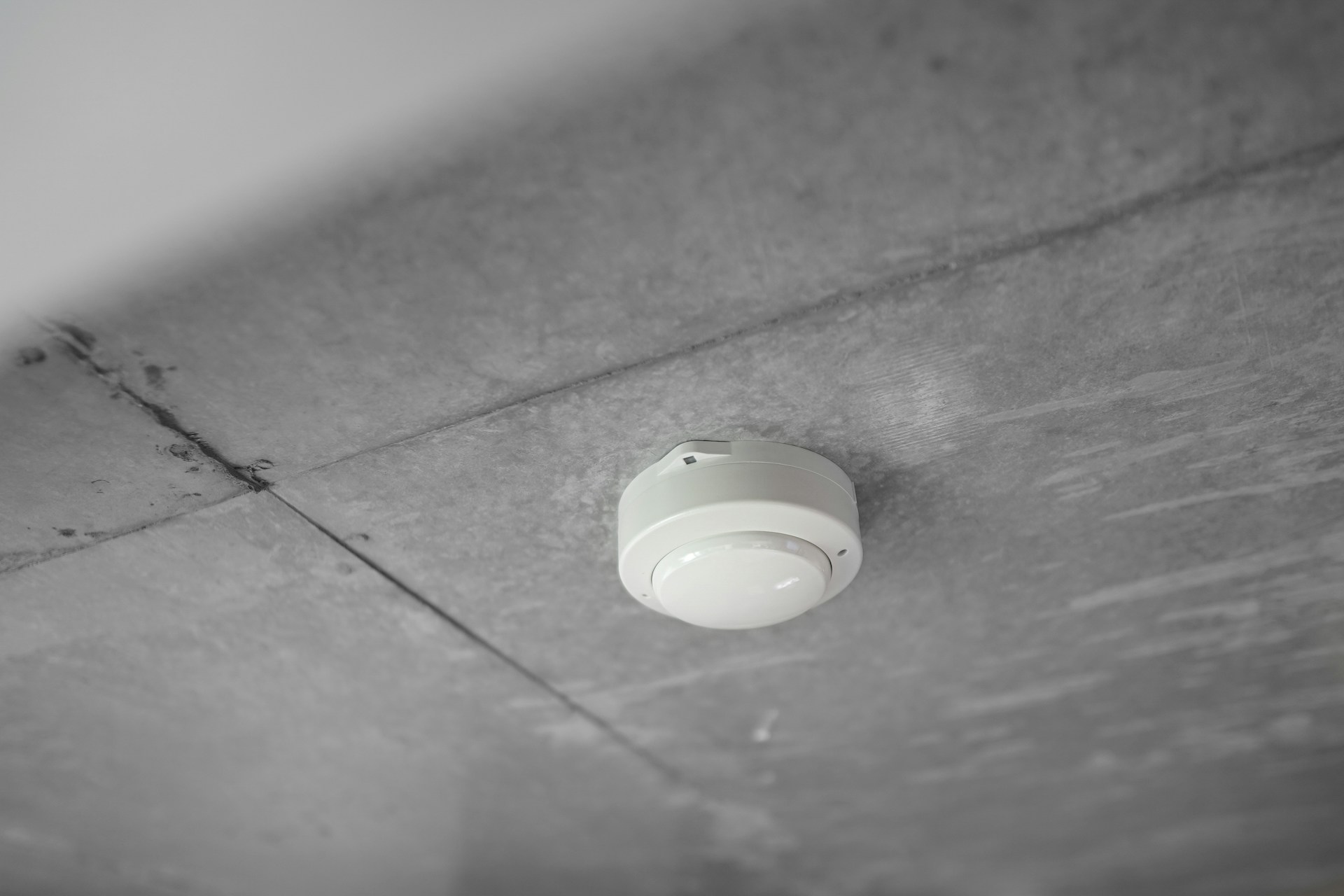
Mount on ceilings when possible, or on walls four to 12 inches below the ceiling
Keep detectors at least 10 feet from cooking appliances, three feet from bathrooms with showers, and away from vents and fans
Interconnect alarms so when one sounds, they all sound. Before installing, check local smoke detector placement requirements
Why smoke detector placement matters more than most hosts realize
Fire spreads extremely quickly. The situation can worsen even in the time it takes for smoke to drift across a large room or turn a corner. That’s why it’s essential that smoke alarms are positioned where they’re most likely to detect fire quickly, and not once it’s had time to spread.
Research shows working alarms cut casualties by a factor of 2.5–3.5, while three out of five home fire deaths occur where alarms aren’t working at all.
Rental properties have unique fire safety risks
Guests are more vulnerable than permanent residents because they’re unfamiliar with exits, appliances, and the property layout. Common triggers of fire include cooking mishaps, smoking indoors, overloaded outlets, and appliance misuse. Because guests don’t know the building the way staff or owners do, early warning is much more important.
Poor smoke detector placement creates compliance and liability risks
Smoke detectors should be placed inside every bedroom, outside sleeping areas, and on every level.
For hospitality properties, CSI Security’s code guide for hotels highlights the National Fire Protection Association standards. NFPA 72 sets the criteria for placement of detectors in corridors and shared areas, as well as notifications and audibility of the alarm. NFPA findings state that “hotels with fully compliant fire alarm and detection systems reduce their risk of fatal fire incidents by up to 55%.”
Smoke detector placement basics every property owner should understand
How smoke travels through a property
Smoke rises, then spreads along ceilings and into adjacent spaces following airflow. Ventilation systems, ceiling height, open doors, and room geometry all influence where smoke concentrates first.
In practice, that means a detector mounted where smoke layers will trigger earlier than one set low or tucked behind an obstruction. Smoke usually reaches hallways and stairwells quickly, so those areas need coverage too.
Ceiling placement vs wall placement
Ceiling mounting is typically best because smoke travels to the ceiling first. If you must use a wall, mount the top of the detector four to 12 inches below the ceiling to avoid dead air that forms tight against the corner seam.
For pitched ceilings, place detectors within three feet of the peak. Keep units at least three feet from ceiling fans too. The U.S. Fire Administration echoes these basics and recommends following the manufacturer’s instructions for specific mounting heights.
Understanding dead air spaces
Dead air zones are pockets where smoke may not circulate effectively, often in ceiling corners, within a few inches of the ceiling-wall junction, directly above vents, or near windows and fans where drafts disrupt the smoke layer. Mounting detectors in these zones can delay activation of the alarm. To help with this, maintain those four to 12 inch offsets on walls, avoid corners, and keep detectors away from supply registers and return grilles to improve performance.
Smoke detector placement guide by room and area
Smoke detector placement in bedrooms
Sleeping guests are most vulnerable, so place detectors inside each bedroom and on the hallway ceiling outside sleeping areas. New York specifies that hallway detectors be within 15 feet of the bedroom entrance, with newer buildings also requiring one inside the room.
This is where interconnected alarms are particularly valuable too. If a fire starts in one room, each alarm sounds so every sleeping guest hears it immediately. This is the best place for smoke detectors when your goal is the fastest possible alert.
Smoke detector placement in hallways and corridors
For guest corridors and apartment hallways, detectors should be mounted on the corridor ceiling outside sleeping areas. If a hallway is longer than 30 feet, consider a unit at each end. Alarms should also be located at the top of stairways and at the bottom of the basement stairway.
Smoke detector placement in kitchens
Kitchens are where most false alarms occur, but they’re also where most fires start. Balance effective coverage with false-alarm prevention by following distance guidelines and code. Several references align here:
ADT recommends placing detectors at least 10 feet from cooking appliances
IAFC suggests 20 feet in or near kitchens
For photoelectric units, six feet is often acceptable, and for ionization alarms, 20 feet or 10 feet with a hush function
Any alarm should be at least three feet from a bathroom with a tub or shower to reduce steam-related nuisance trips.
In commercial kitchens or mechanical rooms where steam and aerosols appear routinely, a heat detector is typically used
Smoke detector placement in living rooms and shared spaces
Shared spaces typically have multiple people, plus electronics, chargers, and sometimes fireplaces or space heaters. In these larger rooms, a detector placed centrally is more likely to catch smoke before it spreads..
Smoke detector placement in basements and utility areas
It’s common for basements to have furnaces, water heaters, laundry equipment, and electrical panels. Install a smoke alarm on the basement ceiling within roughly 10 feet of the stairs to provide early warning before smoke migrates upstairs.
In rooms with frequent dust or steam, or where combustion appliances may create nuisance trips, a rate-of-rise or fixed-temperature heat detector may be the better choice where allowed by code, consistent with hospitality system practices.
Smoke detector placement for multi‑unit rental properties
Why every floor needs smoke detector coverage
Because smoke moves vertically, stairwells, shafts, and open atriums allow it to move quickly between levels. Place alarms on every floor, including basements, and at stair tops to alert occupants before smoke reaches sleeping areas. Interconnected systems are especially valuable in apartments, hotels, large vacation rentals, and many short‑term rental rules.
Shared walls and connected guest spaces
Connected suites, adjoining rooms, and shared ventilation systems allow smoke to migrate between units. Hospitality safety standards often combine smoke detectors in rooms and corridors with heat detectors in kitchens and mechanical spaces, tied back to a supervised fire alarm control panel for better oversight. For apartments and hotels, visual and auditory requirements for certain occupancies may also apply.
Challenges of remote property management
When a unit is vacant or your team isn’t on-site, a small incident can escalate before anyone notices. Smart property monitoring closes that gap by pushing real‑time alerts to your team and documenting incidents between stays. For teams managing multiple properties, consistency is essential — detectors should be installed the same way in every unit, and alerts should reach staff immediately to ensure safety and emergency preparedness.
Common smoke detector placement mistakes property owners make
Installing detectors too close to kitchens or bathrooms
Placing alarms directly over stoves or near bathrooms invites nuisance trips due to cooking aerosols and steam. False alarms frustrate guests, erode trust, and increase the odds of tampering or disconnects. Keep detectors several feet from cooking appliances and at least three feet from bathrooms with showers.
Missing high‑risk areas
Utility rooms, basements, long hallways, and stair tops are often overlooked, yet many fires start or spread through these spaces. Leaving them uncovered creates dangerous blind spots that negate even perfect bedroom coverage.
Improper ceiling and wall positioning
Installing alarms in corners, near vents, above supply registers, or beside fans can delay smoke entry into the sensing chamber. Keep to the four to 12 inch wall offset, avoid corners by at least four inches, and give fans a three-foot berth.
Ignoring testing and maintenance
Placement isn’t enough if devices don’t work. Test alarms monthly and replace units at least every 10 years. NFPA 72 also spells out testing intervals and system supervision expectations for commercial and hospitality systems. Hardwired 120 VAC residential alarms aren’t monitored, whereas system detectors on supervised circuits report trouble conditions and tampering automatically.
Smoke detector placement comparison table
Area
Recommended placement
Why it matters
Key restriction
Bedroom
Inside each bedroom and on the ceiling outside sleeping areas
Faster nighttime alerts for sleeping guests
Zoning-based limits; business Certificate of Use
Hallway
Central hallway ceiling, add units at each end if longer than 30 ft
Improves evacuation along exit routes
Near-total residential prohibitions; allowed only in designated districts
Kitchen
Several feet from stove or oven (see 6–20 ft ranges by detector type)
Reduces false alarms without sacrificing coverage
Registration, inspection, local contact; required noise detection device
Basement
Ceiling near the stairs to the upper level
Early detection before smoke reaches living areas
Licensing, inspections, noise standards and data retention
Living room
Center ceiling, away from vents and fans
Reliable coverage for shared spaces and electronics
Certificate of Use; occupancy cap; 24/7 responsible party
Stairways
At the top of each staircase and at bottom of basement stairs
Smoke rises and travels along stairs quickly
Yes
Why traditional smoke detector placement strategies are no longer enough
Placement alone does not guarantee safety
Even perfect layouts can fall short if devices are silenced, batteries die, or alarms don’t reach every guest. For multi‑unit buildings, unmonitored hardwired alarms can be disabled without anyone knowing, while supervised system detectors report faults automatically.
Delayed awareness in vacant or remote properties
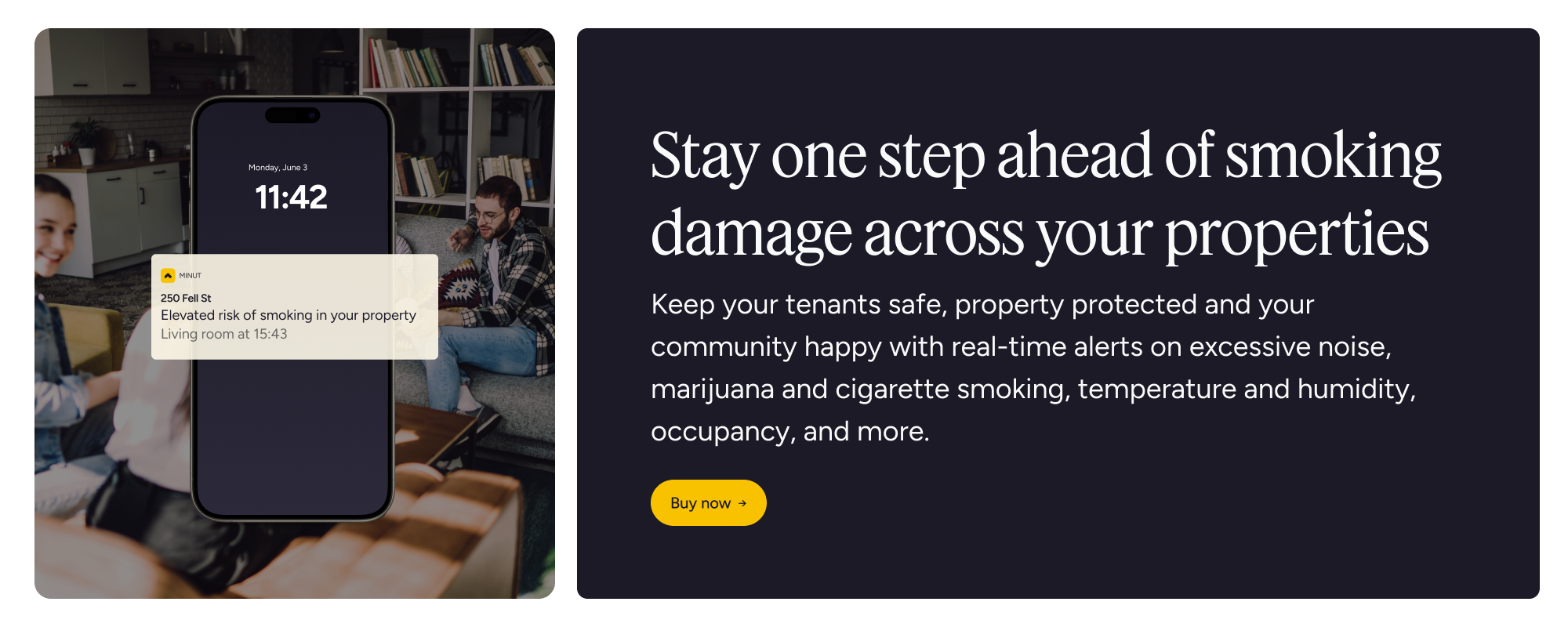
Between stays or overnight, a smoking incident or slow‑burning appliance fault may go unnoticed. That gap is where remote alerts, historical incident logs, and central dashboards pay off. They give operators a way to act fast, even when there’s no staff on site.
How smart monitoring improves smoke detector placement effectiveness
Real‑time awareness and faster response
Placement determines when an alarm sounds. Smart monitoring determines who knows about it and how quickly they respond. Real‑time alerts and property‑level visibility shorten the window between smoke detection and action, which improves outcomes and potentially saves lives. For STR teams, well‑planned smoke alarm placement and intelligent monitoring enhances guest safety.
Supporting guest safety without compromising privacy
You can protect guests without intruding on them by selecting tools that focus on conditions without gathering content.
For example, monitoring noise levels by reading decibel levels rather than recording audio. This can also assist guest safety because unauthorized parties likely cause a surge in noise levels, alerting you to large gatherings and potentially strained evacuation routes before anything goes wrong.
Integrated property monitoring creates better operational control
Safety lives in the details:
detectors in the right places
kitchens that don’t trigger false alarms
stair tops covered
management being notified immediately
For larger properties, it’s efficient to have one system that can flag smoking, noise complaints, and unusual room conditions in the same place. If you’re building a broader guest safety checklist, consolidating signals in one view makes policy enforcement clearer for staff and guests alike.
Smoke detector placement checklist for rental properties
Smoke detectors installed inside bedrooms and immediately outside sleeping areas
Every floor protected, including basements and at stair tops
Kitchens covered with detectors placed several feet from cooking appliances
Utility and mechanical areas monitored with appropriate devices
Interconnected alarms where required by code or where properties are large
Systems tested monthly; batteries maintained; devices replaced every 10 years
Placement reviewed during each turnover or inspection and updated after remodels
Incident logs and alerts enabled for remote awareness and documentation
Smoke detector placement FAQs
Where should smoke detectors be placed in rental properties?
Place alarms on every level, inside each bedroom, and outside each sleeping area. Prioritize hallways, stair tops, basements near stairs, and large shared spaces. Maintain offsets from stoves, bathrooms with showers, vents, and fans.
How many smoke detectors should a rental property have?
At least one per level, one in each bedroom, and one outside each sleeping area. Larger rooms, long corridors, and complex layouts may need more to eliminate blind spots.
What are the most common smoke detector placement mistakes?
Placing alarms too close to kitchens and bathrooms, skipping stair tops and basements, mounting in corners or near vents, and failing to interconnect alarms are the big ones.
How often should smoke detectors be tested in rental properties?
Test monthly and replace devices at least every 10 years. Interconnected or panel‑supervised systems should report faults automatically, but visual checks and documented tests still matter.