Charlotte short-term rental laws: zoning rules, permits, and compliance explained
Charlotte’s short-term rental rules are shaped by zoning under the Unified Development Ordinance, evolving local policies, and complaint-driven enforcement. This guide explains how current rules apply and what operators must do to stay compliant.
Rather than layering a heavy licensing regime on top of everyday property use, Charlotte relies on its land-use rules and general operating standards to set expectations for hosts and property managers.
In 2022, Charlotte updated its Unified Development Ordinance (UDO) and removed its short-term rental–specific language, reinforcing a zoning-first framework that’s supported by building, housing, and nuisance codes. For operators, the practical lesson is simple: start with zoning and the UDO, then make sure you meet state tax obligations, county occupancy tax rules, and citywide standards for safety and neighborhood peace.
Are short-term rentals legal in Charlotte, NC?
Yes, short-term rentals are legal in Charlotte when operated as a residential use consistent with local zoning and general codes. The city doesn’t run a standalone STR licensing program, and in April 2022 removed STR-specific provisions from its UDO. Operators must still comply with state sales tax, Mecklenburg County’s room occupancy tax, building and housing codes, and nuisance rules.
Why Charlotte is zoning-driven
Charlotte’s framework prioritizes land use. The city’s Unified Development Ordinance guides where and how residential activity occurs, and is the first stop for determining whether a short-term rental fits at a given address. In April 2022, the city clarified that STR-specific provisions were removed from the UDO, signaling that rentals would be treated through the lens of existing residential uses and citywide standards rather than a separate, prescriptive licensing overlay.
From an operator’s perspective, that means legality turns on three connected questions:
Is the use permitted in the zoning district?
Does the property meet applicable building and housing codes?
Are you handling taxes and nuisance risks the right way?
While the city’s philosophy has been consistent, implementation details can evolve. Before you rely on any summary, confirm the latest text in the city’s code library at Municode and check official city pages referenced throughout this guide.
What counts as a short-term rental in Charlotte?
In practice, “short-term rental” in Charlotte refers to stays of fewer than 30 consecutive days, which aligns with how most operators and platforms distinguish vacation rentals from typical leases. At the state level, North Carolina’s Vacation Rental Act covers residential rentals of fewer than 90 days to a person who has a permanent residence to return to. That state definition governs many operating fundamentals, like written rental agreements and handling of guest funds, even if a city doesn’t spell out its own day-count threshold.
State-level context: North Carolina vs local control
Instead of a unified statewide permit system for STRs, the state of North Carolina sets the baseline for taxation, trust accounting for guest funds under the Vacation Rental Act, and general housing law, while local governments regulate land use and nuisance standards. That split explains Charlotte’s approach. The city leans on zoning and general ordinances, while the state expects you to register and remit taxes correctly and to manage rental agreements and guest funds appropriately.
The broader policy environment in North Carolina tends to favor property rights, which can limit certain local restrictions, yet there is no single preemption that standardizes STR rules city to city.
In short, Charlotte’s rules are local in practice, shaped by a state framework that emphasizes taxes, safety, and fair dealing.
Zoning and eligibility
Charlotte’s UDO governs where residential uses are allowed and how they may operate. With the city’s removal of STR-specific rules in 2022, short-term rentals are treated within the broader category of residential occupancy rather than as a unique commercial use. The practical implications for operators include:
Confirming that your property’s zoning district allows residential occupancy as you intend to use it, whether it’s a single-family home, a townhouse, a condo, or a multifamily unit.
Ensuring that you aren’t layering in non-residential activities that could conflict with your zoning district or trigger separate approvals, such as large events, commercial parties, or assembly-type uses.
Licensing, registration, and approvals
Charlotte doesn’t administer a standalone short-term rental license akin to the systems seen in Los Angeles, New Orleans, or Nashville. Instead, you should expect to:
Validate your use under the UDO and remain prepared to show that your property meets building and housing standards.
Register for taxes at the state and county levels as applicable.
Consider voluntary participation in the city’s safety registry to streamline communications with local authorities.
The Charlotte‑Mecklenburg Police Department maintains a free, voluntary Residential Rental Property Registration that is open to both short- and long-term rentals within city limits. This registry allows property owners and managers to receive weekly email alerts for calls for service attributed to registered properties and notifications about safety trainings. You can enroll through the city’s portal at Residential Rental Property Registration. Registration is only mandatory for properties meeting specified “disorder risk” thresholds outlined in the ordinance, but you can also opt in to maintain situational awareness.
Because operational guidance can evolve, it’s important to verify any permit-like requirements or planning approvals with the city before listing. When in doubt, ask the Planning department to confirm how your specific use is classified under the current UDO.
Taxes: what Charlotte STR operators must handle
North Carolina state sales tax
Revenue from short-term accommodations is generally subject to North Carolina sales tax. The North Carolina Department of Revenue explains how sales and use tax applies to rentals and accommodations on its official guidance page at Rentals and Accommodations. Operators typically must register with the state, collect tax from guests, and remit returns on the cadence assigned after registration.
Mecklenburg County occupancy tax
Within Charlotte, Mecklenburg County administers a room occupancy tax on short-term stays. Even if a platform assists with tax collection, operators should create an account with the county tax office to confirm how their specific property and booking channels are handled and whether separate filings are still required.
Platform collection caveat
Major platforms often collect and remit some state and local taxes on behalf of hosts, but that doesn’t eliminate your responsibility to register or to file returns where required. Before your first booking, confirm the exact scope of tax collection for each platform you use, then align your filings with the state’s Rentals and Accommodations guidance and Mecklenburg County’s occupancy tax instructions.
Operating rules, enforcement, and penalties
Charlotte relies primarily on complaint-driven enforcement, backed by zoning and code inspections when issues arise. Don’t make the mistake of thinking that an absence of a heavy licensing program means an absence of oversight, though.
Common operating standards
Short-term rentals must meet the same minimum housing, building, and fire-safety standards as other residential properties. Mecklenburg County Code Enforcement outlines the local code administration function and how inspections support life-safety and habitability across residential stock.
Noise and nuisance are handled through the general code of ordinances. Hosts should make guests aware of:
quiet hours
parking expectations
trash handling
When a complaint is filed, the city may investigate under nuisance, zoning, housing, or public safety provisions as appropriate. The city’s code library is accessible at Municode.
Enforcement approach
Most enforcement begins with a neighbor complaint. If an inspector or officer confirms a violation then the city can issue notices and escalate to civil penalties or orders to cease the offending conduct. Repeat violations can result in closer scrutiny, and ignoring correction notices can lead to daily fines under applicable provisions of the code.
Noise management and community relations
In a complaint-driven city, the fastest way to lose neighborhood trust is to let a single booking spiral into a disturbance. Make communications and monitoring part of your operating routine. Send guests a succinct house manual before arrival, reiterate quiet hours at check-in, and provide a local contact who can respond quickly when a question or issue comes up.
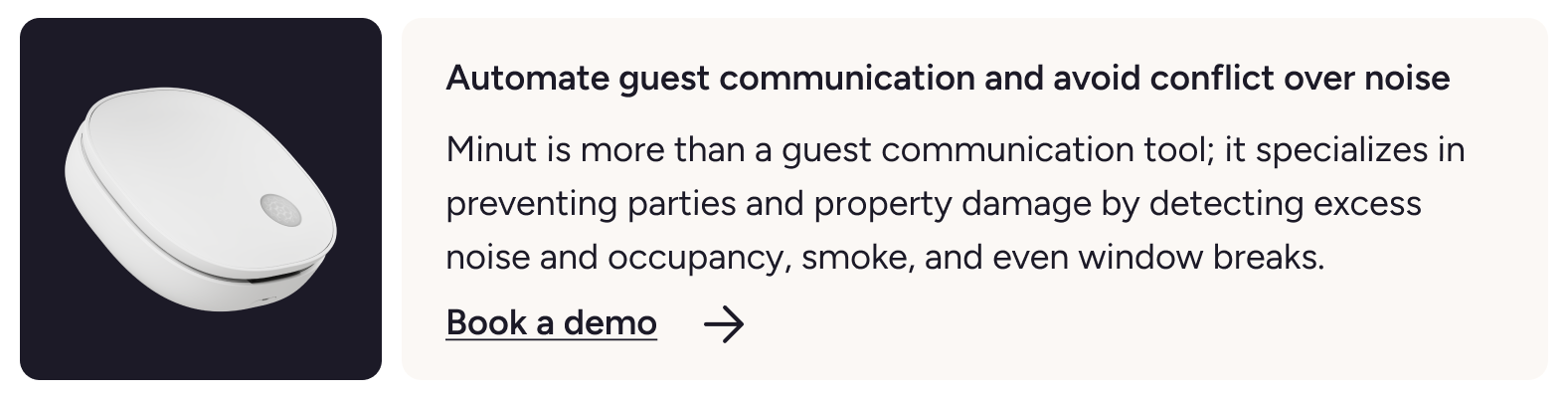
Charlotte’s general noise and nuisance provisions are enforced on a complaint basis, and each complaint increases the chance of a site visit or inspection. Privacy-safe monitoring can help curb problems before they reach that point by warning guests when sound levels are too high, and alerting managers if occupancy or activity suggests a party risk. The goal is not surveillance, but proactive stewardship that keeps your properties comfortable, neighbors happy, and your team focused on service rather than damage control.
HOAs, condos, and private restrictions
City-level permissibility doesn’t override private rules. In Charlotte, homeowners associations, condo boards, and lease agreements frequently set minimum lease terms or prohibit transient occupancy. Before you acquire, convert, or onboard a unit, review:
Recorded covenants and bylaws for any minimum stays or bans on subletting.
Building rules for key policies like guest access, check-in procedures, and noise.
Leases and lender covenants that could restrict use.
Private rules take precedence if they’re stricter than city code. Build those constraints into underwriting and owner conversations from day one.
A practical checklist for operators
To legally and responsibly operate a short-term rental in Charlotte, property managers should:
Confirm zoning allows residential use as you intend to operate, referencing the UDO short‑term rental statement and current code text at Municode.
Validate building, housing, and fire-safety compliance.
Register for state sales tax and follow the state’s rules for rentals and accommodations via the North Carolina Department of Revenue.
Register and remit Mecklenburg County room occupancy tax.
Consider enrolling in the city’s voluntary rental registry to receive incident alerts and educational updates.
Publish clear house rules covering quiet hours, parking, and trash, and put systems in place to prevent and respond to disturbances quickly.
Review HOA, condo, lease, and insurance requirements that may limit or shape STR operations.
Final thoughts
Charlotte allows short-term rentals across much of the city, but not on autopilot. The city’s zoning-first framework makes it essential to confirm residential eligibility under the UDO, then layer in compliance with state sales tax, Mecklenburg County occupancy tax, building and housing codes, and nuisance rules. Private restrictions frequently make the final call, so treat HOA and condo rules as gatekeepers rather than afterthoughts. If you operate with that mindset and build proactive systems that prevent disturbances, you can scale a compliant, community-friendly business in Charlotte.
FAQs
Are short-term rentals legal in Charlotte, NC?
Yes, Charlotte permits short-term rentals when operated as a residential use that complies with zoning and citywide codes. The city removed STR-specific UDO rules in April 2022.
Do I need a permit or registration to operate an STR?
Charlotte doesn’t run a citywide STR license program and most operators don’t need a special STR permit, but you should enroll for taxes at the state and county levels and ensure your property meets building and housing standards.
If Airbnb collects taxes, do I still need to register?
Often yes. Platform collection doesn’t always cover every tax or filing requirement. Register with the state and county, confirm what the platform remits on your behalf, and file any required returns accordingly.
What triggers enforcement in Charlotte?
Enforcement is usually initiated by complaints, with inspections or investigations under zoning, housing, nuisance, or safety codes. Repeated or serious violations can lead to penalties or orders to cease non-compliant activity.
Can an HOA ban STRs in Charlotte?
Yes. Private covenants, condo bylaws, and leases often restrict or ban STRs, and those restrictions are enforceable even when the city allows residential use. Always verify private rules before you buy or convert a unit.
Disclaimer
This article is provided for informational purposes only and does not constitute legal, tax, or compliance advice. Regulations and guidance can change. Always consult the City of Charlotte’s code of ordinances, the UDO, Mecklenburg County Tax Collector, and the North Carolina Department of Revenue—or seek qualified counsel—before making operational decisions for your property.






.jpeg)