London short-term rental regulations (a 2026 guide)
A 2026 guide to London short-term rental rules, covering the 90-night cap, borough enforcement, tax changes, and potential registration and planning changes.
The headline for London’s short-term regulation is the 90-night cap, but your 2026 compliance picture also includes planning law, borough-level enforcement, and tax changes that now treat income from short-term rentals like any other property income.
If you run entire homes or private rooms anywhere in Greater London, this guide covers what matters this year: what’s in force today, what’s enforced in practice, and what’s coming next.
It applies only to entire‑home listings. Hosted room stays while you’re present are outside the cap.
It applies per property, per calendar year, across all platforms. Switching platforms doesn’t reset the count.
Platforms like Airbnb auto‑block entire‑home calendars at 90 nights, but legal responsibility still sits with the host.
Private rules still apply even when councils allow STRs. Lease terms, building rules, and lender conditions commonly restrict or prohibit short lets. Check these before you open your calendar.
When planning permission is required
Once you go past 90 nights, councils treat the use as short-stay/serviced accommodation rather than standard C3 housing (a.k.a. standard residential housing), so you’ll need planning permission. Expect the process to take a couple of months and fees typically in the low hundreds of pounds. Approval isn’t guaranteed: case officers weigh housing pressure, local saturation, and any neighbour objections.
Also bear in mind that planning permission is borough‑specific. Approval in one borough doesn’t carry over to another.
Borough enforcement and variation across London
Enforcement varies across London. The 90‑night cap is enforced borough by borough, with planning teams monitoring platform listings, planning histories and, most importantly, resident complaints.
Central boroughs with the most pressure on housing supply apply the most scrutiny. Central London Forward’s 2025 report found that more than two-thirds of London’s short-term lets “were concentrated within the 12 boroughs which make up the Central London sub-region.” Some, including Westminster and Camden, have adopted measures that aim to discourage more STRs.
If you operate in a high‑pressure borough, expect your planning application to get a line‑by‑line review and neighbour comments to carry weight.
Mortgage interest is capped to a 20% basic‑rate tax credit rather than being deducted in full.
Capital allowances and Business Asset Disposal Relief no longer apply to STRs.
Losses follow the standard property rules.
Bottom line: file Self Assessments treating your STR as property income for 2025–26 and keep clean records. Councils can also charge a Second Homes Premium of up to 100%. Check your borough’s stance before you budget.
Safety requirements and private restrictions
The safety bar hasn’t loosened just because your guests don’t sign an AST. Hosts are expected to meet core landlord safety standards and publish accurate listings. At minimum:
Fire risk: Complete a proportionate fire risk assessment and fit linked smoke alarms. Keep escape routes clear and provide clear house rules for guests.
Gas safety: Annual Gas Safety Certificate if there’s gas.
Electrical safety: EICR at least every five years is the accepted standard for rented homes, and many insurers expect it for STRs too.
Furnishings: Fire‑safe furniture and mattresses that meet UK regs.
Insurance is the other common blindspot. Standard home insurance won’t cover paying guests, so you’ll need to make sure you have adequate cover. If you’re leasehold, read the lease carefully as many prohibit “holiday letting” or require freeholder/managing agent consent even when the council would permit the use.
One practical note on operations: list a local emergency contact who can respond 24/7. In some boroughs, that’s a formal requirement to avoid complaints that can turn into enforcement cases.
What’s coming next: national registration and the proposed C5 use class
Two England‑wide changes are on the government’s roadmap. As of mid‑2026, they’re not yet live in London, but they’re worth planning for now:
Each STR will need a registration number displayed on listings. Timing was originally targeted for 2026, but as of June 2026 it has not yet been implemented.
Proposed C5 planning use class for dedicated short‑term lets: The government has consulted on creating a new use class for properties used as STRs, alongside permitted development rights to switch between C3 (residential) and C5. If implemented, London boroughs in high-pressure areas could seek to remove the permitted development rights via Article 4 directions. As of June 2026, C5 for England remains proposed in policy, with full commencement details still pending.
London compliance in 2026 has four moving parts: planning, borough enforcement, tax, and safety.
To ensure you’re operating legally in London, you should:
Track nights across every channel. The 90‑night cap is your responsibility. If you list on multiple platforms, you need a single source of truth or you’ll accidentally trip the cap. Airbnb will auto‑block at 90 nights, but that won’t save you if nights on other platforms push you over the limit.
Know your borough before you exceed 90 nights. If you’re planning to apply for permission, search your council site for STR guidance and Article 4 status and speak to neighbours early. Boroughs keep close tabs on high‑turnover buildings where complaints stack up, particularly in central boroughs.
Keep safety paperwork current. Gas certificate, EICR, smoke and CO alarms, and fire‑safe furniture. Many insurers and building managers will ask for copies.
Budget for tax like a landlord, not a trader. With FHL gone, you’re under standard property rules and platform reporting means HMRC already sees your income line. If in doubt, speak to a tax adviser with STR experience.
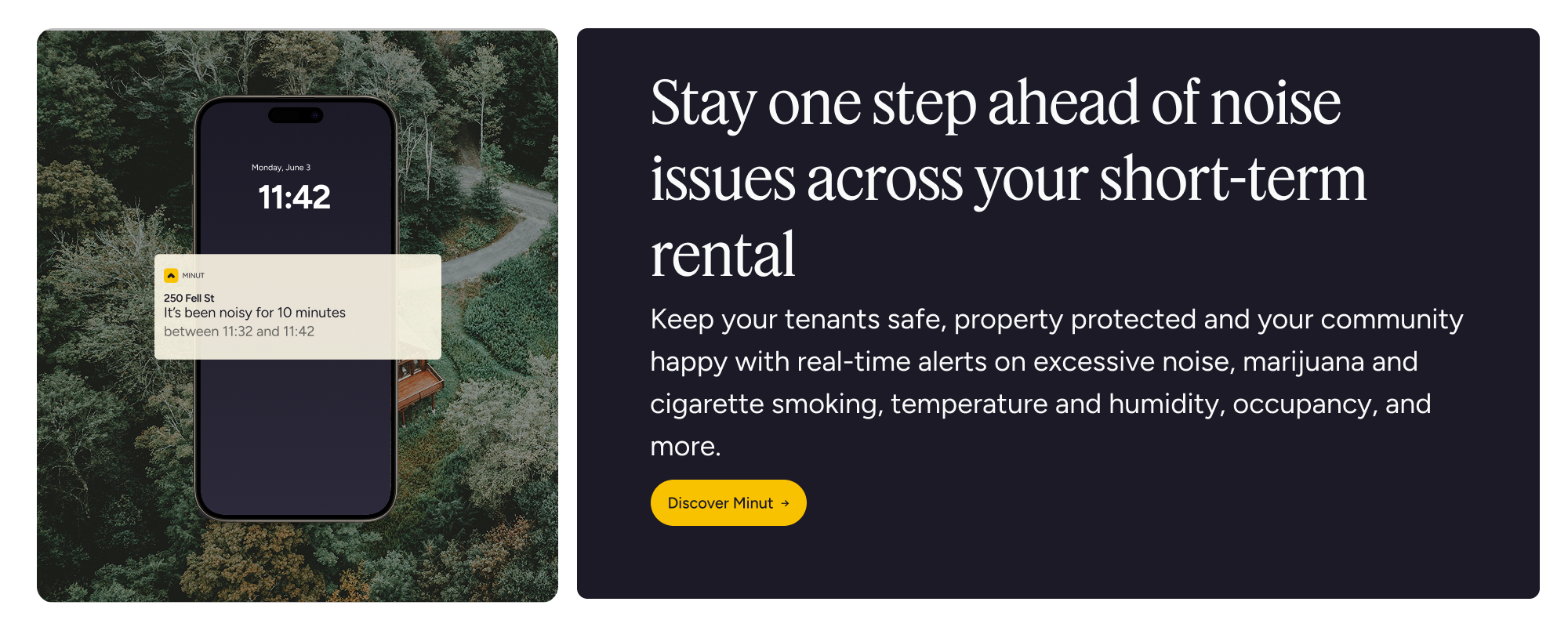
Run a quiet house. Post clear house rules, set quiet hours, and install a privacy‑safe noise monitor. Mention the monitor on your Airbnb listing — people who are planning parties don’t book homes with noise sensors, and if you ever face a neighbour dispute or platform case, the timestamped alert trail verifies the incident.
Final word
London’s STR market remains strong in 2026, but the regulatory environment has changed. Borough enforcement is tightening and the FHL tax regime has been abolished, with a national registration scheme possibly taking effect before the year ends.
If you track your nights across multiple digital platforms, file tax under standard property rules, keep safety paperwork current, and stay up to date with your borough’s guidance, you’ll avoid unexpected tax liabilities or neighbor disputes that escalate into enforcement action.
FAQs
Does the 90‑night rule apply to private rooms or just entire homes?
The cap applies to entire‑home listings. Hosted stays where you’re present aren’t counted toward the 90‑night limit.
What did the FHL abolition mean for London hosts?
From 6 April 2025, STRs no longer qualify for FHL treatment. Mortgage interest relief is limited to a 20% credit, and capital allowances/BADR are off the table.
What is the C5 use class, and when does it come into effect?
C5 is a proposed planning category for dedicated short‑term lets in England. The government signalled its intention to introduce C5 and related permitted development rights, with local ability to withdraw those rights via Article 4. As of June 2026, commencement is pending.
Does the 90‑night rule apply outside London?
No, the 90‑night cap is a Greater London rule baked into planning law. Outside London, rules differ by local authority.
Can my lease or freeholder stop me running an STR even if the council permits it?
Yes. Many leases ban holiday letting or require consent. Mortgage and insurance terms can also restrict STR use. Always check your private restrictions before you list.
Disclaimer
This article is provided for general information only and does not constitute legal, tax, or investment advice. Regulations change and may be interpreted differently by authorities. Always confirm current requirements with official city and regional sources and consult qualified counsel before making compliance or investment decisions.










.jpeg)