Apartment noise complaints: From complaints to prevention
Apartment noise complaints can affect guest satisfaction, retention, and property reputation. Learn why complaints continue to happen and how property managers can move from reaction to prevention.
It’s a familiar story. A resident submits another apartment noise complaint about the upstairs neighbor who drags chairs at midnight. You investigate, give a friendly reminder, and the noise stops. For a week. Then a new ticket appears from the same apartment, just from a different person. If you run multifamily housing or an aparthotel, you’ve lived this cycle, and you know it doesn’t take many loops before guest satisfaction and staff bandwidth take a hit.
How aparthotels can stop recurring apartment noise complaints
The fastest way to reduce apartment noise complaints is to detect sustained noise early and respond before it escalates. Prevention-focused operators set clear quiet hours, watch for patterns across units, and use apartment noise monitoring that measures decibel levels without recording audio. This moves teams from reactive tickets to proactive fixes that protect resident experience and lease renewals.
Apartment noise complaints are often a symptom, not the root problem
Recurring apartment noise complaints rarely start with the complaint. Instead they start with a slow burn that managers don’t see until it’s already a resident relations problem.
The complaint is usually the last step in a much longer story
Most residents tolerate noise for days or even weeks before reporting it. They try to work around it by changing their routines or wearing headphones on their Zoom meetings — hoping it passes. By the time they file a complaint, frustration runs deep and neighbor relationships are strained. That’s why a single apartment noise complaint often represents a deteriorating experience, not a one-off blip.
Complaint volume also undercounts the true impact. In cities, more noise complaints tend to land overnight and early morning, exactly when fatigue and sleep disruption compound annoyance. In New York City alone, over 610,000 noise-related 311 complaints were logged in 2024, with 379,200 of those coming from residential buildings.
Many communities focus on resolving incidents instead of patterns
Resolving apartment noise complaints is an incident-driven process (acknowledge, document, warn, mediate). While an effective process, this rarely addresses repeat patterns — same unit, same hours, same days. Without visibility into time-of-day spikes, building hotspots, and repeat offenders, teams close tickets while the underlying rhythm continues. Over time, this negatively impacts community satisfaction scores and trust in your property management.
Why some properties experience more complaints than others
Not all buildings are built equal when it comes to sound, mainly due to construction standards in different eras. For example, the AAOA points out that the proliferation of glass residential structures in recent decades has made sound problems more common because glass doesn’t reduce sound transmission effectively.
A study on New York City complaints also found that population density, unit density, and demographics correlate with complaint density in non-linear ways, so two similar-looking properties can perform very differently on noise depending on layout and resident mix. Policies, move-in education, and how clearly you communicate quiet hours also play a big role in whether apartment neighbor noise complaints become disputes or stay small.
What apartment noise complaints are really costing property managers
Noise tickets don’t just burn time, they also drag on guest experience, online ratings, and renewals. Here’s where the cost hides:
Staff time and administrative work
Each apartment noise complaint is a burden for your team: people need to be contacted, case notes need updating, follow-ups need scheduling, and sometimes walking the property at odd hours. If these complaints are repetitive, a lot of time is wasted dealing with the same problem over and over.
Resident satisfaction scores
Communities get reputations. If residents believe noise issues linger, they rate cleanliness lower, note a lack of responsiveness, and mention it in surveys and reviews. HOA and rental operators consistently list recurring noise as a top source of conflict, especially for loud gatherings, loud TVs, dogs barking, and renovation work. Once this perception sets in, acknowledgement emails aren’t enough. Residents need to see action being taken.
Lease renewals and resident retention
When residents can’t sleep or work from home, they start looking for a new place to live. Research from the UK has found that noise-related complaints can represent a quarter of total grievances in student and mixed-use communities, which correlates with lower NPS and higher turnover for buildings that don’t get ahead of it. That’s why multifamily noise complaints become a vacancy risk when residents decide not to renew their leases.
Reputation beyond the property
Prospects scan reviews for “thin walls,” “parties,” and “loud neighbors.” Noise is among the top guest complaints, with 73% of guests citing it as a major issue. Once a property earns the reputation of a “problem building,” marketing has to work harder to overcome it.
The lifecycle of an apartment noise complaint
Knowing the stages helps you pick the right intervention, and the right moment to prevent repeat cycles.
Stage 1: Noise begins
Intent to disturb is rare. Excessive noise is typically accidental, like the result of a small gathering that runs late, a subwoofer on movie night, a balcony call that carries, or daily living noise amplified by building design. Fridays and Saturdays are common inflection points, but weekday working from home can create midday spikes.
Stage 2: Frustration builds
Sleep gets disrupted. Calls get interrupted. Residents adjust plans, try earplugs, and vent to neighbors. They may confront the neighbor directly, which often hardens positions and leads to guest disputes.
Stage 3: The complaint is filed
Residents go on to file their complaint, with the expectation of a permanent fix. Your team documents, references quiet hours, and sets next steps. In some cities, the clock is already ticking. San Diego, for example, requires a response to STR noise complaints within one hour.
Stage 4: Management responds
You investigate and communicate with both parties. If needed, you send a warning or mediation request with relevant policies cited. Without objective data, you’re balancing accounts and trying to be fair while protecting community satisfaction.
Stage 5: The issue returns
Temporary fixes fade, staff shifts change, and the cycle repeats. This is where most communities get stuck: handling incidents rather than breaking patterns.
Why traditional complaint handling often fails
Incident resolution matters, but recurring apartment noise complaints highlight these gaps.
Most responses are reactive
Property teams usually get involved after the disruption occurs. You’re always a step behind, depending on third-party reports with limited detail. If you’re understaffed, response quality often becomes inconsistent.
Evidence is often incomplete
You’re relying on one perspective or conflicting stories. Legal thresholds are fuzzy. In NYC, for example, the standard is “plainly audible at 10 feet,” and sustained noise above roughly 45 dB at night or 55 dB during the day can support a case, but the core test remains reasonableness . Educating teams on acceptable decibel levels and how thresholds vary by context cuts down on disputes.
Residents want resolution, not acknowledgement
A quick “we’ve received your ticket” email gives reassurance that you’ve acknowledged the incident. However, feedback and support are far more important than acknowledgement. Specifically early detection, timely nudges, and visible follow-through when patterns persist.
Repeat issues erode trust
If the same unit keeps showing up in reports, residents quickly conclude that management can’t or won’t solve apartment noise issues. That perception spreads, and your quiet hours start to look like suggestions rather than rules.
What causes recurring apartment noise complaints?
These are the common drivers behind repeat tickets. It’s important to identify these drivers, because you can’t fix what you can’t see.
Poor communication between neighbors
Residents often don’t know each other, so small annoyances escalate faster. Without a channel to resolve minor missteps quickly, frustration grows and apartment neighbor noise complaints spike.
Inconsistent community enforcement
If warnings vary by shift or building, or some units appear to get a pass, you’ll hear about it. Perceived unfairness drives more formal complaints and appeals, so it’s important to be seen as consistent with all residents. Using devices like Minut’s M3 sensor helps with this, because you get real-time and objective data that lets you make decisions that aren’t based on interpretation or subjectivity.
Limited visibility into noise events
Without time-stamped data, your team spends time mediating “he said, she said.” That saps confidence and bogs down property management workflows.
Prevention strategies that actually reduce apartment noise complaints
These are practical moves that reduce noise complaints in apartments without turning your community into a surveillance operation.
Set clear community expectations
Define quiet hours and repeat them consistently at listing, lease signing, and move-in. Most operators land between 10 p.m. and 7 a.m., but document your exact windows and tailor by building type. Add brief in-unit signage that emphasizes shared walls and tips like felt pads for chairs.
Make reporting simple and responses transparent. Offer a direct line for after-hours apartment noise complaint reports and set expectations on response windows. Acknowledge quickly and follow up with what changed.
Identify patterns instead of individual incidents
Review weekly: Are certain stacks noisier? Are Fridays from 10 p.m. to midnight a hotspot? Is one balcony creating recurring neighbor complaints? Pattern visibility turns random tickets into solvable problems.
Use data to support decision-making
Objective information shortens investigations and supports consistent enforcement. Building-level analytics can highlight hotspots by hour and day, giving you a real plan instead of guesswork. Being able to share a time-stamped history with residents helps to reduce disputes and improve compliance.
Complaint response vs prevention: A better way forward
Factor
Complaint-driven approach
Prevention-focused approach
Response timing
After disruption
Before escalation
Resident impact
Higher frustration
Improved experience
Staff workload
High
Reduced
Repeat complaints
More common
Less common
Retention impact
Negative
Positive
What the comparison means for property managers
Prevention gives you more control over outcomes that matter: guest retention, online ratings, lease renewals, and team bandwidth. When you solve apartment noise issues before they become public complaints, you protect community satisfaction and spend less time chasing the same behavior.
How Minut helps property managers reduce apartment noise complaints
A prevention strategy needs tools that are fair, privacy-friendly, and easy to run at scale. That’s where Minut fits for multifamily, aparthotels, and STR-style buildings.
Greater visibility into noise events
Minut gives real-time awareness when sustained noise crosses your threshold, so your team can send a courteous nudge before the neighbor calls. Building-level dashboards help you spot patterns across units and hours, turning recurring apartment noise complaints into targeted fixes.
Support fair and consistent enforcement
Objective, time-stamped histories reduce “my word vs theirs.” When you can show exactly when and how long a noise event occurred, warnings feel fair, appeals drop, and decisions are easier to defend. This is especially useful in high-scrutiny markets where documentation matters for local compliance and OTA claims.
Improve resident experience
Most guests and residents don’t realize how loud they’ve become. A polite, automated message at the right moment resolves the majority of events quickly. One friendly reminder can resolve noise in 15 minutes in 94% of cases, which dramatically reduces guest noise complaints downstream.
Built for modern multifamily communities
Noise monitoring
Minut measures decibel levels like a sound meter and flags sustained spikes. It doesn’t record audio or use cameras. That means you’re monitoring the environment, not the guest — a crucial privacy distinction for modern operations.
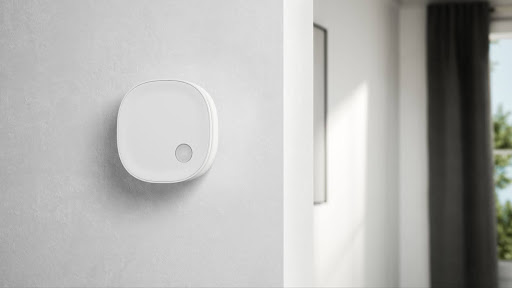
Minut M3 sensor
Privacy-friendly approach
Guests want to sleep, not be watched. Minut’s privacy-safe design keeps conversations and personal activity out of scope while still giving your team actionable decibel data and a timestamped record that supports claims and policy enforcement.
Portfolio visibility
Whether you run one building or many, the Minut app and dashboards make it simple to compare compliance across floors, stacks, and sites.
A practical apartment noise complaint prevention checklist
Prevention checklist
Define quiet hours in leases and house rules, then reinforce at move-in and with simple in-unit signage.
Standardize complaint workflows so day and night shifts apply the same steps and timelines.
Track recurring issues by unit, floor, day, and hour. Review weekly and adjust staffing or policies where patterns appear.
Educate residents on simple fixes like felt pads on chairs, rug placement, and balcony etiquette.
Improve guest communication with templates for first alert and escalation that assume good intent.
Use privacy-safe apartment noise monitoring to detect sustained spikes and send timely nudges before neighbor complaints land.
Document events with time-stamped records to reduce disputes and support consistent follow-through.
Conclusion
Apartment noise complaints are among the most common issues in multifamily housing, but the complaint itself isn’t the core problem. The problem is discovering patterns only after frustration spikes and reviews slide.
Traditional complaint handling is necessary, yet often reactive and incomplete. By setting clear expectations, looking for patterns, and adding apartment noise monitoring that focuses on decibel levels rather than on recording people, you stop many disruptions early and cut staff workload.
Communities that shift from complaint handling to prevention improve resident satisfaction, protect lease renewals, and spend more time operating instead of firefighting.
The takeaway is simple: better visibility drives better outcomes. When you can see noise events as they happen — and respond with a courteous nudge — you can address apartment noise complaints before they become recurring resident frustrations.
Apartment noise complaints FAQs
What causes most apartment noise complaints?
The top drivers are loud gatherings, subwoofers and TVs, balcony conversations that carry, barking, and chair scraping on hard floors. Building materials and layout can amplify the issue, with glass-heavy or high-density designs more prone to carrying sound.
How should property managers handle apartment noise complaints?
Acknowledge fast, document details, reference quiet hours, and communicate with both parties. Then look for patterns — like unit, day, and hour — and address repeat behavior with consistent, policy-based steps. Add early-detection tools so future incidents are resolved before tickets arrive.
Why do apartment noise complaints keep happening?
Apartment noise complaints keep happening because most communities resolve incidents rather than patterns, and teams get involved late with incomplete evidence. Residents also wait to report, so by the time you hear about it, frustration is already high. Early detection and consistent enforcement break this loop.
Do apartment noise complaints affect resident retention?
Yes. Recurring apartment noise complaints harm survey scores, online reviews, and lease renewals. In student and mixed-use settings, noise-related grievances can be a large share of total complaints, correlating with higher turnover.
How can apartment communities reduce noise complaints?
Set clear quiet hours, reinforce expectations at move-in, make reporting simple, and add privacy-safe apartment noise monitoring that triggers courteous, automated nudges during sustained spikes.
What is the best way to prevent apartment noise complaints?
Get ahead of them. Combine move-in education, pattern reviews, and environment-focused monitoring that measures decibel levels without recording audio. Most guests quiet down after the first alert when they realize sound is carrying.
What should property managers do about repeat noise complaints?
Treat them like a pattern, not isolated incidents. Review time-stamped data, escalate warnings based on your policy, and address root causes such as furniture pads or layout changes. Add environment-focused monitoring so the next spike gets a fast, friendly nudge.
How can multifamily communities improve resident experience and reduce noise disputes?
Invest in guest communication at move-in, standardize workflows, and bring in objective, privacy-safe monitoring.





.png)