Tenant noise rules explained: What landlords are legally responsible for
Understand tenant noise rules, landlord legal responsibilities, and how to prevent noise complaints with privacy-safe monitoring in residential rentals.
You don’t forget your first 2 a.m. call about a thumping bass line. If you operate apartments or single‑family rentals, noise complaints can be difficult to manage. Shared walls have a way of making one person’s late night everyone else’s.
Tenants think “it’s my home.” Neighbors expect peace and quiet. And landlords get blamed for both. This guide breaks down tenant noise rules, showing where your landlord’s legal responsibilities for tenant behavior start and stop, and lays out a prevention plan that stops most issues before they escalate.
What are tenant noise rules?
In residential rentals, tenant noise rules are the standards set out in a lease or building policy for acceptable noise in and around a unit.
Most policies cover these two issues:
Quiet hours rules: Set times when elevated noise is not allowed, commonly late evening to morning.
General nuisance noise: Any sound that unreasonably disturbs others, whether or not it falls during quiet hours.
The tenant noise rules themselves differ across:
City and county: Municipalities define allowable decibel levels, measurement methods, and enforcement steps.
State or province: Remedies and landlord obligations vary by jurisdiction.
Building type: Shared walls in apartments and student housing present different noise concerns compared to a detached single‑family home.
Tenant noise rules vs local noise ordinances
Your lease can set the rules within a rental property, but real enforcement standards usually come from local law that applies across a city, county, or municipality.
How ordinances work in real life:
Decibel‑based limits: Some jurisdictions specify indoor and outdoor max levels and how they’re measured.
Time‑based restrictions: Night versus day standards are common even where decibel meters aren’t used.
Enforcement priorities: Many cities de‑prioritize one‑off calls to focus on recurring disturbances. That matters when you’re building evidence and deciding when to act.
Your lease should reflect the residential noise regulations that apply locally, while making it clear how building-specific rules will be enforced.
Are landlords legally responsible under tenant noise rules?
Landlords aren’t on the hook for every loud TV, but they do have to act when tenant noise rules are clearly violated. Courts and regulators generally look for “reasonable action” from the landlord when there are repeated issues.
You’re more likely to be considered responsible when:
Complaints repeat and you don’t follow up
You fail to act on clear violations of the lease agreement clauses
Your enforcement is inconsistent or poorly documented
Responsibility typically remains with the tenant when:
The disturbance is one‑off and minor
The complaint is subjective without supporting evidence
You respond quickly, document the steps taken, and apply the lease consistently
What counts as reasonable action depends on the location, the lease, and the seriousness of the complaint. That might mean contacting the tenant and issuing a warning.
Clear policies and reliable records are central to property management compliance as they show that the complaints have been taken seriously and handled consistently.
Tenant noise rules in lease agreements
Your lease is what turns tenant noise rules into enforceable standards, but vague wording causes more trouble than any Friday night birthday.
The lease should clearly cover:
Quiet hours rules that match your building’s reality and reference the local standard.
Party and gathering restrictions, including occupancy and amplified music.
A clear consequence ladder for noise violations in rental properties, from a warning to any fees or termination where lawful.
Objective thresholds make enforcement defensible, for example: “Sustained noise above X dB for Y minutes” or “two verified disturbances within Z days”. Tell tenants where complaints go, how you evaluate them, and how follow‑ups work.
Common tenant noise complaints landlords face
Noise patterns vary across multifamily properties. The most frequent sources include loud parties or gatherings, dogs barking, loud TVs and music, and power tools. In apartments, a one‑off event rarely spirals. Recurring late‑night gatherings do. That’s when neighbor complaints can move from your inbox to a case with city code enforcement.
Keep two realities in mind:
“Noise” covers wildly different issues. Assess the context around it before deciding how to respond.
Managers working remotely need proof. Long‑distance hosts can’t verify conditions without data.
When tenant noise rules become a legal and financial risk
What starts as a noise complaint can quickly become a liability issue.
Here’s where the costs appear:
Fines and warnings: Municipalities are hiking penalties. For example, Toronto lists ticket amounts for amplified sound and prohibited construction times, with court convictions reaching up to $100,000 and daily fines for ongoing violations.
Neighbor disputes and legal notices: When records are thin, cases become “he said, she said,” which drags on and strains relationships.
Turnover and reputation: Noise drives churn, with a report finding that 53% of people have considered moving or have moved because of a neighbor.
Insurance and liability: Chronic issues can turn into property damage and liability conversations if gatherings become unsafe or if you’re shown to have ignored repeat tenant noise complaints.
Why reactive enforcement of tenant noise rules fails
Reactive management only delays complaints:
Manual checks are slow and subjective
Neighbor reporting can be biased or incomplete
City enforcement prioritizes recurring and persistent issues, not one‑off incidents
Without objective logs, disputes over tenant noise rules devolve into opinions. Relying simply on tenant reports invites accusations of bias – and without data, there’s no way to refute them.
Preventing violations of tenant noise rules proactively
The best way to win a noise case is to avoid having one. Prevention starts before move‑in and needs to be reinforced throughout the tenancy.
Do three things consistently:
Set expectations early: Walk through tenant noise rules at the lease signing, highlight quiet hours rules, and explain what counts as a violation in your building type.
Educate tenants building‑wide: Reminders before weekends and holidays cut issues.
Use data instead of assumptions: If you operate remotely or across a portfolio, you need neutral, time‑stamped records to support consistent calls.
How noise monitoring supports tenant noise rules
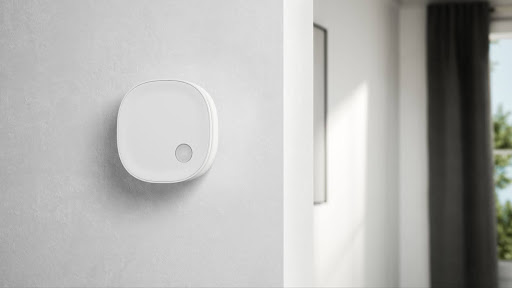
You don’t need a camera or a microphone to manage sound. You need a sensor that looks at the environment, not the people in it.
Here’s how monitoring tightens your process without invading privacy:
Monitors decibel levels, not audio: Devices like Minut measure the sound level, the pattern, and the duration. No conversations are captured. That distinction matters to tenants and regulators.
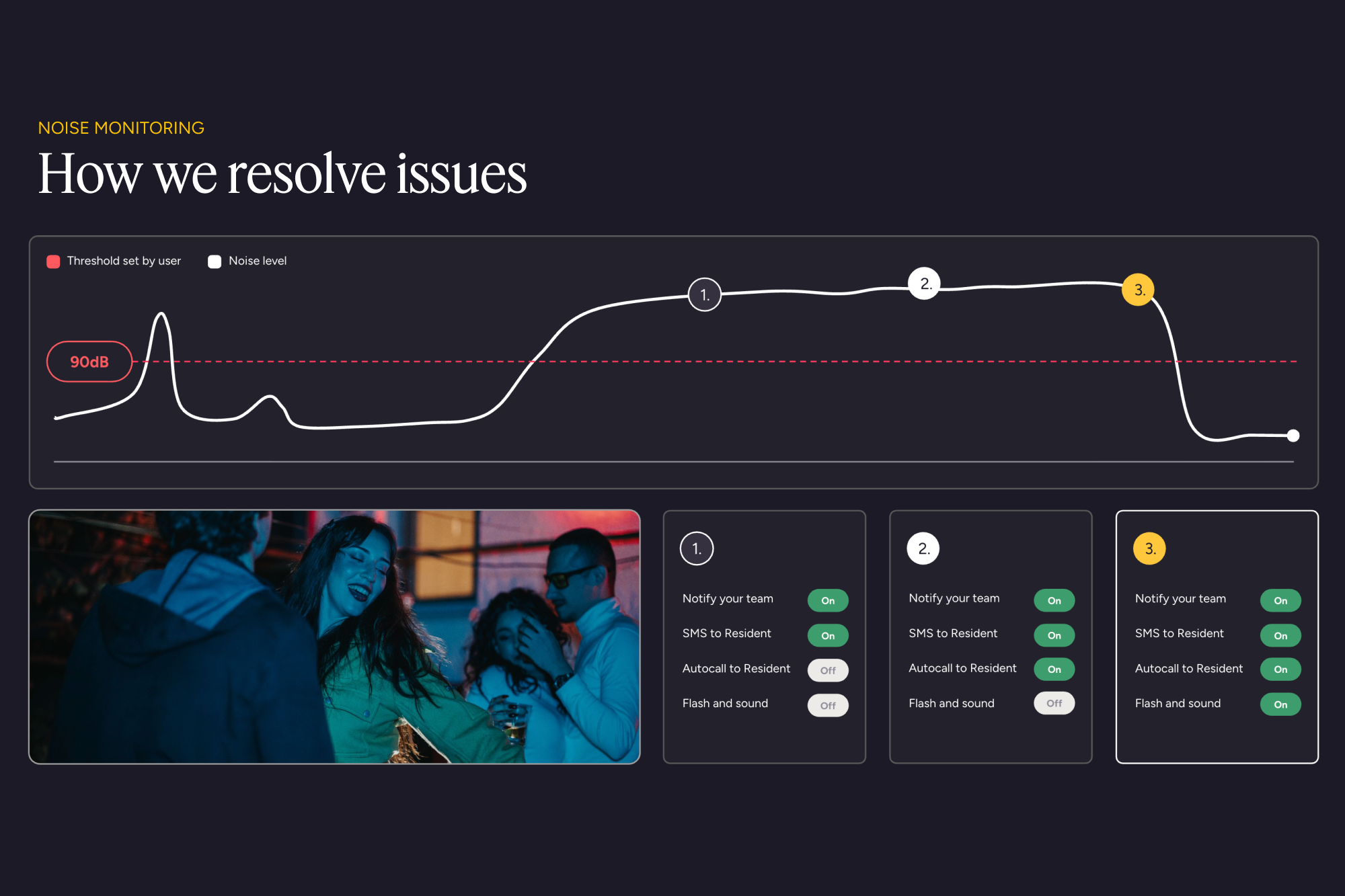
Detects patterns rather than pouncing on blips: The goal is to catch sustained, high‑level noise before it turns into a knock on the door.
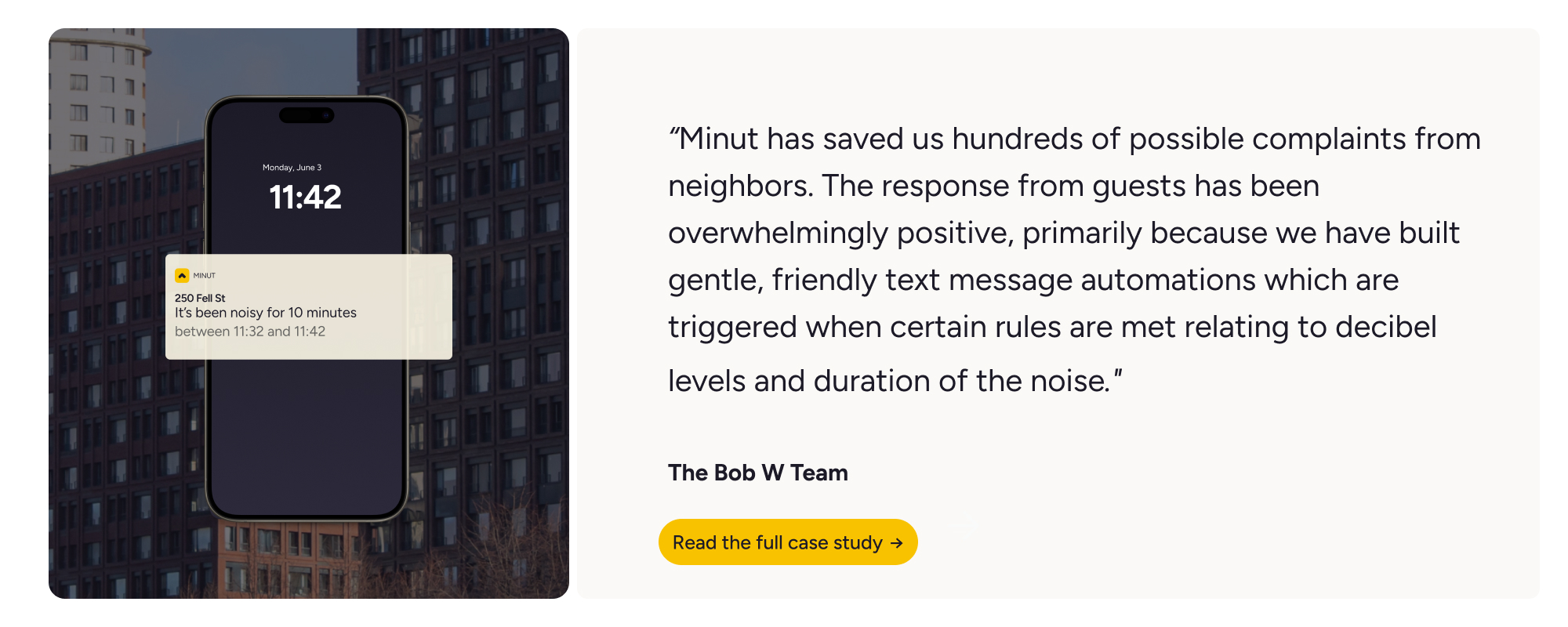
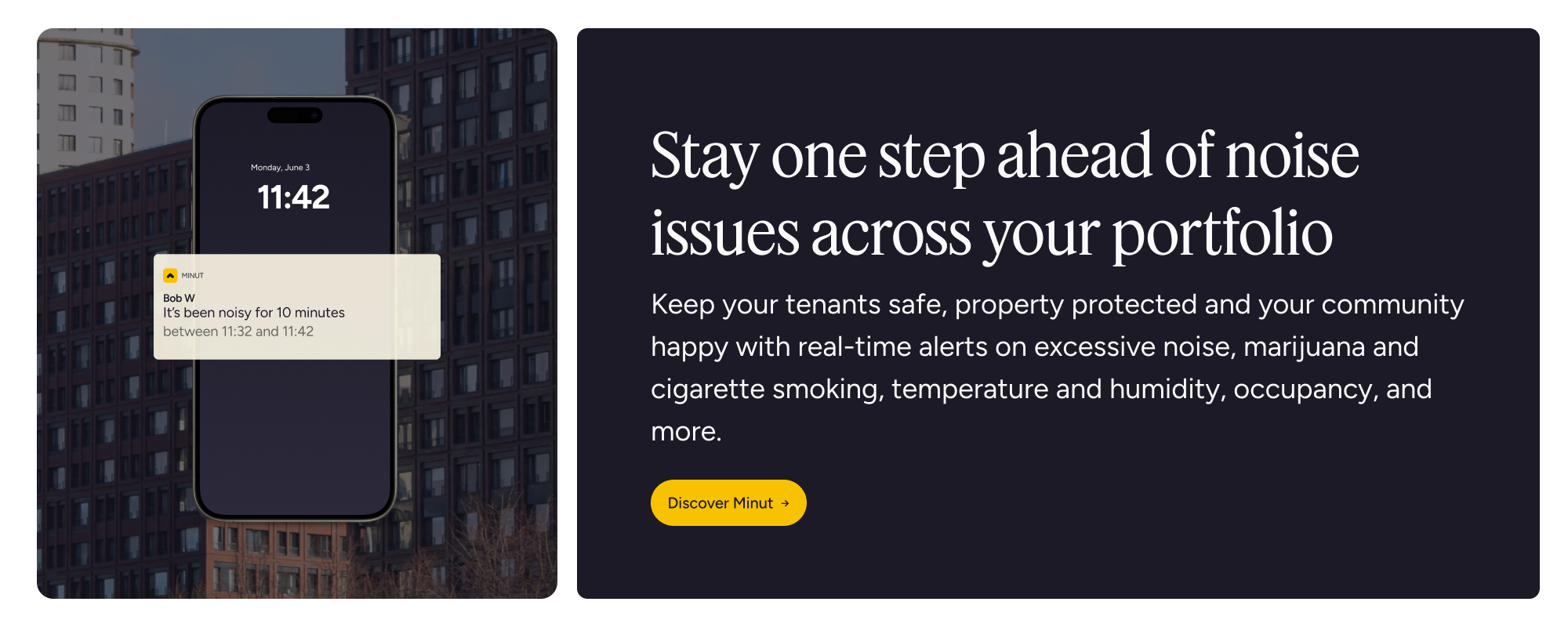
Sends early alerts that stop most issues: A simple message in real time is usually enough to calm a gathering before it becomes a complaint. A single friendly reminder can resolve 94% of noise incidents within 15 minutes.
Using noise data to enforce tenant noise rules fairly
Noise data can give landlords a clearer record to consider alongside a resident’s complaint. Rather than relying on multiple accounts of what happened, they can review a timestamped event that measured the decibels and its duration.
Why this matters:
More context for each complaint: Each incident can show time, duration, and noise level, so proportionate action can be taken.
More consistent enforcement: When the same standard applies across the property, compliant tenants feel protected and repeat offenders learn consequences are real.
Documentation protects both sides: Documenting time, date, noise type, witnesses, lease terms, and follow‑ups help landlords respond fairly.
Best practices for managing tenant noise rules in residential rentals
A clear, consistent process can help reduce noise complaints across apartments, student housing, and scattered single‑family units.
Start with the following:
Clear policy and lease agreement clauses: Spell out tenant noise rules, quiet hours rules, and the consequence ladder in the lease. Reference your local noise ordinances so tenants see the legal context.
Consistent enforcement across units: Follow the same steps, timelines, and notice templates for every address. That’s how you steer clear of bias claims and keep property management compliance tight.
Privacy‑safe monitoring that alerts early: A quick, friendly message usually stops the issue before a neighbor calls.
For remote or high‑volume portfolios, clear records can help staff apply these steps consistently and identify any repeat issues.
Conclusion
Tenant noise rules are about prevention, not punishment. The standard is reasonableness backed by records – and the landlords who document consistently and respond quickly are the ones who stay out of any legal trouble. Clear lease language aligned with local noise ordinances and privacy‑safe monitoring is how you reduce disputes, fines, and churn across apartments and single‑family homes. And it’s how you sleep through the night because the 2 a.m. bass line dropped after the first alert.
Tenant noise rules FAQs
What are tenant noise rules?
Tenant noise rules are the lease‑level standards for acceptable sound in a rental, commonly combining quiet hours rules with time‑ or decibel‑based limits tied to local noise ordinances. They define how tenants should behave and how violations are handled.
Are landlords responsible for tenant noise complaints?
You’re not liable for every sound, but you are expected to take reasonable action when complaints repeat or cross clear thresholds. Document responses, apply your lease consistently, and align with residential noise regulations in your city.
Can landlords be fined for tenant noise violations?
Yes, in some jurisdictions, repeated, unresolved violations can lead to penalties that affect the property operator.
Do tenant noise rules apply during the day?
Yes, many ordinances allow higher daytime thresholds but still restrict unreasonable or persistent noise. Your lease should reflect both day and night standards from your local noise ordinances.
Are noise monitoring devices legal in residential rentals?
In most places, yes, when they measure environmental sound levels rather than recording audio or video. Some cities even require proof of monitoring for short‑term rental permits.
Do noise monitors record conversations?
No, if you pick the right tech. Minut, for example, measures decibel levels and patterns. It doesn’t record audio or use cameras and is designed specifically for residential and multifamily properties.
How can landlords document tenant noise violations?
Use a central log with dates, times, and outcomes. Include objective sensor events, any witness statements, and references to lease agreement clauses.
What is the best way to prevent tenant noise complaints?
Set clear expectations at move‑in, educate residents regularly, and use privacy‑safe monitoring to catch sustained spikes early. A quick message often stops an issue before it becomes a neighbor complaint.